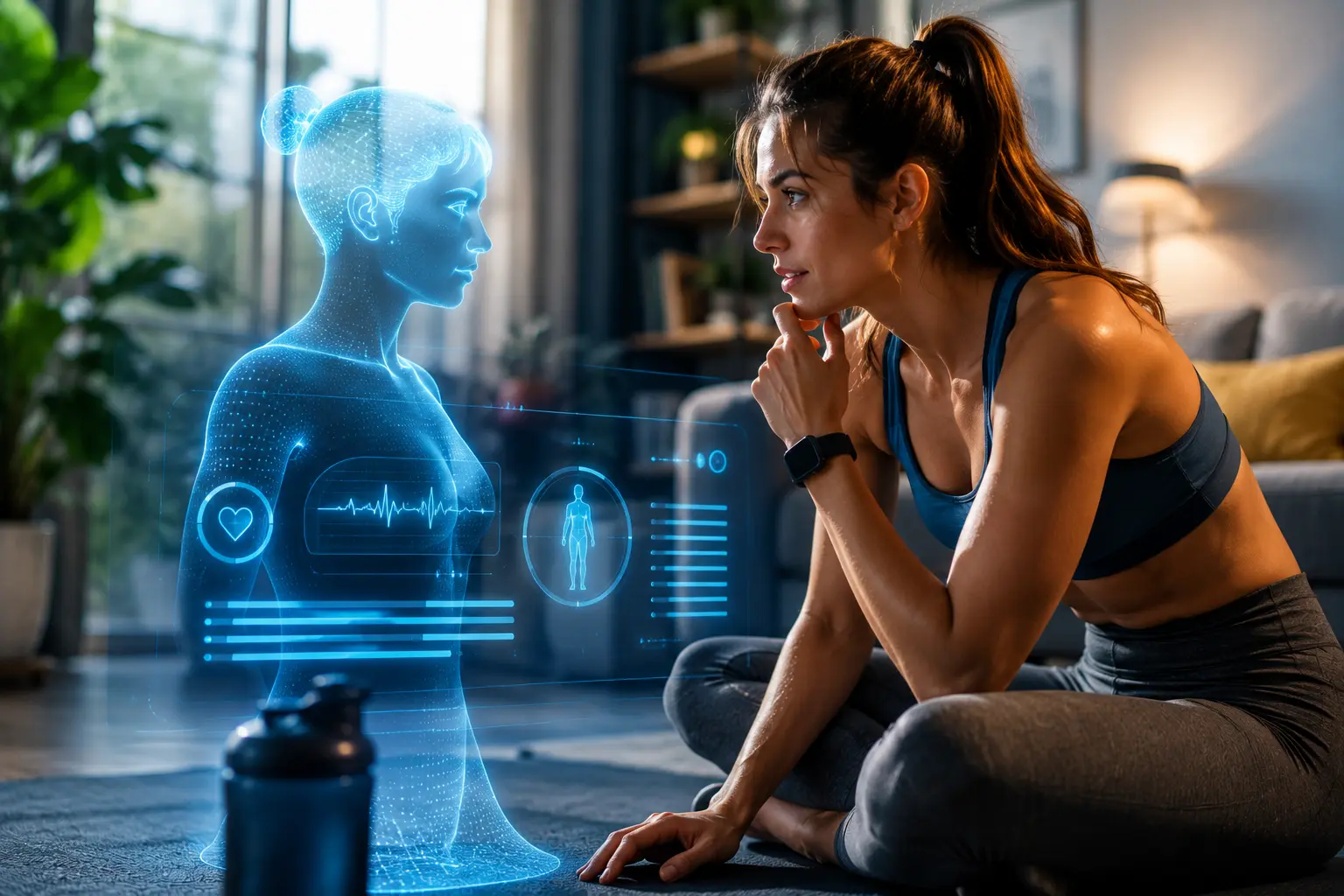
You’re tired of feeling lost between doctor appointments, struggling to remember which foods help your blood pressure, and wondering if you’re moving enough each day, so let’s break down how an AI health coach explained in simple terms can actually become the personal wellness partner you’ve been missing.
Understanding AI health coaches
AI health coaches are digital assistants built on artificial intelligence technology that work quietly in the background of your smartphone or tablet, learning your unique patterns and preferences over time. Think of them as a knowledgeable friend who never sleeps and never forgets the details you share. These systems analyze multiple data streams simultaneously, from how many steps you took yesterday to when you typically feel most energetic, creating a comprehensive picture of your daily life. For example, if you mention that you have arthritis, an AI coach might notice that you move less on rainy days and gently suggest water-based exercises on those mornings. Unlike a generic fitness app, these coaches adapt to your specific situation, whether you’re managing diabetes, recovering from surgery, or simply wanting to stay active as you age. The technology behind them uses machine learning, which means the more data you provide, the smarter and more personalized the guidance becomes.
AI coach features
Modern AI health coaches pack a surprising range of practical tools into one interface, designed specifically with older adults in mind. Activity tracking monitors your daily movement without requiring you to wear uncomfortable devices, simply using your phone’s built-in sensors. Sleep monitoring helps you understand your rest patterns, noting when you sleep deeply and when you’re restless, then offering suggestions like adjusting your evening routine. Medication reminders send gentle notifications at the right times, which proves invaluable if you take multiple prescriptions throughout the day. Nutrition logging lets you photograph meals instead of typing complicated food names, and the system learns your eating habits to suggest balanced alternatives. Vital sign integration connects with blood pressure monitors, scales, and glucose meters you may already own, eliminating duplicate data entry. Real-time feedback arrives when you need it most, such as encouragement after a morning walk or a gentle reminder to hydrate. Some coaches even include social features that let you share progress with family members or connect with peers facing similar health challenges, reducing the isolation many seniors experience.
How AI coaches operate
The mechanics of AI coaching involve several interconnected processes working together seamlessly behind the scenes. When you input information or the system collects data automatically, algorithms immediately begin analyzing patterns and comparing your current behaviors against your personal baseline and broader health research. Machine learning models recognize subtle connections you might miss, such as noticing that your energy levels drop two days after you skip your evening walk, or that certain foods trigger inflammation in your joints. The system then generates recommendations tailored specifically to you, not generic advice that applies to everyone. For instance, instead of telling all seniors to exercise thirty minutes daily, an AI coach might suggest three ten-minute sessions spread throughout your day if it detects you have limited stamina. The feedback loop continuously improves as you interact with suggestions, telling the system what works for you and what doesn’t. This personalization becomes increasingly sophisticated over weeks and months, eventually anticipating your needs before you fully recognize them yourself. The entire process operates without human intervention, making guidance available at three in the morning if you’re worried about a symptom or at noon when you need motivation to prepare a healthy lunch.
- Collect and analyze user data from multiple sources including activity, sleep, nutrition, and vital signs
- Generate personalized recommendations based on your individual patterns, preferences, and health goals
- Provide real-time feedback and support through notifications, encouragement, and adaptive guidance
🔬 Science-backed benefits in 2 minuteschoose where to begin:
Benefits of AI health coaches
The advantages of having an AI health coach extend far beyond simple convenience, touching on fundamental aspects of aging well. Continuous support means you’re never truly alone in your health journey, with guidance available whenever you need it, whether that’s midnight when anxiety strikes or early morning when motivation flags. Motivation becomes easier to maintain because the coach celebrates your small wins, remembers your goals even when you forget them, and gently redirects you without judgment when you slip back into old patterns. Consider Margaret, a seventy-three-year-old managing both arthritis and prediabetes, who found that her AI coach’s daily encouragement transformed her mindset from feeling defeated to feeling capable. The insights these systems provide often reveal surprising connections, such as discovering that your sleep quality improves when you reduce afternoon caffeine, or that your mood lifts noticeably on days you spend time outdoors. Accessibility represents another crucial benefit, particularly for seniors with mobility challenges or those living in rural areas with limited access to specialists. The coach adapts to your pace, never rushing you, and explains health concepts in language you actually understand rather than medical jargon that leaves you confused.
Future developments in AI coaching
The trajectory of AI health coaching technology points toward increasingly sophisticated and intuitive systems that will feel less like using an app and more like having a wise advisor in your pocket. Researchers are developing coaches that can recognize your voice and respond conversationally, eliminating the need to type or navigate complex menus, which particularly benefits seniors with arthritis or vision changes. Integration with wearable devices will become seamless, automatically pulling data from smartwatches and health rings without requiring manual input. Predictive capabilities are advancing rapidly, meaning future coaches might alert you to potential health issues weeks before symptoms become obvious, giving you time to consult your doctor proactively. Emotional intelligence is another frontier, with systems learning to recognize when you’re feeling discouraged or anxious and responding with appropriate support rather than just data. Some researchers envision AI coaches that coordinate directly with your healthcare providers, sharing relevant information with your doctor’s office while maintaining your privacy, creating a truly integrated care experience. The technology will likely become more affordable and accessible, ensuring that AI coaching isn’t just available to wealthy seniors but becomes a standard part of healthcare for everyone.
Integration of AI coaches
Bringing an AI health coach into your daily life doesn’t require a complete overhaul of your routines, but rather a thoughtful integration that fits naturally into how you already live. Start small by choosing one area where you struggle most, whether that’s remembering to take walks, managing your diet, or tracking blood pressure, then let the coach focus there before expanding to other aspects. Many seniors find success by setting a specific time each day to check in with their coach, perhaps during morning coffee or after dinner, creating a habit that becomes as natural as brushing your teeth. The coach works best when you’re honest with it, sharing not just the good days but the challenging ones when you ate poorly or skipped your exercises, because that’s how it learns what actually works for your life. Family members can play a supportive role by helping you set up the initial account and checking in occasionally to see how you’re progressing, though the coach itself requires no ongoing technical support. Think of it as having a health partner available twenty-four hours a day, someone who knows your history, understands your goals, and genuinely wants to help you feel your best as you age.
AI health coaches represent a meaningful advancement in how seniors can manage their well-being, offering personalized support grounded in data analysis and machine learning. These digital assistants work continuously to understand your unique situation, provide timely motivation, and deliver insights that help you make better health decisions. By leveraging algorithms and your own health data, they adapt and improve over time, becoming increasingly valuable as they learn what truly works for you. The science behind these coaches reveals their potential to revolutionize aging well by making expert-level guidance accessible, affordable, and available whenever you need it.
How do AI health coaches personalize recommendations?
AI health coaches personalize recommendations by continuously analyzing your individual data patterns, including activity levels, sleep quality, dietary choices, and vital signs. The system learns what works specifically for you, not generic advice for everyone. For example, if the coach notices you consistently feel better on days you walk in the morning rather than evening, it will prioritize morning walk suggestions. This personalization deepens over time as machine learning algorithms identify subtle connections between your behaviors and health outcomes, eventually anticipating your needs before you fully recognize them yourself.
What are the key benefits of using an AI health coach?
Key benefits include continuous support available whenever you need it, personalized recommendations tailored to your specific situation and preferences, and valuable insights into how your daily habits affect your health. AI coaches provide motivation without judgment, celebrate your progress, and help you stay committed to your goals even when motivation naturally fluctuates. They also offer accessibility for seniors with mobility challenges or those in areas with limited healthcare access, and they adapt to your pace, never rushing you or overwhelming you with information.
Others also read:
Disclaimer: This article is for informational purposes only and is not a substitute for professional medical advice. Always consult a healthcare professional for personal guidance.
This article has been prepared and reviewed by the GlobalHealthBeacon editorial team and is based on current medical research and published scientific literature available in 2026. It provides structured, evidence-based information to support informed health decisions.
