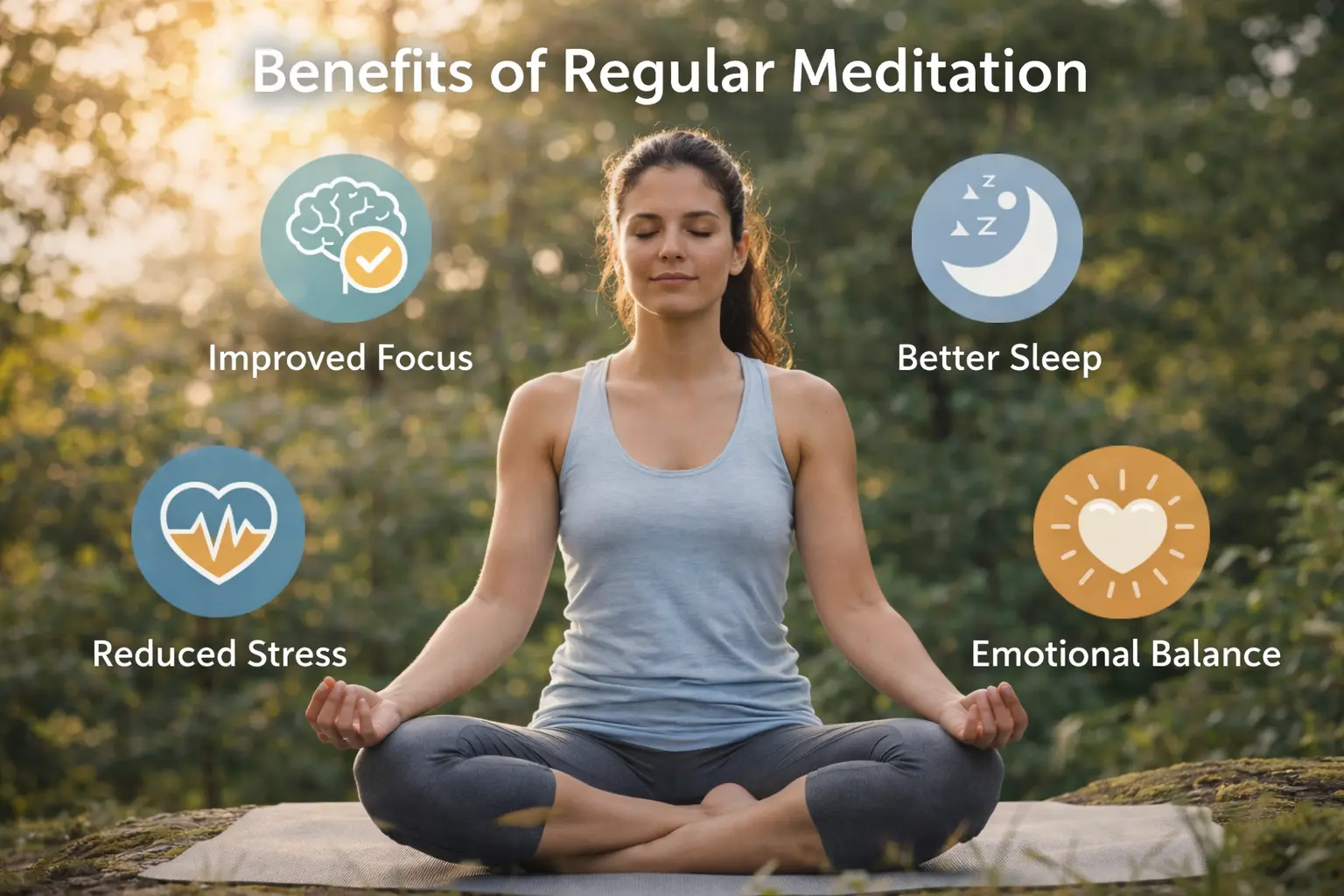
Your shoulders are tight, your mind won’t shut off, and you’re running on fumes, but the benefits of regular meditation could be the reset button you’ve been searching for without even knowing it.
Understanding the basics of meditation
Meditation isn’t some mystical practice reserved for yogis or spiritual gurus. It’s simply training your attention. Start by finding a quiet corner, even if it’s just your bedroom with the door closed. Sit comfortably, not rigidly, and focus on your breath. Notice the inhale, the exhale. When your mind wanders, gently bring it back. This happens to everyone. A woman might sit down expecting perfect silence in her mind and instead find herself thinking about grocery lists, work deadlines, or that awkward text she sent yesterday. That’s normal. The practice isn’t about achieving a blank mind; it’s about noticing when you’ve drifted and choosing to return. Start with just three to five minutes. Experiment with different techniques like body scans, where you mentally move through each part of your body, or loving-kindness meditation, where you silently repeat phrases of compassion. Be patient with yourself. Building this skill takes time, just like learning any new habit.
- Start with just a few minutes a day
- Experiment with different meditation techniques
- Be patient and kind to yourself as you learn
Creating a consistent routine
Consistency beats intensity every time. Rather than meditating for thirty minutes once a week, commit to five minutes daily. Pick a specific time. Morning meditation sets a calm foundation before the day’s demands pile up. You sit down before checking your phone, before the kids wake up, before work emails start flowing. This creates a buffer between sleep and chaos. Alternatively, an evening practice helps you process the day’s stress and sleep better. Some women find midday meditation at their desk or in their car helps them reset. The key is anchoring your practice to an existing habit. Meditate right after your morning coffee, before lunch, or immediately after dinner. This removes the decision-making burden. Your brain stops asking if you should meditate and simply does it. Track your practice for two weeks. You’ll notice patterns. Some days feel easier. Some days your mind races. Both are fine. The consistency itself is what rewires your nervous system over time.
📘 Fix your day in under 2 minuteschoose where to begin:
Exploring guided meditations
Guided meditations are like having a coach in your ear. Someone else handles the structure while you simply follow along. Apps like Insight Timer, Calm, or Headspace offer thousands of sessions. Some focus on stress relief, others on sleep, anxiety, or building confidence. A woman dealing with work anxiety might use a five-minute grounding meditation before a presentation. Another managing insomnia might try a body scan at bedtime. The variety means you can match your practice to your current need. Start with free options. Many apps offer free trials or free content libraries. Listen to different teachers. You’ll naturally gravitate toward voices and styles that resonate with you. Some prefer gentle, slow-paced guidance. Others like more structured, upbeat sessions. There’s no wrong choice. Guided meditations remove the pressure of doing it right. You’re not responsible for the content; you’re just showing up and listening. This makes meditation accessible, especially for beginners who feel uncertain about meditating alone.
Embracing mindfulness in daily life
Meditation isn’t confined to a cushion. Mindfulness extends into everything you do. When you’re washing dishes, actually feel the warm water and soap instead of mentally planning your evening. When eating, taste your food instead of scrolling. When walking, notice the ground beneath your feet, the air on your skin, the sounds around you. This sounds simple but requires practice. Most of us operate on autopilot. We drive to work without remembering the drive. We eat lunch without tasting it. Mindfulness interrupts this pattern. A woman might practice mindfulness during her commute by focusing on the scenery instead of stress. Another might bring it to conversations, truly listening to a friend instead of planning her response. Gratitude is a powerful mindfulness tool. Each evening, name three specific things you’re grateful for, not generic ones. Instead of ‘my family,’ try ‘my daughter’s laugh this morning’ or ‘my partner making coffee.’ This trains your brain to notice good moments as they happen. Mindfulness in daily life amplifies the benefits of your formal meditation practice and creates a continuous sense of presence and awareness.
Nurturing your mind-body connection
Your body holds stress. Tight shoulders, clenched jaw, shallow breathing. Meditation addresses this directly. As your mind calms, your body relaxes. As your body relaxes, your mind follows. This is the mind-body loop. During meditation, you might notice tension you didn’t know you carried. Some women discover they clench their teeth when stressed or hold their breath when anxious. Simply noticing breaks the automatic pattern. Pair meditation with other body-aware practices. Gentle yoga, walking, or stretching complement meditation beautifully. They all enhance that connection between what you think and how you feel physically. Self-care becomes non-negotiable when you understand this link. If you’re exhausted, rest. If you’re tense, move. If you’re overwhelmed, meditate. Your body sends signals constantly. Meditation teaches you to listen. Honor what your body needs, whether that’s sleep, movement, nourishment, or stillness. This isn’t indulgence; it’s maintenance. A car needs oil changes. Your mind and body need regular attention. Meditation is one of the most efficient ways to provide that care.
Building a meditation habit starts with understanding the fundamentals and committing to consistency. Use guided meditations to ease into practice, extend mindfulness into your daily activities, and nurture the connection between your mind and body. These steps create a sustainable habit that delivers real, measurable benefits over time.
How often should I meditate to experience benefits?
Daily practice, even for just five minutes, produces better results than occasional longer sessions. Most people notice shifts in stress levels, sleep quality, and emotional resilience within two to four weeks of consistent daily practice. The key is showing up regularly, not meditating for long stretches sporadically.
Can meditation help with managing stress and anxiety?
Yes. Meditation directly reduces cortisol, the stress hormone, and activates your parasympathetic nervous system, which is your body’s natural calming mechanism. Regular practitioners report lower baseline anxiety, better emotional regulation, and improved ability to handle stressful situations without becoming overwhelmed.
Others also read:
Disclaimer: This article is for informational purposes only and is not a substitute for professional medical advice. Always consult a healthcare professional for personal guidance.
This guide has been prepared and reviewed by the GlobalHealthBeacon editorial team and reflects current medical research as of 2026. It provides structured, evidence-based information to support informed health decisions.
