Your mind won’t shut up, your chest feels tight before every exam, and scrolling through your phone at 2 AM has become your default coping mechanism – but the benefits of regular meditation could be the reset button you actually need.
Understanding the basics of meditation
Meditation isn’t some mystical practice reserved for monks in mountain temples. At its core, meditation is simply the act of directing your attention to a single point – whether that’s your breath, a sound, a word, or a physical sensation – and gently returning to it whenever your mind wanders. Think of it like training a puppy. Your mind will get distracted, and that’s completely normal. The practice isn’t about achieving perfect silence or emptiness. Instead, it’s about noticing when you’ve drifted and bringing yourself back without judgment. For young adults juggling classes, work, relationships, and social media, meditation offers a straightforward tool to cut through the noise. You don’t need special equipment, a specific location, or hours of free time. You can meditate in your dorm room, at a coffee shop, or even during a study break. The practice works because it trains your nervous system to shift from fight-or-flight mode into a calmer state, which has measurable effects on focus, stress levels, and emotional resilience.
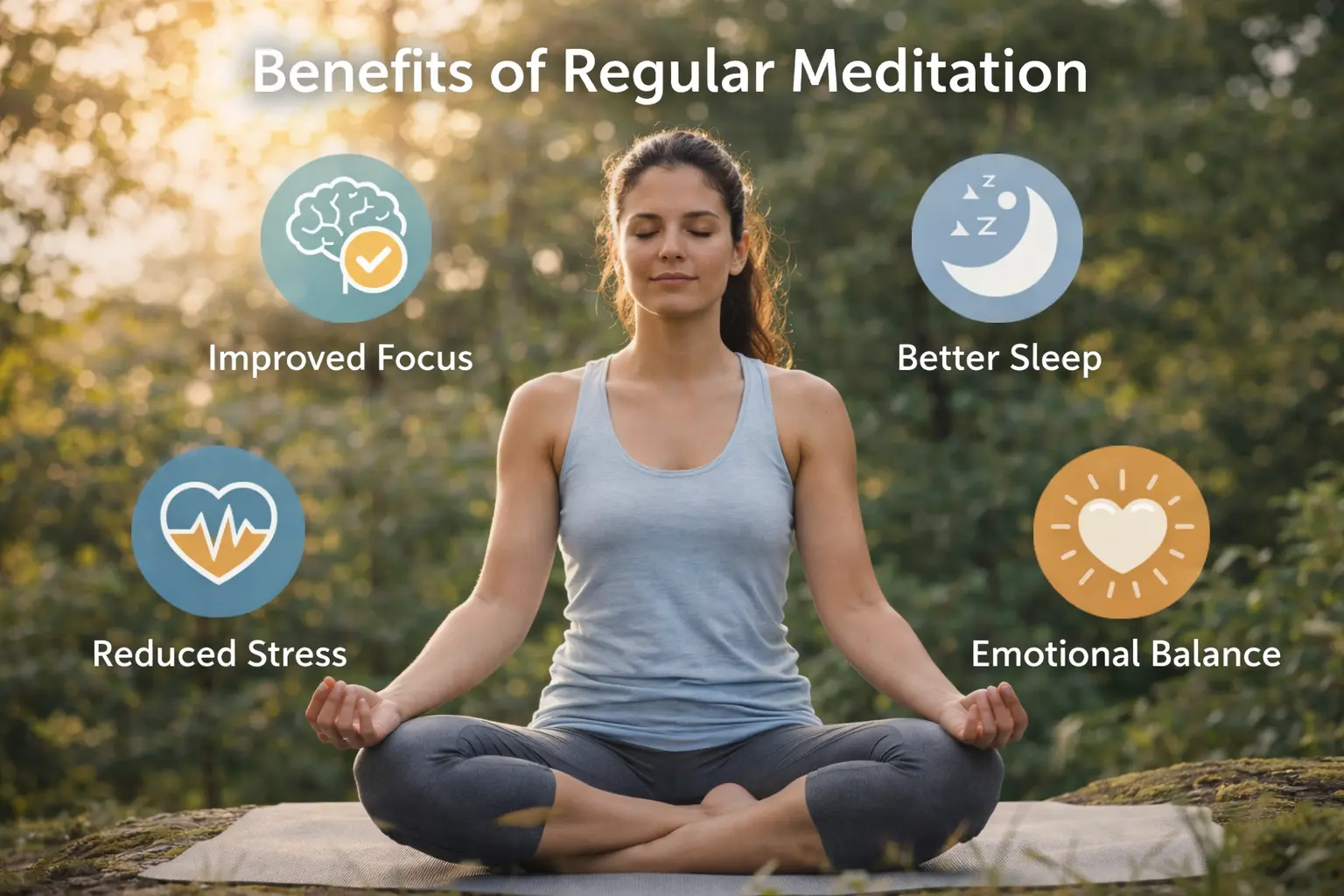
- Increased focus and concentration
- Reduced stress and anxiety levels
- Improved emotional well-being
Creating a meditation routine
Starting a meditation practice is simple, but consistency is what transforms it from a one-time experiment into a real habit. Begin by choosing a specific time each day when you’re most likely to follow through. Morning works well for many people because your mind is fresher and fewer distractions have accumulated. If you’re not a morning person, pick whatever time feels realistic – even 5 minutes during lunch or right before bed counts. Next, find a quiet space where you won’t be interrupted. This doesn’t mean a perfectly silent room. It means closing your door, putting your phone on silent, and telling roommates or family you need 10 minutes. Sit somewhere comfortable, whether that’s a chair, cushion, or your bed. Your posture matters slightly – keep your spine relatively upright so you don’t drift into sleep, but don’t force yourself into an uncomfortable position. Start with just 5 to 10 minutes. This is crucial. Many beginners try 30 minutes immediately and quit after three days because it feels impossible. Short sessions build momentum. As the practice becomes easier and more automatic, you can gradually extend to 15 or 20 minutes. Use a simple timer on your phone so you’re not checking the clock constantly. The key is showing up regularly, even on days when you don’t feel like it.
📘 Fix your day in under 2 minuteschoose where to begin:
Exploring different meditation techniques
Not all meditation feels the same, and what works for your roommate might not click for you. Mindfulness meditation, the most popular approach, involves observing your thoughts and sensations without trying to change them. You notice the thought, acknowledge it like a cloud passing through the sky, and return to your breath. This technique works well if you tend to be analytical or if you want to understand your thought patterns better. Guided meditation uses a voice or recording to lead you through the practice, which is helpful if sitting in silence feels overwhelming or if your mind needs more structure. Apps like Insight Timer or Calm offer thousands of free guided sessions ranging from 3 to 45 minutes. Loving-kindness meditation involves directing compassion toward yourself and others, which can help if you struggle with self-criticism or social anxiety. You silently repeat phrases like ‘May I be happy, may I be healthy’ and gradually extend these wishes to others. Body scan meditation systematically moves your attention through different parts of your body, noticing sensations without judgment. This technique is particularly useful if you hold stress in your body or if you want to improve body awareness. Try each approach for a week or two before deciding what resonates. Your preference might shift over time, and that’s fine. The best meditation technique is the one you’ll actually do.
Overcoming common meditation challenges
Your first meditation session probably won’t feel peaceful or transformative. Your mind will race with thoughts about your to-do list, that awkward thing you said last week, or what you’re having for dinner. This is not a sign you’re doing it wrong. This is meditation working exactly as intended. The entire point is noticing that your mind wandered and bringing it back. If your mind wanders 100 times in 10 minutes, and you notice it 100 times, you’ve had a successful session. Another common challenge is restlessness or the feeling that you’re wasting time. Combat this by remembering why you started. Keep a small journal noting how you feel after meditating – your mood, energy level, focus. Over a few weeks, patterns emerge. You’ll notice you handle stressful situations better on days you meditate. You sleep more soundly. Your patience with others improves. These changes motivate you to keep going. If you fall off the routine, don’t spiral into guilt. Life happens. You miss a few days, a week, maybe longer. Simply start again the next day without drama. Consistency matters more than perfection. Some people find accountability helpful – meditating with a friend or joining an online meditation group creates gentle pressure to show up. Others benefit from tracking their practice on a calendar, watching the chain of consecutive days grow. Find what keeps you accountable and use it.
Embracing the benefits of regular meditation
After two to four weeks of consistent practice, something shifts. You notice you’re less reactive when someone cuts you off in traffic. You catch yourself spiraling into anxiety and can actually pause and breathe instead of immediately spiraling further. Your sleep improves because your nervous system isn’t constantly in overdrive. Concentration during studying or work becomes noticeably easier. These aren’t magical changes – they’re the result of training your brain to regulate itself. Your prefrontal cortex, the part responsible for decision-making and emotional control, strengthens with practice. Meanwhile, your amygdala, which triggers the stress response, becomes less reactive. Over months and years, regular meditators report deeper self-awareness. You understand your triggers, your patterns, your values more clearly. You make decisions that align with who you actually are rather than who you think you should be. You respond to conflict with more wisdom and less defensiveness. The benefits extend into relationships too. When you’re calmer and more aware, you listen better, communicate more clearly, and handle disagreements with more grace. You become someone people want to be around. These changes don’t happen overnight, but they accumulate quietly. One day you realize you haven’t had a panic attack in months, or you handled a major disappointment without falling apart. That’s when you understand why meditation has been practiced for thousands of years.
Regular meditation offers a multitude of benefits, including increased focus, reduced stress, and enhanced emotional well-being. By establishing a meditation routine, exploring various techniques, and overcoming common challenges, young adults can unlock the transformative power of this ancient practice.
How long should I meditate each day to see results?
Start with just 5-10 minutes of meditation per day and gradually increase the duration as you become more comfortable with the practice. Consistency is key, so aim to meditate daily to experience the full benefits.
Can meditation help with managing exam stress?
Absolutely! Regular meditation has been shown to reduce stress levels, improve focus, and enhance cognitive performance. Incorporating meditation into your study routine can provide a valuable tool for managing exam stress effectively.
Others also read:
Disclaimer: This article is for informational purposes only and is not a substitute for professional medical advice. Always consult a healthcare professional for personal guidance.
This guide has been prepared and reviewed by the GlobalHealthBeacon editorial team and reflects current medical research as of 2026. It provides structured, evidence-based information to support informed health decisions.
