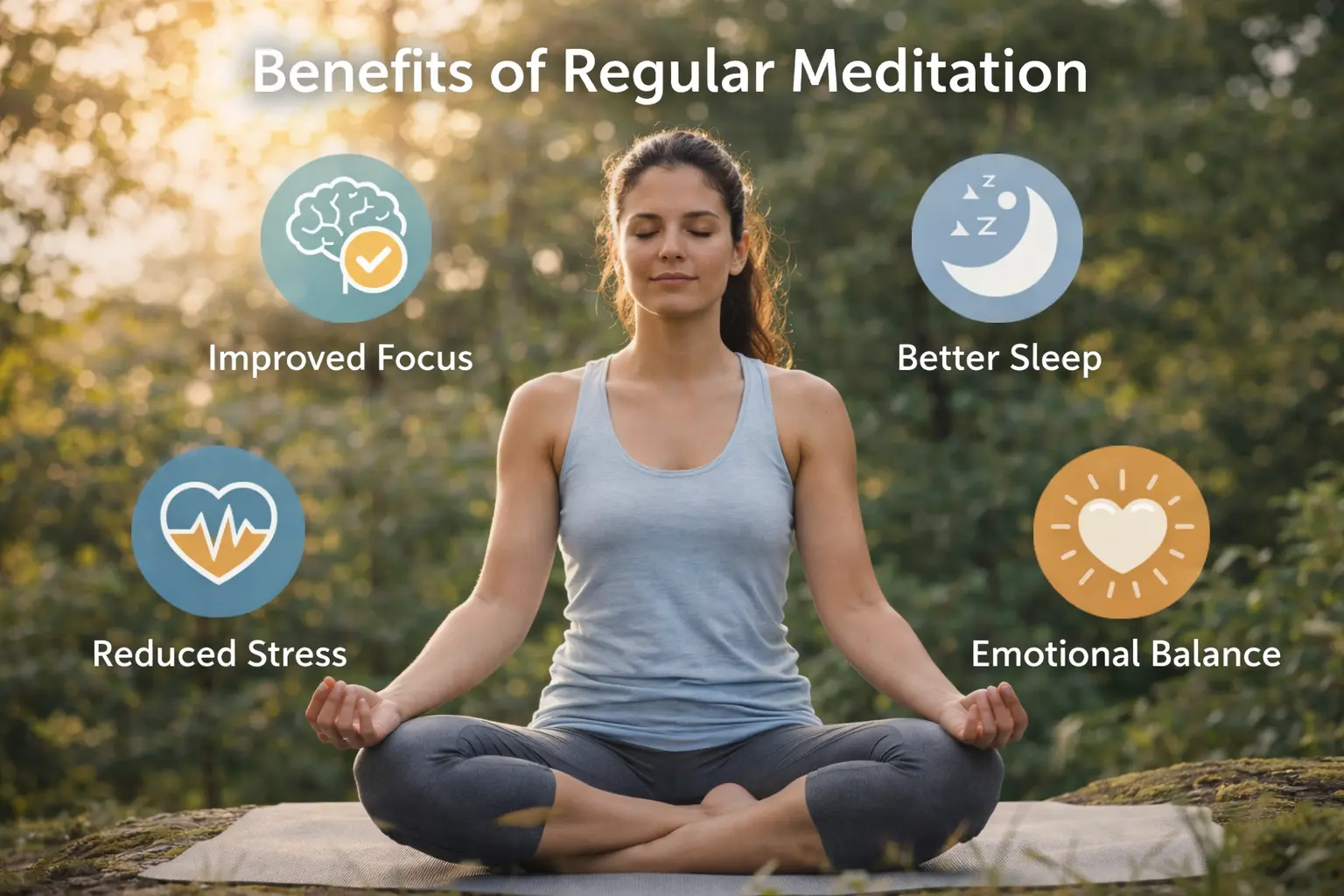
Your mind won’t stop racing, your shoulders live somewhere near your ears, and you can’t remember the last time you felt genuinely calm, but the benefits of regular meditation might be the reset your nervous system has been desperately waiting for.
Reduced stress and anxiety
When stress accumulates day after day, it doesn’t just feel uncomfortable in the moment, it actually changes how your brain processes information and regulates emotions. Research consistently demonstrates that regular meditation activates the parasympathetic nervous system, the part of your body responsible for the rest-and-digest response. Consider Sarah, a 52-year-old professional who found herself waking at 3 AM with racing thoughts about work deadlines. After committing to just 12 minutes of daily meditation, she noticed her cortisol levels dropped measurably within three weeks. The mechanism is straightforward: when you focus your attention on your breath during meditation, you’re essentially telling your nervous system that the threat has passed. Your heart rate slows, your blood pressure decreases, and the constant background hum of worry begins to quiet. Women often carry multiple layers of responsibility, and meditation provides a physiological off-ramp from that chronic activation state.
Improved mental clarity
Mental fog is real, and it’s not just about aging or lack of sleep. When your brain is constantly switching between tasks and processing stress signals, your prefrontal cortex, the area responsible for focus and decision-making, becomes less efficient. Meditation strengthens the neural pathways associated with attention and working memory. Brain imaging studies show that regular meditators develop increased gray matter density in areas linked to learning, memory processing, and emotional regulation. Think about the difference between trying to read a book in a noisy coffee shop versus a quiet library. Meditation essentially creates that quiet library inside your mind. Women who practice meditation report clearer thinking during important conversations, better recall of information they need at work, and improved ability to organize complex tasks. One woman described it as finally being able to see the forest instead of getting lost in individual trees. The clarity often extends beyond meditation sessions, creating a baseline improvement in how you process information throughout your entire day.
Enhanced emotional well-being
Emotional resilience isn’t something you’re born with or without, it’s a skill that develops through practice. Meditation trains your brain to observe emotions without being swept away by them. Instead of reacting immediately to frustration or disappointment, you develop space between the feeling and your response. This is particularly valuable for women navigating hormonal fluctuations that naturally influence mood. When you practice mindfulness meditation, you’re essentially becoming a neutral observer of your own emotional landscape. You notice anger arising without acting on it, you see sadness without judgment, and you recognize joy without grasping at it. Over time, this creates genuine emotional balance. Women who meditate report stronger relationships because they respond rather than react to their loved ones, they experience less regret about words spoken in anger, and they develop genuine compassion for themselves during difficult moments. The practice of loving-kindness meditation specifically cultivates warmth toward yourself and others, counteracting the self-criticism many women internalize.
- Practice mindfulness meditation for at least 10-15 minutes daily by finding a quiet space, sitting comfortably, and bringing your attention to the natural rhythm of your breath without trying to change it.
- Focus on your breath and observe your thoughts without judgment by noticing when your mind wanders and gently returning attention to breathing, treating each distraction as practice rather than failure.
- Engage in loving-kindness meditation to foster compassion towards yourself and others by silently repeating phrases like ‘may I be peaceful, may I be healthy’ before extending those wishes to loved ones and eventually all beings.
🔬 Science-backed benefits in 2 minuteschoose where to begin:
Physical health benefits
The mind-body connection isn’t metaphorical, it’s measurable. When you meditate regularly, you’re directly influencing your cardiovascular system, immune function, and sleep architecture. Research shows that women who meditate experience lower blood pressure readings, reduced inflammation markers, and improved heart rate variability, which is a sign of a more resilient cardiovascular system. Sleep quality often improves because meditation reduces the hyperarousal state that keeps many women awake at night. Instead of lying in bed with a racing mind, meditators fall asleep more easily and experience deeper sleep cycles. The immune system benefits emerge over weeks and months of consistent practice, with studies showing increased antibody production and enhanced natural killer cell activity. Women in perimenopause and menopause report that meditation helps manage hot flashes and night sweats by calming the nervous system’s overreaction to temperature fluctuations. These aren’t subtle changes, they’re measurable physiological shifts that accumulate with consistent practice.
Long-term effects
The real power of meditation emerges when you stick with it for months and years. Short-term benefits like temporary stress relief are nice, but long-term practitioners experience fundamental changes in how their brains are wired. Longitudinal studies following women over multiple years show sustained improvements in emotional regulation, cognitive function, and overall life satisfaction. The brain’s neuroplasticity means that repeated meditation literally reshapes neural structures. Women who have meditated for years report that they naturally respond to stress with calm instead of panic, they experience fewer depressive episodes, and they maintain better emotional equilibrium through life transitions. The cumulative effect is like the difference between occasionally exercising and becoming genuinely fit. Your baseline shifts. You’re not just managing stress better during meditation sessions, you’re fundamentally less reactive to stress throughout your life. Research also suggests that long-term meditators show slower cognitive decline with aging, meaning the practice may offer protective benefits for brain health as you grow older.
Mind-body connection
Your mind and body aren’t separate systems sending occasional messages to each other, they’re deeply integrated. Meditation strengthens your awareness of this integration. When you sit quietly and notice tension in your shoulders, you’re experiencing the physical manifestation of mental stress. When you breathe deeply and feel your anxiety ease, you’re witnessing how conscious attention to your body influences your mental state. This bidirectional awareness is transformative. Women often spend years disconnected from their bodies, ignoring hunger cues, pushing through fatigue, and dismissing physical signals of emotional distress. Meditation reverses this disconnection. You learn to recognize the early warning signs of stress in your body before they escalate into full anxiety episodes. You develop genuine self-awareness about what your body needs. This deeper connection creates a sense of inner peace that’s not dependent on external circumstances. You’re not waiting for life to calm down to feel calm, you’re cultivating calm from within by honoring the intricate conversation between your mind and body.
Research demonstrates that regular meditation offers women a host of benefits, including reduced stress, improved mental clarity, enhanced emotional well-being, and physical health benefits. These effects can lead to long-term improvements in overall well-being and a stronger mind-body connection.
How often should women meditate to experience benefits?
Consistency is key when it comes to meditation. Aim to practice daily for at least 10-15 minutes to reap the full benefits over time.
Can meditation help women with sleep problems?
Yes, meditation has been shown to improve sleep quality in women by promoting relaxation and reducing stress levels, leading to better overall sleep patterns.
Others also read:
Disclaimer: This article is for informational purposes only and is not a substitute for professional medical advice. Always consult a healthcare professional for personal guidance.
This article has been prepared and reviewed by the GlobalHealthBeacon editorial team and is based on current medical research and published scientific literature available in 2026. It provides structured, evidence-based information to support informed health decisions.
