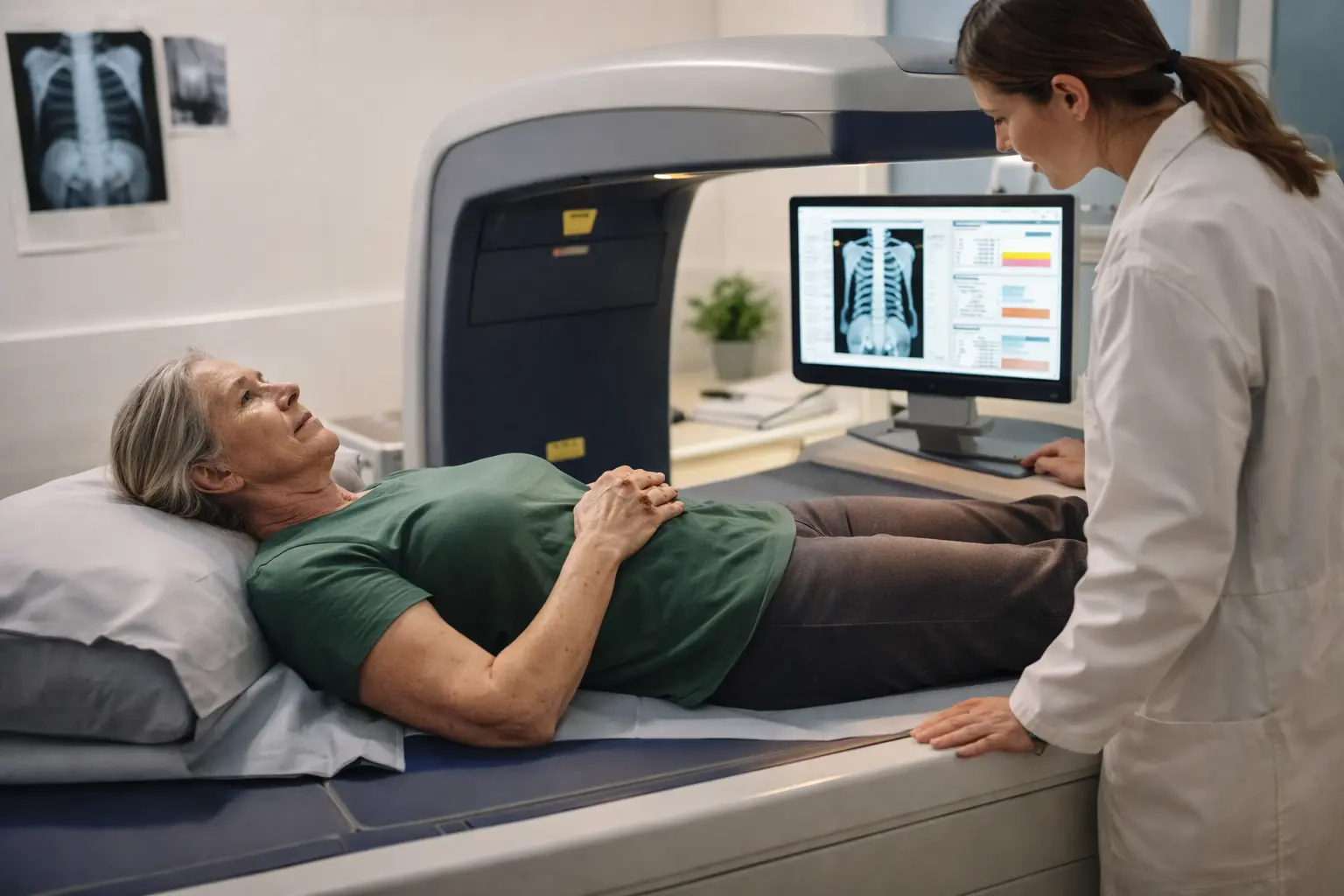
You’re staring at a doctor’s recommendation for a bone density scan and wondering if it’s really necessary, what it actually does, or whether you should be worried about what they might find – here’s bone density scan dxa explained in plain terms so you can stop second-guessing yourself.
Understanding bone density scan dxa
A DXA scan functions as a detailed snapshot of your skeletal system, measuring how densely packed your bone tissue is and how strong your bones actually are. Think of it like a quality check for your body’s structural foundation. The procedure uses low-dose X-rays to scan specific areas, typically your lumbar spine, hip, or forearm, creating a clear picture of bone mineral density. For many women, this scan becomes increasingly relevant after age 50 or when risk factors emerge, such as family history of osteoporosis, prolonged corticosteroid use, or early menopause. The beauty of DXA is its simplicity: it’s painless, takes only 10 to 30 minutes, and delivers results that help your doctor understand your fracture risk. Unlike guessing whether your bones are strong enough, this scan gives concrete data that guides real treatment decisions.
- DXA scans help identify osteoporosis risks early, when treatment can be most effective.
- The results of the scan are compared to age-matched norms to determine your bone health status.
- Your doctor might recommend DXA scans based on age, risk factors like family history, or medications that may affect bone health.
Preparing for your dxa scan
Preparation for a DXA scan is straightforward, but a few details matter for accuracy. Wear comfortable, loose-fitting clothing without metal fasteners, zippers, or underwire, since metal can interfere with imaging. Avoid taking calcium supplements, multivitamins, or iron supplements on the day of your scan, as these can create artifacts that skew results. If you’ve had a barium X-ray or CT scan with contrast within the past week, mention this to your technician, as residual contrast can affect measurements. Plan to arrive 10 to 15 minutes early to complete paperwork and discuss any concerns. Remove jewelry, phones, and keys before entering the scanning room. If you’re pregnant or think you might be, inform staff immediately, though DXA radiation exposure is minimal. Consider scheduling your scan at a time when you’re relaxed and unhurried, so you can lie still comfortably during the procedure.
📘 Fix your day in under 2 minuteschoose where to begin:
During the dxa scan
When you arrive for your scan, a technician will guide you to lie flat on a padded table, fully clothed. You’ll position yourself with your spine straight and your legs slightly apart, or in whatever position the technician recommends based on which bones are being measured. A scanner arm passes slowly over your body, emitting extremely low-dose X-rays while a detector underneath captures the data. You won’t feel anything during this process, and you can breathe normally. The technician may ask you to hold still for a few seconds during certain passes, but there’s no pain, noise, or sensation of radiation. The entire scan typically takes 10 to 30 minutes depending on which bones are being assessed. If you have anxiety about medical procedures, remember that you can ask the technician questions beforehand and let them know if you need breaks. Some facilities allow you to listen to music or have a support person nearby, so ask about these options when you schedule.
Interpreting the results
Your DXA results arrive as a T-score and Z-score, which might sound technical but are simply comparisons. The T-score compares your bone density to a healthy 30-year-old woman’s bones, while the Z-score compares you to women your age. A T-score of minus 1.0 or higher is considered normal, between minus 1.0 and minus 2.5 indicates low bone mass, and below minus 2.5 signals osteoporosis. Your doctor will walk through these numbers with you, explaining what they mean for your specific situation. They’ll consider your overall health, lifestyle, family history, and other fracture risk factors before recommending next steps. Some women need only lifestyle modifications like increased weight-bearing exercise and dietary calcium. Others benefit from medications like bisphosphonates that slow bone loss. Your doctor might also suggest vitamin D testing, since deficiency is common and easily corrected. Don’t hesitate to ask your doctor to explain your results in plain language and discuss what happens next.
Frequency of dxa scans
For most women with normal bone density, repeat DXA scans every 2 years provide adequate monitoring of changes over time. However, your individual schedule depends on your baseline results and risk profile. Women with low bone mass or osteoporosis may need scans every 1 to 2 years to track whether treatment is working. Those taking bone-building medications often get scans after 2 years to assess response. If your first scan shows normal results and you have no major risk factors, your doctor might recommend waiting 5 to 10 years before repeating. Some women benefit from more frequent monitoring if they’re starting new medications, experiencing rapid bone loss, or managing multiple health conditions affecting bone. Your doctor will create a personalized schedule based on your results and circumstances. Don’t assume you need annual scans, as this isn’t standard practice and exposes you to unnecessary radiation. Instead, discuss the right timing with your healthcare provider based on your unique situation.
DXA scans offer crucial insights into your bone health, helping detect osteoporosis early for timely intervention and treatment. Understanding the procedure, preparation, and interpretation of results is essential for proactive bone care.
Is a DXA scan safe?
Yes, DXA scans are safe and painless, exposing you to a very low dose of radiation equivalent to a day’s worth of natural background radiation.
Are DXA scan results accurate?
DXA scans are highly accurate in assessing bone health, providing a reliable measure of your bone density and fracture risk.
Others also read:
Disclaimer: This article is for informational purposes only and is not a substitute for professional medical advice. Always consult a healthcare professional for personal guidance.
This guide has been prepared and reviewed by the GlobalHealthBeacon editorial team and reflects current medical research as of 2026. It provides structured, evidence-based information to support informed health decisions.
