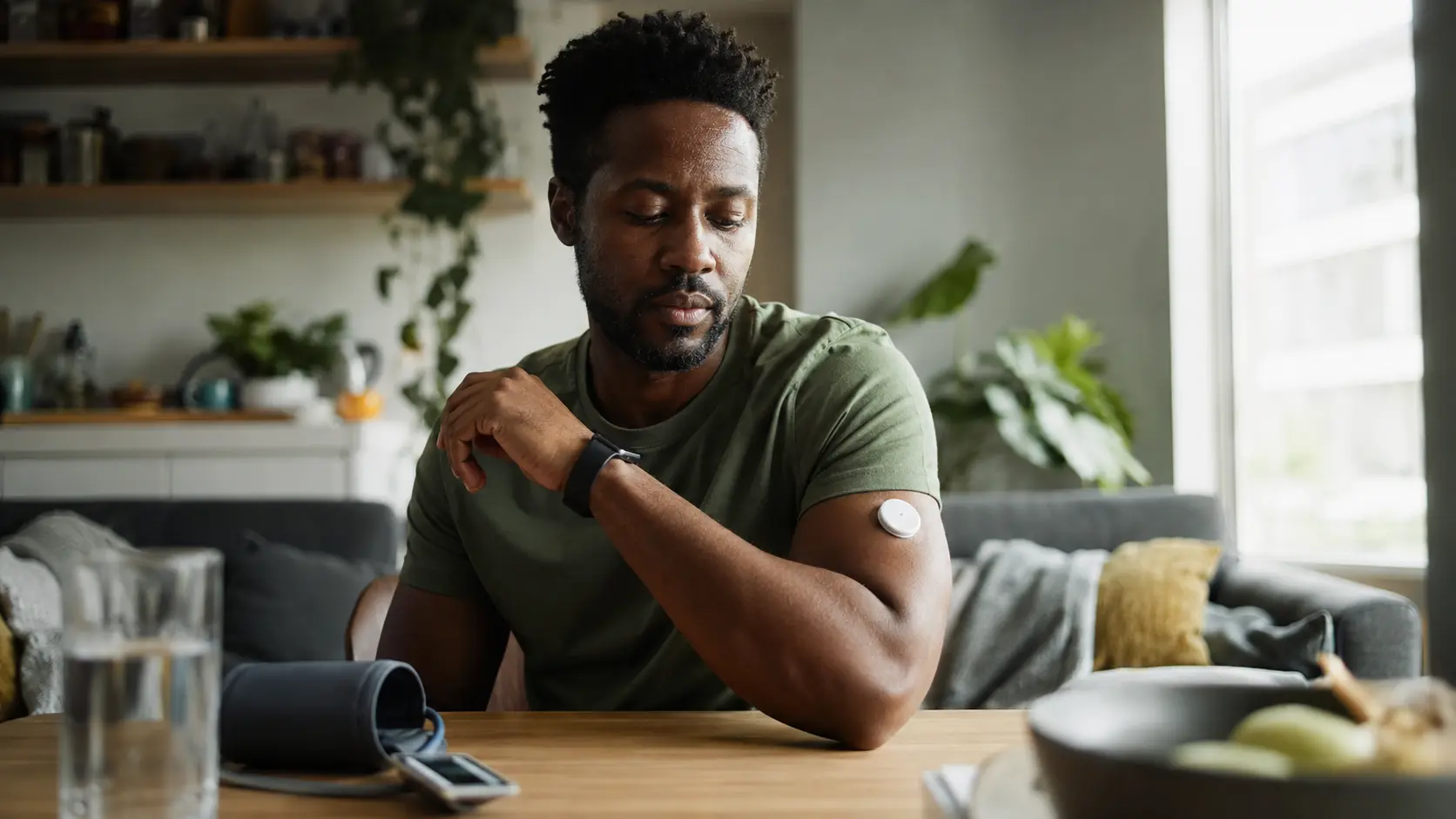
You’re drowning in notifications from your fitness tracker, obsessing over sleep scores that seem to change every night, and wondering if any of this actually matters or if you’re just feeding into tech marketing hype with connected health devices.
Understanding connected health devices
Connected health devices are wearable or portable smart gadgets that wirelessly sync with your smartphone or computer to track and monitor various physiological and behavioral health parameters. Think of them as personal data collectors that work continuously throughout your day and night. These devices use embedded sensors to measure metrics like heart rate variability, step count, calories burned, sleep architecture, blood oxygen levels, and even stress indicators. When you put on a smartwatch or fitness band, you’re essentially wearing a miniature laboratory that’s constantly sampling your body’s signals. The data flows wirelessly to an app on your phone, where algorithms process the raw measurements and translate them into digestible insights. For young adults, these devices often represent a first real encounter with quantified self-tracking, offering a tangible way to understand how daily choices impact measurable health markers. Unlike visiting a doctor once a year, connected health devices provide continuous feedback loops that reveal patterns invisible to the naked eye.
Benefits of connected health devices
The primary advantage of connected health devices lies in their ability to shift health awareness from passive to active. Instead of assuming you’re healthy because you feel fine, these devices provide objective data that either confirms your intuition or reveals hidden patterns. For instance, a young adult might discover through sleep tracking that their inconsistent bedtime is fragmenting their sleep architecture, explaining their afternoon energy crashes. Real-time feedback creates accountability without judgment, allowing you to see immediate consequences of lifestyle choices. If you stayed up late gaming, the sleep data shows it. If you skipped your usual walk, step counts reflect it. This continuous feedback loop empowers informed decision-making about diet, exercise, and stress management. Many users report that visible progress on their device motivates them to maintain healthy habits, turning abstract health goals into concrete, trackable achievements. The social sharing features on many platforms also create communities where young adults support each other’s wellness journeys, adding a motivational layer beyond individual tracking.
How connected health devices work
Connected health devices operate through a three-stage process: data collection, wireless transmission, and algorithmic analysis. The collection phase relies on miniaturized sensors embedded in the device. An accelerometer detects movement and calculates steps, a photoplethysmograph uses light to measure heart rate by detecting blood flow changes in your wrist, and a gyroscope tracks body orientation to distinguish between walking and running. These sensors sample data continuously, sometimes hundreds of times per second, creating massive datasets. The device’s processor then compresses this raw data and transmits it via Bluetooth to your smartphone or computer. The transmission happens in the background, often syncing when your device is near your phone. Once in the cloud or on your phone’s app, machine learning algorithms interpret the sensor data. They recognize sleep stages by analyzing heart rate patterns and movement data, estimate calorie burn by combining movement intensity with your personal metrics, and flag anomalies that might warrant attention. The algorithms improve over time as they learn your personal baseline. What makes this powerful is that the same raw sensor data can be analyzed in multiple ways, revealing different insights depending on the algorithm applied.
- Wear the device consistently throughout your day and night to establish a reliable personal baseline and ensure the sensors capture representative data across different activities and rest periods.
- Sync your device regularly with your smartphone or computer app to upload collected data and allow the algorithms to process and analyze your health metrics in real time.
- Review your health trends and patterns over weeks and months rather than obsessing over daily fluctuations, looking for meaningful changes that correlate with lifestyle adjustments you’ve made.
🔬 Science-backed benefits in 2 minuteschoose where to begin:
Accuracy and reliability of connected health devices
Here’s where the science gets complicated. Connected health devices are generally accurate within specific contexts but have meaningful limitations you should understand. Heart rate measurement, for example, is typically accurate within 5-10 beats per minute during steady-state activity, but accuracy drops significantly during intense exercise or if the device isn’t fitted snugly. Step counting works well on flat surfaces but struggles with stairs or pushing a shopping cart. Sleep stage classification relies on algorithms trained on limited populations, so if your sleep patterns differ from the training data, predictions may be less accurate. Sensor quality varies dramatically between budget and premium devices. A $50 fitness band uses cheaper sensors than a $400 smartwatch, resulting in noisier data that requires more aggressive filtering. The algorithms themselves introduce another layer of uncertainty. Different manufacturers use proprietary algorithms that can produce wildly different calorie burn estimates for the same activity. Environmental factors matter too: cold temperatures affect battery performance and sensor readings, while certain skin tones may affect optical sensors differently. Rather than viewing these devices as medical instruments providing absolute truth, think of them as trend indicators that reveal relative changes in your health patterns.
Future of connected health devices
The trajectory of connected health technology points toward increasingly sophisticated integration of artificial intelligence and machine learning. Next-generation devices will likely incorporate more diverse sensors, including non-invasive glucose monitoring, continuous blood pressure tracking, and advanced respiratory analysis. AI algorithms will move beyond simple pattern recognition toward predictive capabilities, potentially alerting you to health changes before you consciously notice symptoms. Imagine a device that detects subtle shifts in your heart rate variability and sleep quality that precede a cold or flu, giving you days of warning to adjust your schedule. Integration with medical systems is accelerating too. Some devices already share data directly with healthcare providers, enabling more informed clinical decisions. Wearable sensors may eventually replace or supplement traditional diagnostic tools for certain conditions. However, this advancement raises important questions about data interpretation. As devices become more predictive, they’ll generate more alerts and recommendations. The challenge will be distinguishing between genuinely actionable insights and false alarms that create unnecessary anxiety. The future likely involves devices that are smarter about when to notify you, using contextual awareness to avoid alert fatigue.
Ethical considerations in using connected health devices
Connected health devices collect intimate data about your body and behavior, raising legitimate privacy and security concerns. Your device knows when you exercise, sleep, stress, and potentially when you’re menstruating or experiencing health issues. This data is valuable to insurers, employers, and marketers, creating incentives for breaches. When you purchase a device, you’re entering a relationship with the manufacturer and often third-party data processors. Reading privacy policies is tedious but essential. Some companies explicitly state they won’t sell your data to insurers or employers, while others are vague or reserve the right to change policies. Consider what happens if the company is acquired or goes bankrupt. Your historical health data could end up in unexpected hands. There’s also the psychological dimension. Constant health monitoring can shift from motivating to obsessive, particularly for young adults already prone to anxiety. Some users develop unhealthy relationships with their data, obsessing over metrics that don’t actually matter for their wellbeing. The device becomes a source of stress rather than insight. Additionally, algorithmic bias in health devices disproportionately affects underrepresented populations. If training data skewed toward certain demographics, the device may be less accurate for others. Being aware of these ethical dimensions helps you use connected health devices as tools rather than letting them use you.
Connected health devices offer valuable, continuous insights into personal health patterns through sensor-based data collection and algorithmic analysis. These devices empower young adults to make informed decisions about lifestyle and health habits by providing objective feedback on activity, sleep, heart rate, and other metrics. However, understanding their limitations is crucial. Accuracy varies based on sensor quality, algorithmic design, environmental factors, and individual differences. Rather than treating device data as medical truth, view it as a trend indicator that reveals relative changes in your patterns. Privacy and security deserve careful attention when choosing devices and understanding manufacturer policies. The future promises more sophisticated AI-driven insights and medical integration, but also requires vigilance about data protection and avoiding obsessive monitoring behaviors. Used thoughtfully, connected health devices can be powerful tools for self-awareness and motivation.
Are connected health devices accurate in monitoring health metrics?
Connected health devices vary in accuracy depending on sensor quality, algorithm design, and usage context. Heart rate measurement is typically accurate within 5-10 beats per minute during steady activity but less reliable during intense exercise. Step counting works well on flat surfaces but struggles with stairs. Rather than viewing these devices as medical instruments providing absolute measurements, think of them as trend indicators that reveal relative changes in your personal patterns over time. Comparing your own data week to week is more meaningful than comparing your numbers to someone else’s.
How can I ensure the security of my health data when using connected health devices?
Start by carefully reading the privacy policy and terms of service from the device manufacturer before purchasing. Understand what data is collected, how it’s stored, who has access, and whether it’s sold to third parties. Use strong, unique passwords for your device app account and enable two-factor authentication if available. Regularly update your device firmware and app software, as updates often include security patches. Consider what personal information you link to your account and minimize unnecessary data sharing. Be cautious about granting permissions to third-party apps that request access to your health data. Periodically review your account settings and connected apps to remove access for services you no longer use.
Others also read:
Disclaimer: This article is for informational purposes only and is not a substitute for professional medical advice. Always consult a healthcare professional for personal guidance.
This article has been prepared and reviewed by the GlobalHealthBeacon editorial team and is based on current medical research and published scientific literature available in 2026. It provides structured, evidence-based information to support informed health decisions.
