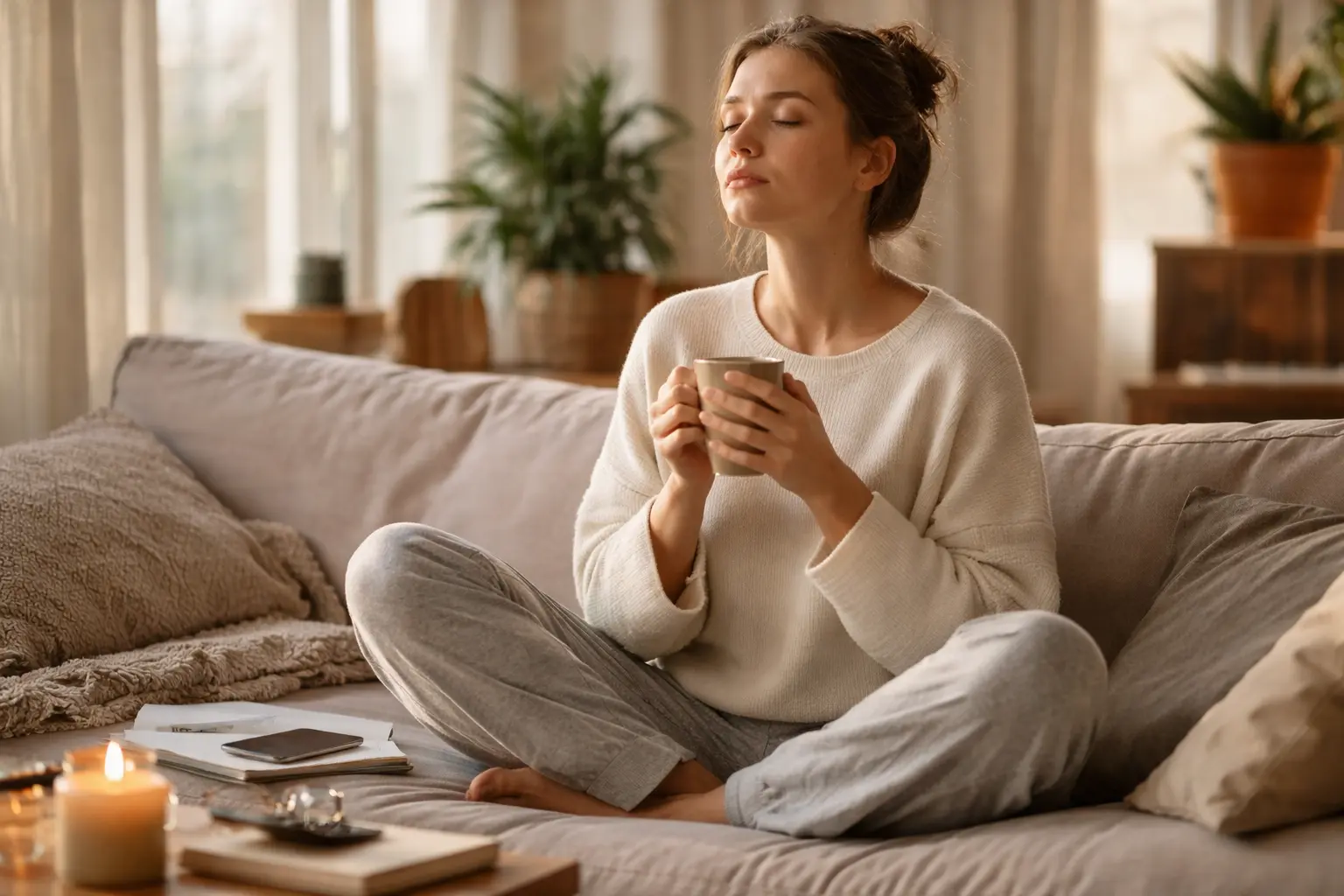
You wake up already behind, your mind spinning with work deadlines, family needs, and that nagging feeling that you are failing at everything, and you are desperate to discover daily stress reduction strategies that actually work instead of just surviving another day on fumes.
Mindfulness practices for daily stress relief
Sarah used to feel her chest tighten during afternoon meetings, her thoughts racing ahead to the evening rush. Then she discovered that even five minutes of mindful breathing could pull her back to the present moment. She started pausing between tasks, closing her eyes, and counting her breaths. Within weeks, that tight feeling loosened. Mindfulness practices work because they interrupt the stress cycle your body enters when you are constantly thinking about what is next. When you focus on your breath or a body scan, you signal to your nervous system that the threat has passed. Many women find that visualization techniques, where you imagine a peaceful place in vivid detail, create a mental escape that feels genuinely restorative. Yoga offers another pathway, with certain poses like child’s pose and legs-up-the-wall specifically designed to calm your nervous system and release the tension you hold in your shoulders and jaw without requiring you to be flexible or athletic.
- Mindful breathing exercises to center yourself in moments of stress
- Visualization techniques to create a mental escape from daily pressures
- Yoga poses specifically designed to release tension and promote relaxation
Healthy lifestyle choices for stress management
When Jennifer started eating regular meals instead of skipping lunch, she noticed her afternoon anxiety dropped noticeably. Her energy stayed stable, her mood improved, and she stopped reaching for sugary snacks that left her feeling worse. This is not coincidence. What you eat directly affects your stress response because your body needs consistent fuel to manage cortisol levels. Regular exercise does something powerful too. It does not have to be intense. A thirty-minute walk where you notice the trees and feel your legs moving can shift your entire nervous system. Sleep is where the real magic happens though. Women who prioritize seven to nine hours of sleep experience dramatically better stress resilience because your brain literally processes and stores memories during sleep, clearing out the mental clutter that makes you feel overwhelmed. Many women underestimate how much their stress improves simply by treating sleep as non-negotiable rather than a luxury they might get around to.
💬 Ready to feel better in 2 minutes?choose where to begin:
Creating supportive social connections
Maya spent years trying to handle everything alone, convinced that asking for help meant she was weak. When her sister finally insisted they have coffee weekly, something shifted. Just being heard without judgment, sharing the small frustrations and big fears, made her feel less isolated. This is what supportive connections do. They remind you that what you are experiencing is normal and that you are not alone in feeling overwhelmed. Whether it is a trusted friend, family member, or a support group of women facing similar challenges, these relationships become your safety net. Talking through your stress with someone who gets it actually helps your brain process what is happening instead of letting it loop endlessly in your mind. Many women find that vulnerability with the right people is not weakness but rather the pathway to genuine relief and feeling truly seen.
Setting boundaries and practicing self-care
Priya kept saying yes to everything until she realized she had no time for herself. Setting her first boundary felt selfish and uncomfortable, but something remarkable happened. When she started protecting even thirty minutes for herself each week, her stress plummeted. Self-care is not selfish. It is the fuel that keeps you functioning. This might mean saying no to an extra project, leaving work at a reasonable hour, taking a long bath, or simply sitting with a cup of tea without your phone. The common mistake women make is waiting until they are completely burned out to prioritize themselves. By then, recovery takes much longer. Learning to set realistic expectations for yourself, acknowledging that you cannot do everything perfectly, and giving yourself permission to rest are radical acts that transform how you experience daily pressure. When you protect your own well-being, you actually have more energy and presence for the people and responsibilities that matter most.
Exploring mindfulness practices, healthy lifestyle choices, supportive social connections, and setting boundaries are effective strategies women are using to manage daily stress. By incorporating these key elements into their lives, women can experience a greater sense of balance and well-being.
How can mindfulness practices help manage daily stress?
Mindfulness practices such as meditation and deep breathing help women focus on the present moment, reducing anxiety and promoting relaxation.
Why are healthy lifestyle choices important for stress management?
Eating well, staying active, and getting enough sleep enhance women’s resilience to stress, improving their overall mood and well-being.
Others also read:
Disclaimer: This article is for informational purposes only and is not a substitute for professional medical advice. Always consult a healthcare professional for personal guidance.
This article presents an experience-based perspective and has been reviewed by the GlobalHealthBeacon editorial team in 2026. It provides structured, evidence-based information to support informed health decisions.
