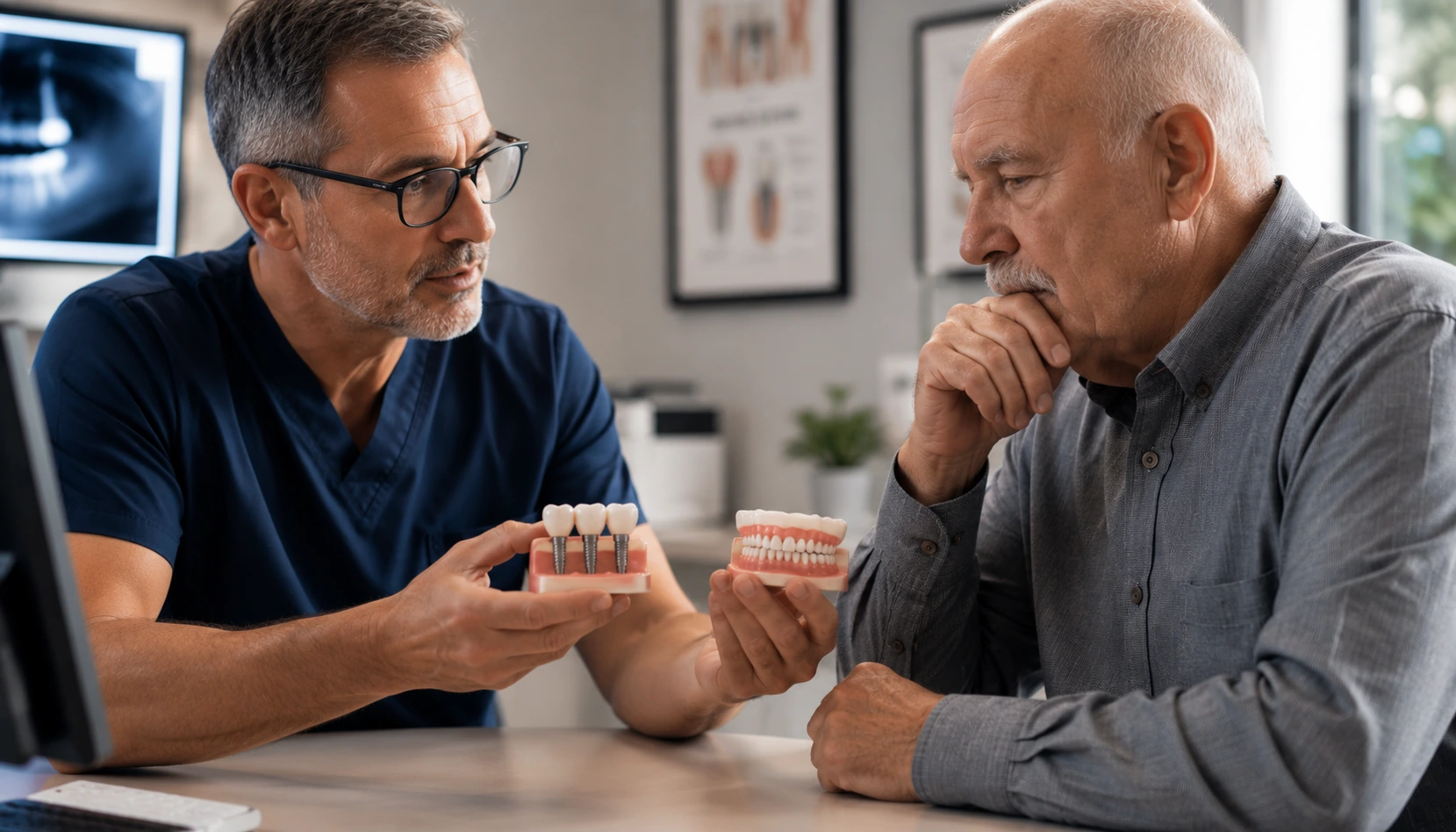
You’re tired of hiding your smile, uncomfortable with loose teeth shifting when you talk, and drowning in conflicting advice about whether dental implants versus dentures is even the right choice for you in the first place.
Understanding dental implants and dentures
Dental implants and dentures represent two fundamentally different approaches to replacing missing teeth, each with its own timeline and integration process. Dental implants are surgically anchored into your jawbone, functioning like artificial tooth roots that fuse with bone over several months. Think of them as a permanent foundation. Dentures, by contrast, are custom-made removable devices that sit on your gums, replacing both teeth and sometimes surrounding tissue. Consider a woman who lost teeth due to periodontal disease. With implants, she undergoes a surgical procedure, waits for osseointegration (bone fusion), then receives a crown. With dentures, she gets fitted, makes minor adjustments, and can wear them immediately. Implants preserve your jawbone structure because they stimulate bone like natural tooth roots do. Dentures, while non-invasive, can lead to gradual bone resorption over time, which changes facial structure and fit. Understanding this difference helps you see beyond just the cosmetic outcome and consider what happens beneath the surface.
- Implants provide a long-term solution lasting 20+ years, while dentures typically need adjustments or replacement every 5-10 years.
- Implants offer superior chewing ability and prevent bone loss, whereas dentures may shift during eating and allow bone deterioration.
- Dentures are easier to clean and maintain initially but may not feel as natural as implants and require daily removal and care.
Pros and cons of dental implants
Dental implants offer stability that feels like your own teeth because they’re anchored directly into bone. You can eat hard foods, laugh without worry, and maintain your facial structure long-term. Many women report feeling confident again after implant placement. The downsides are significant though. Implants require surgery, bone grafting if you lack sufficient jawbone, and a healing period of 3-6 months before the crown is placed. Costs range from $1,500 to $6,000 per tooth, and insurance rarely covers them. A woman with multiple missing teeth might face $15,000 to $30,000 in total expenses. There’s also a small risk of implant failure, infection, or nerve damage, though complications are uncommon with experienced surgeons. Maintenance involves regular brushing, flossing, and dental visits, similar to natural teeth. If you have uncontrolled diabetes, heavy smoking habits, or severe bone loss, implants may not be suitable without additional procedures.
📘 Fix your day in under 2 minuteschoose where to begin:
Pros and cons of dentures
Dentures are the most affordable tooth replacement option, costing $300 to $2,000 depending on quality and customization. You get immediate results without surgery, making them ideal if you need teeth replaced quickly. Dentures are also completely removable, allowing thorough cleaning and giving your gums a break each night. For women with health conditions that make surgery risky, dentures offer a safe alternative. However, dentures come with real lifestyle adjustments. They can slip or click while eating, speaking, or laughing, causing embarrassment. Proper fit is critical but takes time to achieve, often requiring multiple adjustment appointments. Many women report difficulty eating sticky or hard foods, limiting their diet. Dentures also require daily soaking in cleaning solution, careful handling to avoid breaking, and regular replacement as gums reshape. Some experience sore spots, difficulty speaking clearly initially, or taste interference. Bone loss beneath dentures accelerates over time, meaning your face may appear more sunken as years pass, and denture fit worsens, requiring relines every 2-3 years.
Factors to consider before making a decision
Your decision hinges on several interconnected factors that go beyond cost alone. First, assess your oral health. Do you have enough jawbone density for implants, or would you need grafting? Are your remaining teeth healthy, or do you have active gum disease? Second, evaluate your budget realistically. Can you afford implants upfront, or do you need a phased approach? Some women choose implants for visible front teeth and dentures for back teeth. Third, consider your lifestyle. Are you active, social, and concerned about denture movement? Do you travel frequently and prefer not carrying cleaning supplies? Fourth, think about your age and long-term plans. A 45-year-old woman might benefit more from implants’ longevity, while someone 75 might prefer dentures’ simplicity. Fifth, examine your commitment to maintenance. Implants require lifelong dental care; dentures require daily cleaning discipline. Finally, consult your dentist about your specific situation. They can assess bone quality, discuss realistic timelines, and help you weigh medical risks versus benefits for your unique circumstances.
Final thoughts on implants vs dentures
There is no universally correct choice between dental implants and dentures. Your decision reflects your priorities, circumstances, and what matters most to your quality of life. Some women thrive with implants and love the permanence and natural feel. Others prefer dentures for their simplicity, affordability, and non-invasive approach. Many choose a hybrid solution, combining implants and dentures strategically. The key is making an informed decision based on honest conversations with your dentist, realistic expectations about timelines and costs, and clear understanding of what daily life looks like with each option. Take time to research, ask questions, and don’t rush. Your teeth replacement choice affects you daily for years, so it deserves thoughtful consideration. Whatever you choose, know that modern dentistry offers viable solutions that can restore your smile, confidence, and ability to eat and speak comfortably. The best choice is the one that aligns with your values, budget, health status, and lifestyle.
Dental implants and dentures are two viable options for replacing missing teeth, each with distinct advantages and trade-offs. Implants offer permanence and natural function but require surgery and significant investment. Dentures provide affordability and immediate results but demand daily maintenance and may affect comfort and confidence. By understanding the differences between implants and dentures, considering your oral health, budget, lifestyle, and long-term goals, you can choose the solution that best fits your unique situation and supports both your oral health and overall well-being.
Are dental implants better than dentures?
Neither option is universally better. Dental implants offer permanence, superior stability, and bone preservation, making them ideal for active women who prioritize long-term investment and natural feel. Dentures are more affordable, non-invasive, and require no surgery, making them better for women with budget constraints, health conditions that contraindicate surgery, or those who prefer removable solutions. Your best choice depends on your oral health, budget, lifestyle, and personal preferences.
Can dental implants be removed like dentures?
No. Dental implants are surgically placed into your jawbone and are designed to be permanent. Once the implant fuses with bone, it becomes a fixed part of your jaw structure. Only a dentist can remove an implant if necessary, which requires surgical extraction. This permanence is one reason implants feel and function like natural teeth but also means you cannot take them out for cleaning or rest like you can with dentures.
Others also read:
Disclaimer: This article is for informational purposes only and is not a substitute for professional medical advice. Always consult a healthcare professional for personal guidance.
This guide has been prepared and reviewed by the GlobalHealthBeacon editorial team and reflects current medical research as of 2026. It provides structured, evidence-based information to support informed health decisions.
