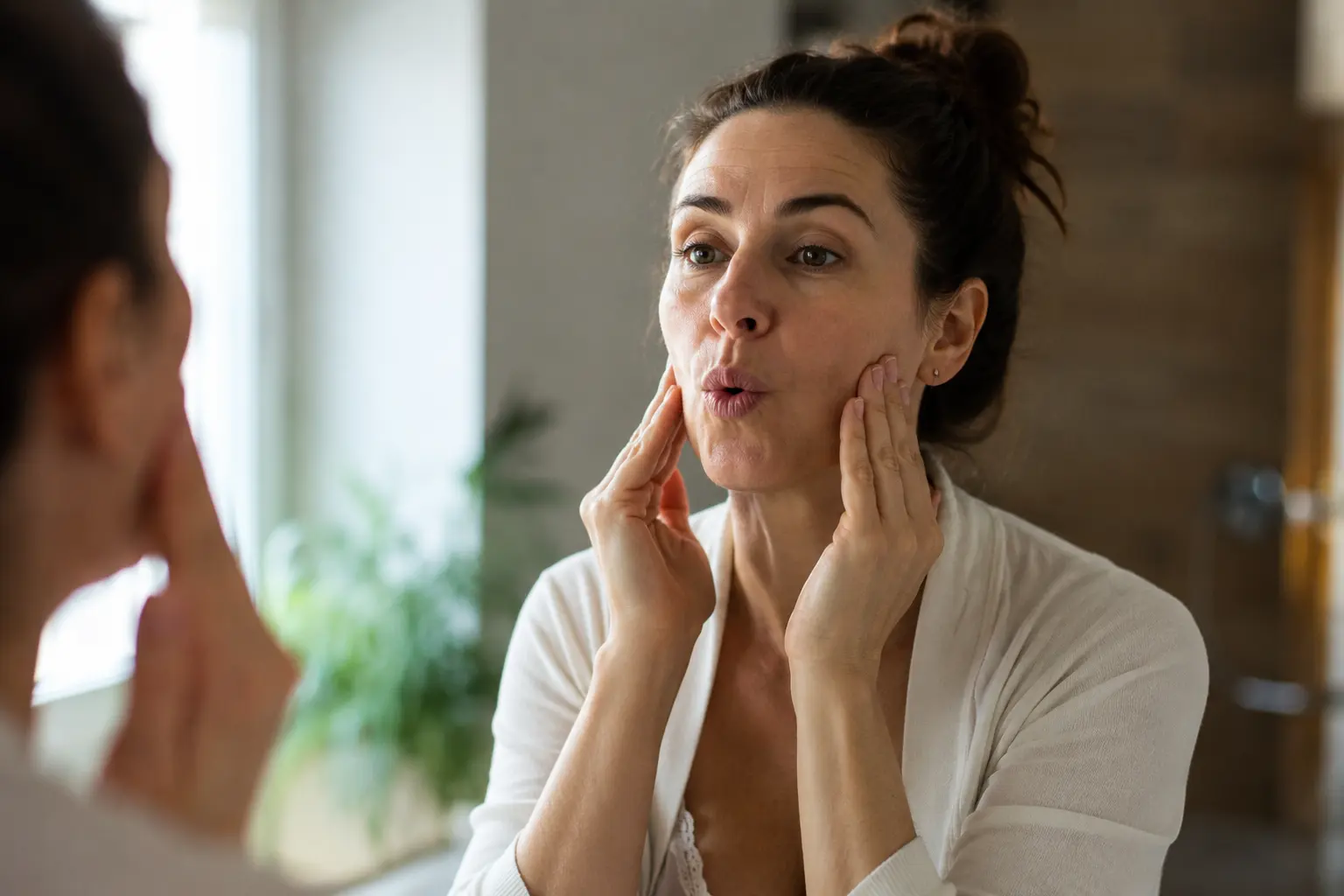
You catch your reflection and notice those lines deepening around your eyes and forehead, and you wonder if there’s actually something you can do about it without needles or expensive treatments – well, face yoga wrinkle prevention might be the answer you’ve been searching for.
Understanding face yoga wrinkle prevention
Face yoga represents a systematic approach to facial aging that works by engaging the muscles beneath your skin through targeted exercises. Think of it like strength training for your face. Your facial muscles, much like any other muscles in your body, can atrophy and lose tone over time, contributing to sagging skin and the formation of wrinkles. When you perform face yoga exercises, you’re essentially asking these muscles to work harder, which encourages them to strengthen and tighten. Consider a typical scenario: a 65-year-old woman notices her jawline has become less defined and her cheeks appear flatter. By consistently practicing face yoga that targets the masseter and zygomaticus muscles, she gradually rebuilds the underlying support structure of her face. The exercises focus on specific zones like the forehead, around the eyes, cheeks, and neck, areas where most people experience the most visible signs of aging. This targeted approach helps restore definition and can reduce the appearance of fine lines by improving the skin’s surface tension.
Benefits of face yoga in wrinkle prevention
The proposed mechanisms behind face yoga’s effectiveness involve multiple biological pathways. When you exercise facial muscles, you increase blood circulation to that area, which delivers more oxygen and nutrients to skin cells. This enhanced circulation can promote a natural flush and reduce puffiness that often makes wrinkles appear more pronounced. Additionally, the mechanical stimulation from facial exercises may encourage fibroblasts, the cells responsible for producing collagen and elastin, to work more actively. Imagine a 70-year-old man who practices face yoga for three months. He notices not only that his skin appears more vibrant and less puffy around his eyes, but also that his overall complexion has a healthier tone. The improved blood flow means his skin receives better nourishment, potentially supporting the skin’s natural repair processes. Research from various studies suggests that consistent facial muscle engagement may help maintain skin elasticity and firmness, though scientists emphasize that more rigorous clinical trials are needed to quantify these effects precisely. The combination of improved circulation, potential collagen stimulation, and enhanced muscle tone creates a multi-faceted approach to addressing visible aging.
Facial exercises for wrinkle prevention
Effective face yoga practice requires a structured approach that builds gradually over time. Begin by ensuring your face is completely relaxed, as tension can work against your goals. Gently warm up your facial muscles with light massage movements across your forehead, cheeks, and jawline for about one minute. Next, move to specific exercises: for forehead wrinkles, place your fingers above your eyebrows and gently lift while resisting with your eyebrow muscles, holding for five seconds and repeating ten times. For the eye area, squeeze your eyes shut tightly for three seconds, then relax, repeating this cycle eight times. The cheek lift involves smiling broadly while lifting your cheeks upward with your fingers, holding for five seconds. For neck and jawline definition, tilt your head back slightly and press your tongue against the roof of your mouth, holding for five seconds. A 68-year-old woman might dedicate just ten minutes each morning to these exercises, noticing gradual improvements in skin firmness over six to eight weeks. Consistency matters far more than intensity, so daily practice of even five to ten minutes yields better results than sporadic longer sessions.
- Start with a completely relaxed facial expression and perform gentle warming massage movements across your entire face for one minute to prepare muscles.
- Work through each targeted area systematically, holding each exercise for five seconds and repeating eight to ten times per area.
- Practice daily, preferably at the same time each day, to build a sustainable habit that produces cumulative results over weeks and months.
🔬 Science-backed benefits in 2 minuteschoose where to begin:
Scientific evidence supporting face yoga
The scientific landscape around face yoga remains evolving, with some promising preliminary research but a clear need for more rigorous clinical studies. A few small-scale studies have examined facial exercises and reported improvements in skin appearance and muscle tone, though these studies often lack the large sample sizes and long-term follow-up that would make findings definitive. What we know from exercise physiology is that muscles respond to resistance and repetition by strengthening and increasing in volume, a principle that logically applies to facial muscles as well. However, translating this into measurable improvements in wrinkle depth or skin elasticity requires carefully controlled research. Some dermatologists acknowledge that while face yoga likely has benefits, the effects are probably modest compared to other interventions like retinoids or professional treatments. A 72-year-old retired teacher who practiced face yoga for six months reported subjectively that her skin felt firmer and looked more lifted, though objective measurements would be needed to confirm these observations scientifically. The honest assessment is that face yoga appears to have potential, shows promise in early research, but requires more substantial clinical evidence before making definitive claims about its effectiveness.
Incorporating face yoga into your routine
Successfully integrating face yoga into daily life requires treating it like any other health habit that deserves consistent attention. The most effective approach combines face yoga with a comprehensive skincare routine that includes sun protection, moisturizing, and possibly other evidence-based treatments. Consider a practical example: a 66-year-old woman establishes a morning routine where she performs face yoga exercises for five minutes immediately after her shower, when her skin is warm and muscles are relaxed. She follows this with her regular moisturizer and sunscreen application. By anchoring face yoga to an existing habit, she ensures it becomes automatic rather than something she must remember separately. Evening practice is equally valid, perhaps while watching television or before bed. The key is finding a time that fits naturally into your life so that consistency becomes effortless. Many practitioners find that combining face yoga with mindfulness or meditation enhances the experience, as the focused attention on facial sensations can be meditative. Over months of regular practice, you may notice gradual changes in how your skin looks and feels, though patience is essential since facial changes develop slowly and subtly.
Consultation with a professional
Before beginning any new facial exercise routine, especially if you have sensitive skin, active skin conditions, or recent cosmetic procedures, consulting with a dermatologist or skincare professional is genuinely important. These specialists can assess your individual skin type, identify any contraindications, and provide personalized guidance. For instance, someone with active acne or rosacea might need to modify certain exercises or avoid them entirely until their condition improves. A person who recently had injectable treatments should wait an appropriate interval before starting face yoga to avoid interfering with results. Your dermatologist can also help you set realistic expectations about what face yoga can and cannot accomplish for your specific situation. They might recommend combining face yoga with other approaches like professional skincare products, treatments, or lifestyle modifications for optimal results. This professional perspective ensures you practice safely and effectively while understanding how face yoga fits into your broader skincare strategy. Think of this consultation as an investment in getting personalized guidance rather than following generic advice.
Face yoga represents a natural, non-invasive approach to facial aging that works by strengthening underlying facial muscles, potentially improving circulation, and supporting skin health through consistent practice. While scientific evidence is still developing, preliminary research and practitioner reports suggest that regular face yoga exercises may contribute to improved skin tone, reduced puffiness, and a more lifted appearance. The practice is accessible to most people, requires no special equipment, and can be integrated into daily routines relatively easily. Success depends on consistency, realistic expectations, and ideally, guidance from a skincare professional who understands your individual needs.
Is face yoga suitable for all skin types?
Face yoga exercises are generally safe for most skin types, though individual factors matter significantly. People with sensitive skin, active acne, rosacea, or recent cosmetic procedures should consult a dermatologist before starting. A skincare specialist can assess your specific situation and recommend modifications if needed. Most people can safely practice face yoga as part of their routine, but personalized professional guidance ensures you approach it appropriately for your skin’s unique characteristics and current condition.
How soon can I expect to see results from face yoga?
Results from face yoga vary considerably depending on your age, skin condition, genetics, and how consistently you practice. Some people report noticing subtle improvements in skin tone and firmness within three to four weeks of daily practice, while others may need six to eight weeks to observe meaningful changes. Realistic expectations are important: face yoga produces gradual, subtle improvements rather than dramatic transformations. Factors like overall health, skincare routine, sun protection, and lifestyle also influence how quickly you notice results. Patience and consistency matter far more than expecting rapid changes.
Others also read:
Disclaimer: This article is for informational purposes only and is not a substitute for professional medical advice. Always consult a healthcare professional for personal guidance.
This article has been prepared and reviewed by the GlobalHealthBeacon editorial team and is based on current medical research and published scientific literature available in 2026. It provides structured, evidence-based information to support informed health decisions.
