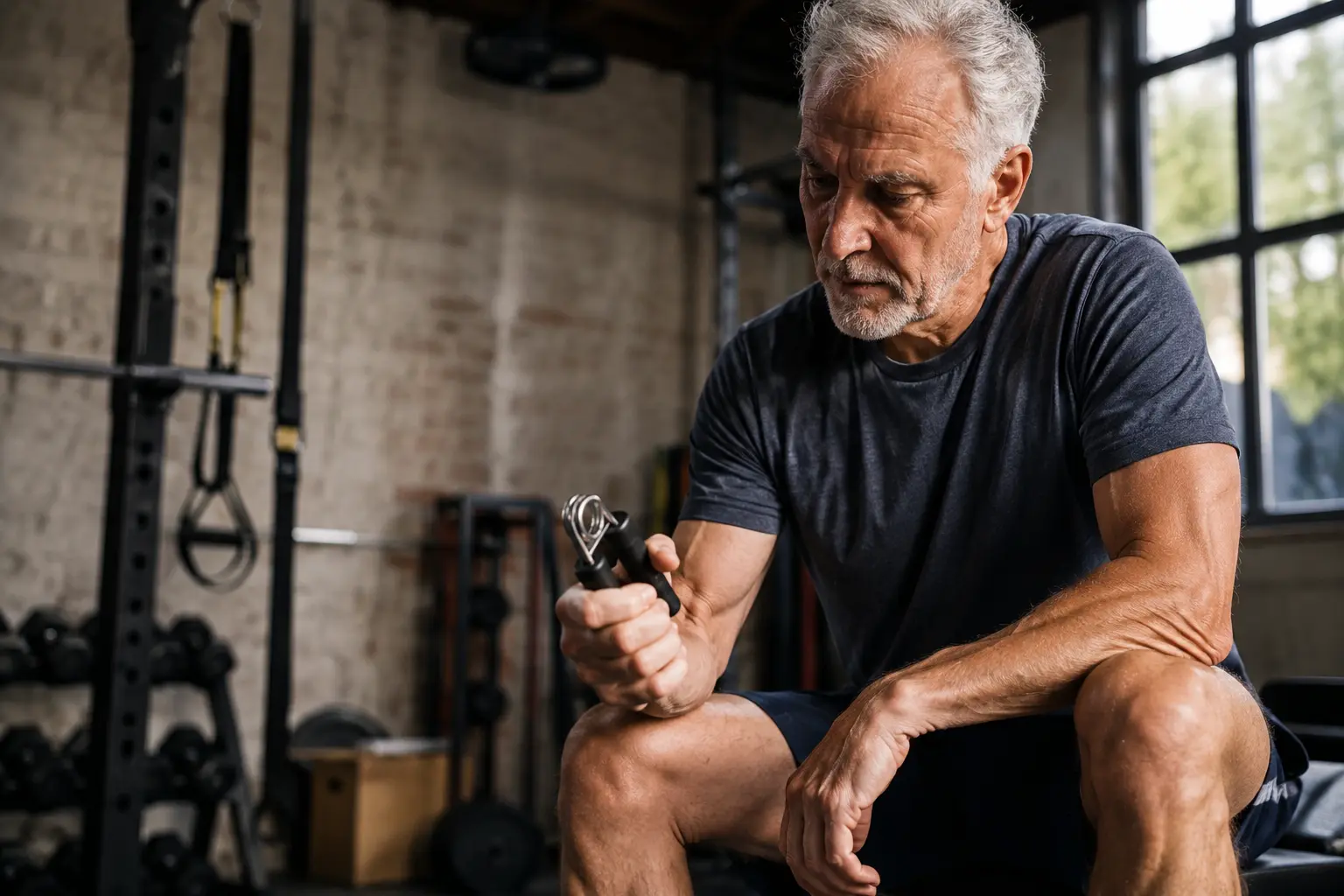
You’re struggling to open a jar, your hands feel weak during workouts, and you’re starting to wonder if this is just how your body is now, but the truth is your grip strength and longevity are deeply connected and you have way more control over both than you realize.
The link between grip strength and longevity
Here’s something that might surprise you: your grip strength is basically a window into your overall health. When researchers started studying this, they discovered that people with stronger grips tend to live longer, healthier lives. Think of it like this – your grip reflects the strength of your muscles throughout your entire body, and muscle strength is directly tied to how well your heart, bones, and organs function. A young adult in their twenties or thirties with weak grip strength might be signaling early warning signs that their cardiovascular system or muscle mass needs attention. Studies have shown that grip strength correlates with reduced risk of heart disease, strokes, and even cognitive decline as you age. It’s not magic – it’s just that building and maintaining grip strength forces you to engage your entire kinetic chain, from your forearms to your core.
- Enhances functional abilities in daily tasks
- Can indicate muscle strength and overall fitness level
- Linked to lower mortality rates and better outcomes in various health conditions
How to boost your grip strength
The beautiful part about grip training is that you don’t need fancy equipment or hours at the gym. Start with farmer’s walks – grab two dumbbells and just walk around for 30 to 60 seconds. Your forearms will burn, but that’s exactly what you want. Then add wrist curls using light weights, holding them for a few seconds at the top of each rep. Grip squeezes with a hand gripper are perfect for your commute or while watching TV. The key mistake most young adults make is jumping straight to maximum resistance and then quitting because it’s too hard. Instead, start light and gradually increase over weeks. Aim for two to three sessions per week, giving your muscles time to recover between workouts. You’ll be shocked how quickly your grip improves – most people see noticeable gains within three to four weeks of consistent training.
💬 Ready to feel better in 2 minutes?choose where to begin:
The impact of grip strength on athletic performance
Whether you’re into rock climbing, weightlifting, CrossFit, or even tennis, grip strength is your silent performance booster. Imagine you’re halfway through a heavy deadlift and your grip gives out before your legs do – that’s frustrating and limits your gains. Young athletes who focus on grip training often break through plateaus they didn’t even know they had. A climber with weak grip strength will tire quickly and miss sends they could otherwise make. A weightlifter with poor grip endurance can’t hold onto the bar long enough to complete their sets. The connection is direct: stronger grip means better control, longer endurance, and fewer injuries. Many young adults overlook this because grip strength feels secondary, but it’s actually foundational. Improving your grip doesn’t just help you perform better in your sport – it prevents compensatory injuries where your body tries to work around weak hands.
Mind-body connection: stress and grip strength
Your stress levels literally show up in your hands. When you’re anxious or under pressure, your muscles tense up, including the ones in your forearms and hands. Over time, chronic stress can actually weaken your grip because your nervous system stays in fight-or-flight mode, burning out your muscle fibers without giving them proper recovery. Young adults dealing with work stress, school pressure, or life changes often notice their grip feels weaker during stressful periods. The reverse is also true – when you practice stress management techniques like deep breathing, meditation, or even just taking walks, your grip naturally improves because your muscles can relax and function optimally. Try this: measure your grip strength when you’re calm versus when you’re stressed and you’ll see the difference yourself. Incorporating mindfulness and relaxation into your routine isn’t just good for your mental health – it directly impacts your physical strength.
Grip strength goes beyond hand power; it serves as a vital indicator of health and longevity. By focusing on exercises to improve your grip, you can enhance your physical performance, reduce health risks, and lead a more fulfilling, healthier life.
Can grip strength improve as you age?
Yes, grip strength can be improved at any age through regular exercise and training. Starting early and maintaining a routine can help prevent age-related decline in hand strength.
Are there specific tools or equipment for grip strength training?
There are various tools available for grip training, such as hand grippers, stress balls, and grip trainers. These tools offer resistance and can be used to target specific muscle groups in the hands and forearms.
Others also read:
Disclaimer: This article is for informational purposes only and is not a substitute for professional medical advice. Always consult a healthcare professional for personal guidance.
This article presents an experience-based perspective and has been reviewed by the GlobalHealthBeacon editorial team in 2026. It provides structured, evidence-based information to support informed health decisions.
