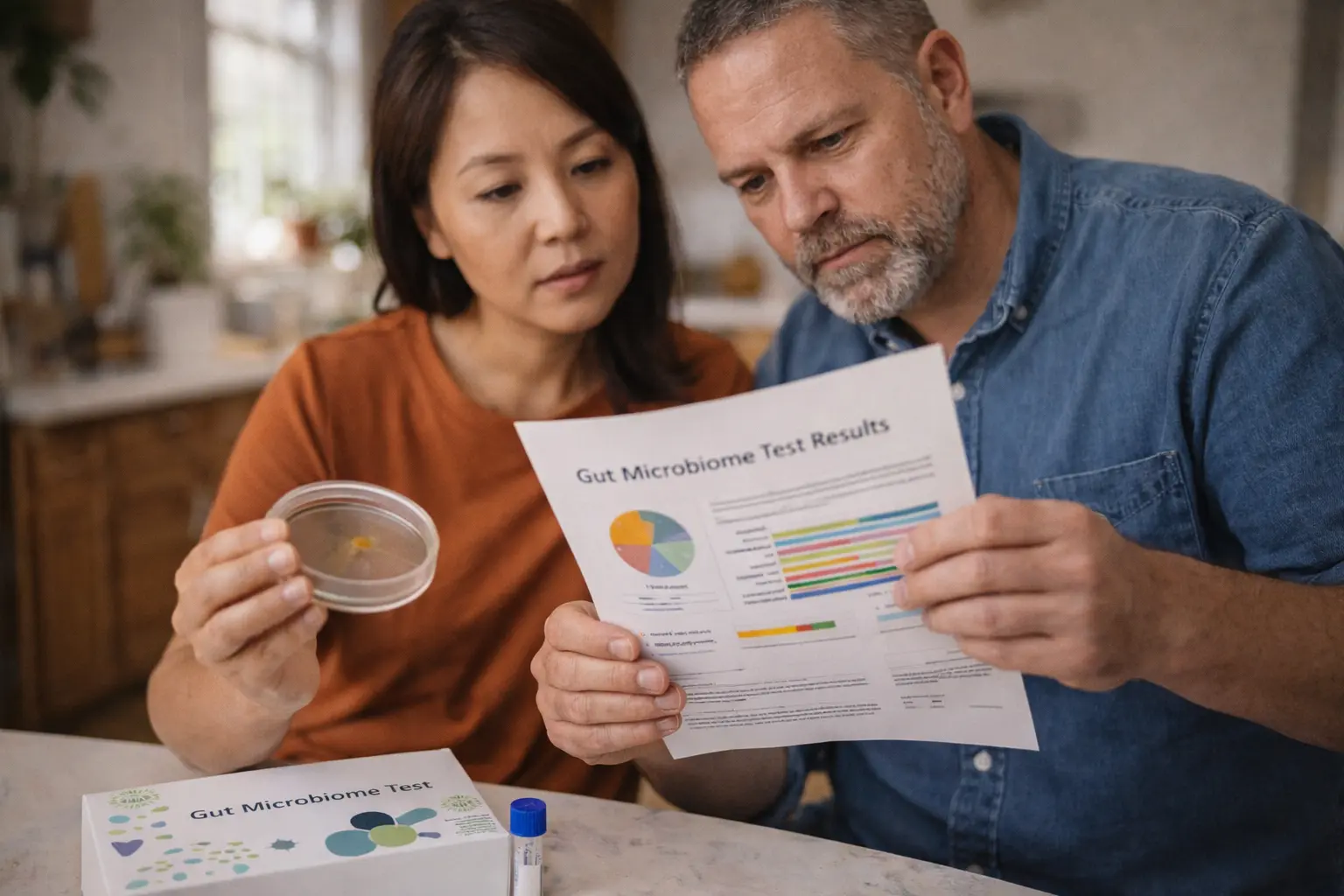
Your gut feels off, bloating hits after meals, energy crashes by afternoon, and you wonder if something deeper is wrong – so you’ve heard about gut microbiome test accuracy and whether it can finally give you real answers about what’s happening inside.
Understanding gut microbiome testing
Gut microbiome testing represents a fascinating window into the microscopic world living inside your digestive system. These tests analyze the trillions of microorganisms – bacteria, viruses, and fungi – that reside in your intestines and play fundamental roles in digestion, immune function, and even mood regulation. Think of your gut microbiome as an entire ecosystem. When you send a stool sample to a laboratory, scientists extract DNA from these microorganisms and identify which species are present and in what quantities. For example, someone experiencing chronic bloating might have an imbalance where harmful bacteria outnumber beneficial ones like Lactobacillus or Bifidobacterium. The test reveals this composition in detail, showing diversity levels and specific bacterial populations. This information helps paint a picture of your internal microbial landscape, though interpreting what it means requires understanding both the science and your individual health context.
Factors influencing test accuracy
The accuracy of gut microbiome testing depends on multiple interconnected factors that can either strengthen or weaken your results. Sample collection method matters significantly – how you collect the stool sample, how quickly it’s processed, and storage temperature all influence which microorganisms survive for analysis. A sample left at room temperature for days may show different results than one refrigerated immediately. Sequencing technology also plays a crucial role. Different labs use different DNA sequencing methods, some capturing more bacterial species than others. Data analysis techniques vary too – one lab’s software might identify 150 bacterial species while another identifies 200 from the same sample, simply due to different analytical thresholds. Additionally, your recent antibiotic use, dietary changes, travel, and even stress levels can shift your microbiome composition within days. A test taken while you’re on antibiotics shows a dramatically different picture than one taken two months later after your microbiome has recovered. Choosing a laboratory that follows standardized protocols, publishes their methods transparently, and participates in quality control programs significantly improves reliability.
Ensuring reliable results
Getting accurate microbiome test results requires attention to detail at every stage of the process. Before you even collect your sample, understand what the test can and cannot tell you – it’s a snapshot of one moment in time, not a permanent diagnosis. When collecting your stool sample, follow the lab’s instructions precisely. Use the collection kit provided, avoid contamination from toilet water, and note the exact time of collection. Store it in the refrigerator if instructed, as temperature fluctuations degrade microbial DNA. Document any medications you’re taking, especially antibiotics or probiotics, since these dramatically alter results. Choose a laboratory with verifiable credentials – look for CLIA certification, published research, and transparent methodology. Before testing, consider whether your current health state represents your baseline. Testing during acute illness, food poisoning, or while taking antibiotics gives misleading results. After receiving results, don’t attempt to interpret them alone. A healthcare provider familiar with microbiome science can contextualize your results within your complete health picture, considering your symptoms, diet, medications, and medical history to draw meaningful conclusions.
- Collect and store stool samples correctly according to lab instructions.
- Select a reputable lab with CLIA certification and transparent microbiome analysis methods.
- Consult with a healthcare provider to interpret your results in context of your complete health.
🔬 Science-backed benefits in 2 minuteschoose where to begin:
Interpreting test results
Microbiome test results arrive as detailed reports showing bacterial species names, abundance percentages, and diversity scores – but what does it all mean? Your results might show you have high Firmicutes and low Bacteroidetes, or reveal the presence of Clostridium difficile, but these numbers only gain meaning when connected to your actual symptoms and health situation. Consider a hypothetical scenario: a 68-year-old woman receives results showing low microbial diversity and high levels of Proteobacteria. In isolation, this might seem concerning, but if she feels energetic, has regular digestion, and no symptoms, it may simply reflect her normal baseline. Conversely, another person with identical results experiencing chronic diarrhea and fatigue has a very different clinical picture. Your microbiome composition reflects your unique combination of genetics, diet, medications, stress levels, and life history. A healthcare provider interprets your results by asking crucial questions: Have you recently taken antibiotics? Do you eat mostly processed foods or whole foods? How’s your stress level? Are you experiencing symptoms? This personalized interpretation transforms raw data into actionable insights rather than abstract numbers.
Potential limitations of testing
While microbiome testing offers valuable information, understanding its limitations prevents misplaced hope or unnecessary worry. The biggest limitation is that microbiome composition changes constantly – what your test reveals today may differ significantly in two weeks. If you’ve recently changed your diet, started a new medication, experienced stress, or traveled internationally, your microbiome is in flux. A test taken during this transition period doesn’t represent your stable baseline. Another limitation involves interpretation uncertainty. Scientists continue discovering new relationships between specific bacteria and health conditions, meaning today’s test results might be reinterpreted in five years as research advances. Additionally, the test identifies which organisms are present but not always their functional activity – two people with identical bacterial species lists might have completely different health outcomes based on what those bacteria are actually doing. Cost and accessibility present practical limitations too. Quality microbiome testing isn’t cheap, and insurance rarely covers it. Finally, having test results doesn’t automatically lead to solutions. Knowing you have an imbalance doesn’t guarantee that any particular intervention will restore balance for your specific situation. The test is informative but not predictive or prescriptive.
Future of microbiome research
Microbiome science is experiencing explosive growth, with researchers uncovering increasingly specific connections between gut bacteria and conditions ranging from depression to autoimmune disease to longevity itself. Emerging research suggests that certain bacterial metabolites – compounds produced by bacteria during digestion – influence brain function, immune response, and inflammation throughout the body. Future testing will likely move beyond simply identifying which bacteria are present toward measuring what these bacteria are actually producing and doing. Artificial intelligence is beginning to play a role, with machine learning algorithms identifying microbiome patterns that predict health outcomes better than human analysis alone. Personalized microbiome interventions tailored to your specific bacterial profile are becoming more sophisticated, moving beyond generic probiotic supplements toward targeted bacterial strains selected based on your unique composition. For seniors specifically, research increasingly focuses on how microbiome changes with aging affect immune function, bone health, and cognitive decline. Staying informed about emerging research empowers you to have informed conversations with your healthcare provider and make decisions aligned with the latest scientific understanding rather than outdated assumptions about gut health.
Understanding gut microbiome test accuracy requires recognizing that testing involves multiple variables affecting reliability, from sample collection through laboratory analysis to result interpretation. The most accurate approach combines proper sample handling, selection of a reputable laboratory with standardized protocols, and consultation with a healthcare provider who can contextualize your results within your complete health picture. While microbiome testing provides valuable insights into your internal microbial ecosystem, it’s most useful when understood as one informational tool among many, not as a definitive diagnosis or treatment plan.
How can I ensure the accuracy of my gut microbiome test results?
Ensure accuracy by following your lab’s sample collection and storage procedures precisely, selecting a laboratory with CLIA certification and published microbiome analysis methods, avoiding testing during acute illness or antibiotic use, documenting all medications and supplements you’re taking, and consulting with a healthcare provider experienced in microbiome interpretation to contextualize your results within your complete health situation.
What factors can impact the reliability of gut microbiome test results?
Multiple factors affect reliability including sample collection method and storage temperature, sequencing technology and data analysis techniques used by the laboratory, your recent antibiotic or probiotic use, dietary changes in the weeks before testing, stress levels and sleep quality, recent travel or illness, and your current medications. Even timing matters – testing during acute symptoms versus baseline health produces different results.
Others also read:
Disclaimer: This article is for informational purposes only and is not a substitute for professional medical advice. Always consult a healthcare professional for personal guidance.
This article has been prepared and reviewed by the GlobalHealthBeacon editorial team and is based on current medical research and published scientific literature available in 2026. It provides structured, evidence-based information to support informed health decisions.
