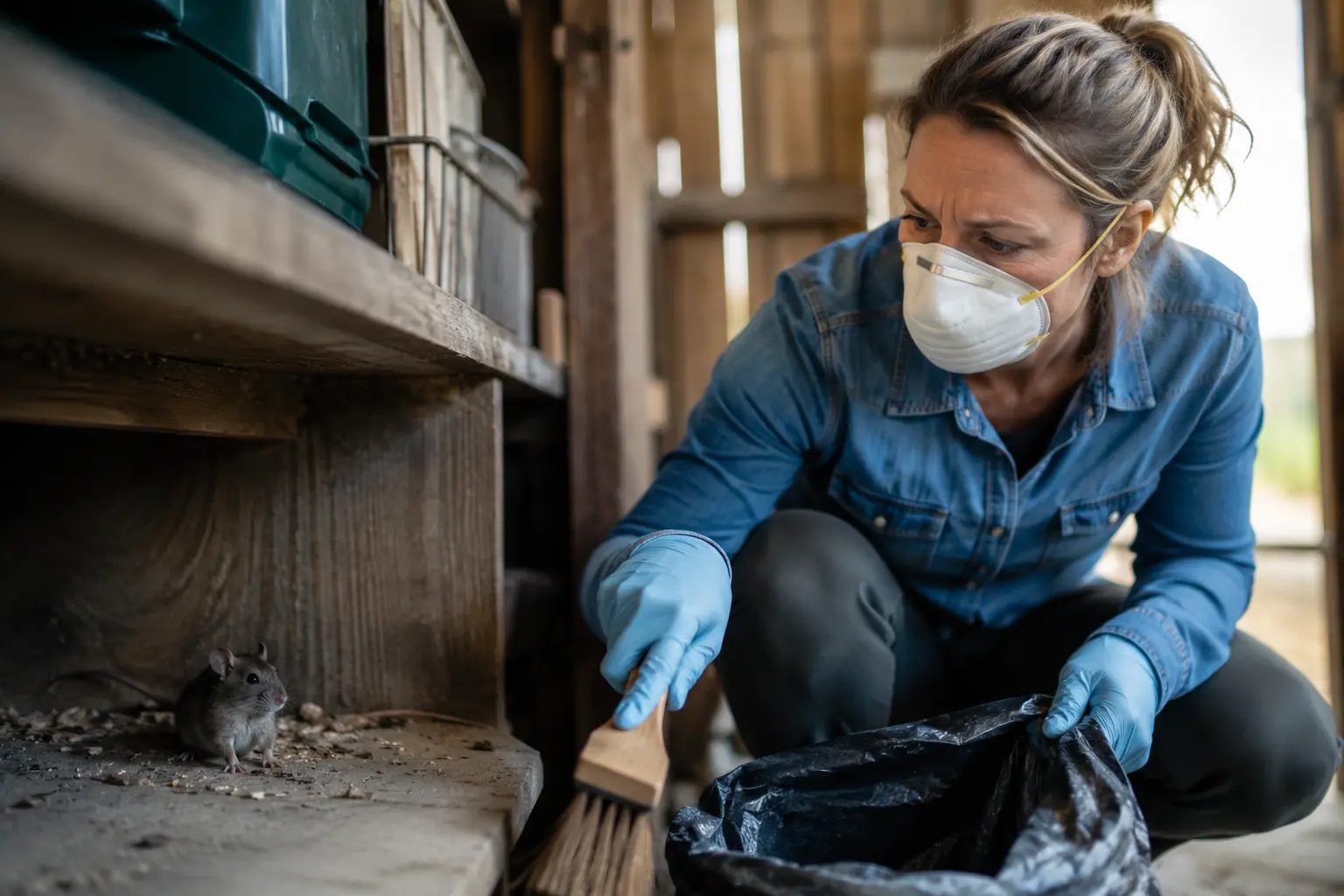
You’re cleaning out that dusty garage or sweeping the basement, and suddenly you’re wondering if that cough is just age catching up with you or something darker, because hantavirus transmission basics are something most seniors never learned about until it’s too late.
Misconception: hantavirus is only transmitted through rodent bites.
Most seniors grew up thinking rodent danger meant a bite or scratch, but the real threat is far more invisible. Picture yourself cleaning a shed you haven’t touched in years. You’re sweeping, dust is flying, and you’re breathing it all in without a second thought. That dust could contain particles from rodent droppings or urine that dried months ago. The virus doesn’t need to bite you to get inside your body. It travels through the air, settles in your lungs, and that’s when trouble starts. A friend’s father learned this the hard way after finding mouse droppings in his garage rafters. He cleaned without protection, felt fine for days, then developed a fever he couldn’t shake. Wearing a mask and gloves during any cleaning where rodents might have been present isn’t paranoia, it’s smart protection. Even gardening in areas where rodents live or handling stored grain can expose you to contaminated particles you’ll never see coming.
- Hantavirus can enter the body through inhalation of airborne particles from dried rodent waste.
- Rodent droppings or urine can carry the virus, posing a risk for seniors even weeks after the rodent is gone.
- Preventive measures like wearing N95 masks and gloves can significantly reduce exposure during cleaning or outdoor activities.
Misconception: hantavirus symptoms are mild and easily recognizable.
Here’s where hantavirus gets really tricky for older adults. The early symptoms feel almost ordinary. You wake up tired, your muscles ache a bit, maybe you have a low fever. You chalk it up to getting older, to that cold going around, to not sleeping well. Days pass. You might even feel a little better, so you convince yourself it’s nothing serious. Then suddenly you’re short of breath climbing stairs you’ve climbed a thousand times. Your chest feels tight. You’re more exhausted than you’ve ever been. By this point, the virus has already progressed significantly. A 68-year-old retired teacher described it like this: she had flu-like symptoms for nearly a week before she realized something was genuinely wrong. Because hantavirus mimics so many common illnesses, doctors sometimes miss it on the first visit. Seniors often attribute breathing difficulties to age or existing conditions rather than considering an infection. The key is knowing that if you’ve had potential rodent exposure and then develop fever, muscle aches, and especially any breathing difficulties, you need medical attention immediately. Don’t wait for symptoms to get worse or assume you’ll bounce back like you used to.
💬 Ready to feel better in 2 minutes?choose where to begin:
Misconception: hantavirus is not a serious health threat for seniors.
This belief could cost you your life, and that’s not an exaggeration. Hantavirus isn’t like a mild cold that runs its course. In seniors, it can progress to hantavirus pulmonary syndrome, which attacks your lungs and can lead to severe respiratory failure. Your body simply can’t fight it the way a younger person’s might. The mortality rate for older adults is significantly higher than for younger populations. A 72-year-old man who contracted hantavirus after cleaning his garage spent three weeks in intensive care on a ventilator. He survived, but the experience was terrifying and left him weakened for months. Many seniors don’t make it. The harsh reality is that prevention isn’t just smart, it’s essential for your survival. This means taking rodent control seriously in and around your home. It means wearing protective gear when cleaning areas where rodents might have been. It means understanding that exposure is real and the consequences are severe. You’ve lived a long life, built a family, created memories. Protecting yourself from hantavirus is about protecting all of that. Take it seriously, talk to your doctor about your risk factors, and don’t dismiss early symptoms.
Unveil the truth behind common hantavirus myths seniors believe. From transmission misconceptions to symptom recognition, this informative guide empowers older adults to protect themselves against this potentially deadly virus.
How can seniors reduce their risk of hantavirus exposure?
Seniors can reduce the risk of hantavirus exposure by avoiding direct contact with rodents, wearing protective gear during cleaning activities, and ensuring proper ventilation in closed spaces where rodents may reside.
Is hantavirus treatable in seniors?
Early detection and supportive care can improve outcomes for seniors with hantavirus infection. However, there is no specific treatment or cure for hantavirus, highlighting the importance of prevention and timely medical intervention.
Others also read:
Disclaimer: This article is for informational purposes only and is not a substitute for professional medical advice. Always consult a healthcare professional for personal guidance.
This article presents an experience-based perspective and has been reviewed by the GlobalHealthBeacon editorial team in 2026. It provides structured, evidence-based information to support informed health decisions.

