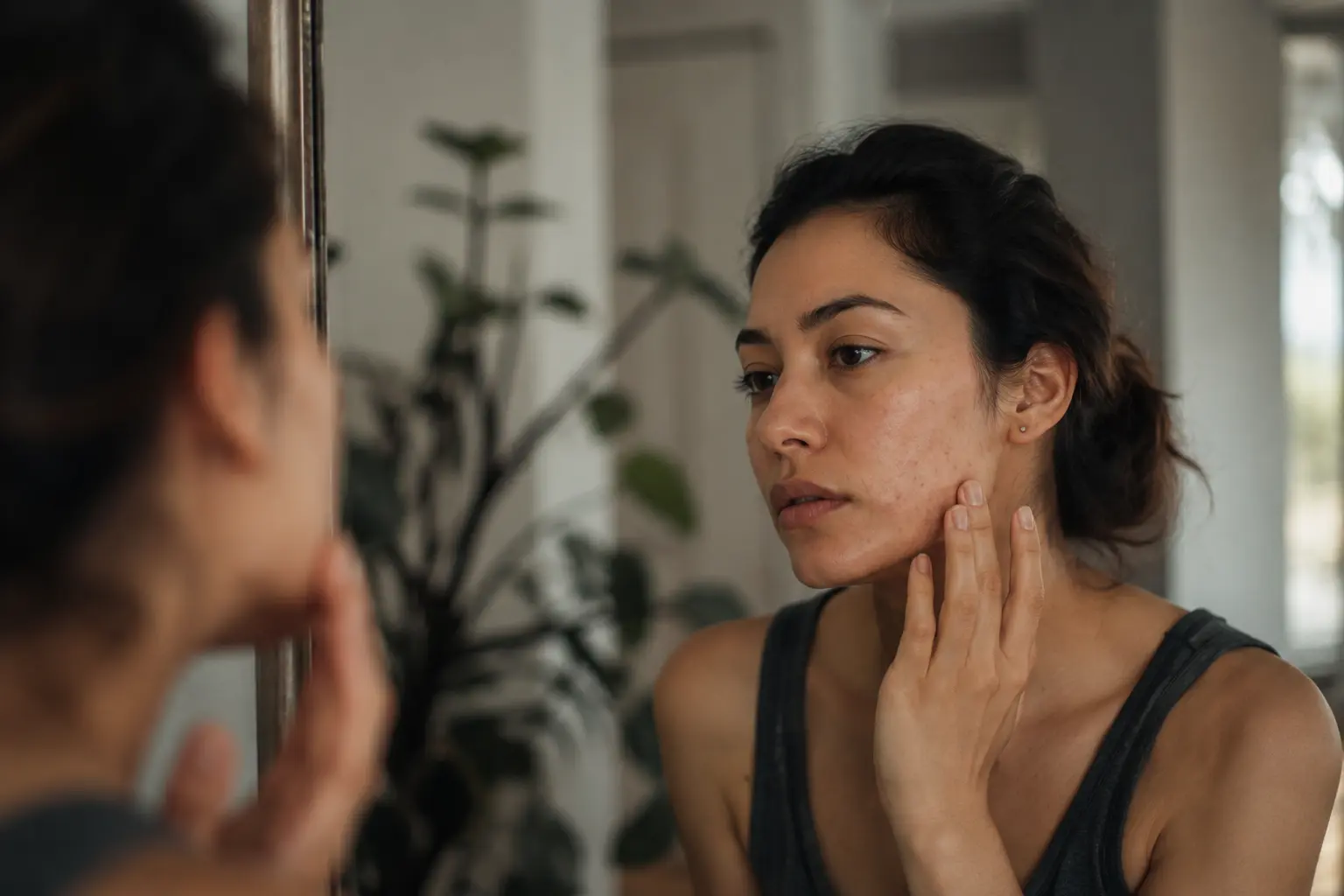
You wake up, look in the mirror, and there it is again: another cluster of painful bumps along your jawline that showed up right on schedule with your cycle, and you’re exhausted from wondering if hormonal skin changes are actually the culprit behind your acne or if you’re just making excuses.
Understanding hormonal acne
Hormonal acne is fundamentally different from the occasional pimple you might get from touching your face. It happens when fluctuations in hormone levels, particularly androgens, trigger your sebaceous glands to produce excess oil. This overproduction clogs your pores and creates an environment where bacteria thrive, leading to those deep, stubborn breakouts. Think of it like this: your hormones send a signal to your skin that says ‘produce more oil,’ and your skin obeys without question. The result is typically concentrated on your lower face, jawline, and neck, which is why you might notice a clear pattern emerging around specific times of your month. Menstrual cycles are the most common trigger, but pregnancy, menopause, and even certain medications like hormonal birth control or corticosteroids can shift your hormone levels enough to cause flare-ups. Beyond the biological factors, stress, high-glycemic foods, and certain skincare products can amplify these hormonal signals, making breakouts worse.
- Increased androgen levels play a significant role in hormonal acne development.
- Menstrual cycles, pregnancy, menopause, and certain medications can influence hormone levels and exacerbate acne.
- Stress, diet, and skincare products can also impact hormonal acne flare-ups.
Signs of hormonal acne
Identifying whether your acne is truly hormonal requires you to become a detective about your own skin. Start tracking your breakouts for two to three months. Do they appear consistently around the same time each month, typically five to ten days before your period starts? That’s a major red flag for hormonal acne. The texture matters too. Hormonal breakouts tend to be deeper and more cystic than surface-level whiteheads. They’re often painful to touch, feel like hard lumps under the skin, and don’t come to a head easily. Location is another clue: if your acne clusters primarily on your jawline, chin, and lower cheeks rather than spreading across your forehead or nose, hormonal factors are likely at play. You might also notice that your skin feels oilier during certain weeks of your cycle, or that your usual skincare routine suddenly stops working during specific times. Some people experience hormonal acne that’s resistant to topical treatments like benzoyl peroxide or salicylic acid, which is another indicator that the root cause is internal rather than external.
📘 Fix your day in under 2 minuteschoose where to begin:
Managing hormonal acne naturally
If you’re not ready to explore prescription options, there are several natural strategies that can genuinely help reduce hormonal acne flare-ups. Start with your skincare routine: use a gentle cleanser twice daily, avoid over-exfoliating, and incorporate niacinamide or zinc-based products that help regulate oil production without stripping your skin. Diet matters more than many people realize. Research suggests that high-glycemic foods like white bread, sugary drinks, and processed snacks can spike insulin levels, which in turn increases androgens. Try replacing these with whole grains, lean proteins, and plenty of vegetables for two to four weeks and observe if your skin improves. Stress management is equally important because cortisol, your stress hormone, can trigger sebum production. This might mean adding yoga, meditation, or even just thirty minutes of walking to your weekly routine. Hydration and sleep are non-negotiable: aim for eight hours nightly and drink at least two liters of water daily. Some people find that supplements like spearmint tea, saw palmetto, or omega-3 fatty acids help balance hormones naturally, though results vary. Track what works for your body specifically rather than following generic advice.
Professional treatment options
When natural approaches aren’t enough, dermatologists have several evidence-based treatments specifically designed to address hormonal acne. Oral contraceptives containing estrogen and progestin can regulate hormone fluctuations and reduce androgen activity, making them one of the most effective options for menstruating individuals. Common choices include Yaz, Ortho Tri-Cyclen, and others, though it typically takes three to six months to see significant improvement. Spironolactone is an anti-androgen medication that blocks androgens at the receptor level, effectively reducing oil production and breakouts. It’s particularly useful if you can’t take or don’t want hormonal birth control. Retinoids like tretinoin or adapalene work by normalizing skin cell turnover and reducing inflammation, and they’re especially effective when combined with hormonal treatments. For severe cases that haven’t responded to other treatments, isotretinoin (Accutane) is a powerful option that can potentially provide long-term remission or even cure hormonal acne, though it requires careful monitoring due to potential side effects. Your dermatologist will help determine which option aligns with your health history, lifestyle, and acne severity.
Lifestyle adjustments for clearer skin
Beyond skincare and medications, your daily habits significantly influence your skin’s hormonal balance and overall clarity. Regular exercise, particularly strength training and cardio, helps regulate insulin levels and reduces stress hormones, both of which impact acne. Aim for at least 150 minutes of moderate activity weekly. Sleep quality directly affects your skin because your body repairs and regenerates during deep sleep, and insufficient sleep elevates cortisol. Prioritize consistent bedtimes and aim for seven to nine hours nightly. Hydration isn’t just about drinking water; it supports your body’s natural detoxification processes and keeps your skin barrier healthy. Beyond water, herbal teas like green tea and spearmint have anti-inflammatory properties. Consider your environment too: change your pillowcase every two to three days to prevent bacteria buildup, avoid touching your face throughout the day, and be mindful of phone hygiene since your phone touches your face constantly. If you wear makeup, choose non-comedogenic products and remove them thoroughly each night. Finally, manage stress through activities you genuinely enjoy, whether that’s reading, spending time with friends, or creative hobbies, because chronic stress is a legitimate acne trigger that compounds hormonal imbalances.
Hormonal acne stems from hormone fluctuations, leading to excess oil production and breakouts mainly on the jawline and chin. Understanding the signs and managing it naturally or with professional treatments can help achieve clearer skin.
Can hormonal acne be cured completely?
While there’s no definitive cure for hormonal acne, it can be effectively managed through a combination of lifestyle adjustments, skincare routines, and medical treatments.
Does diet play a role in hormonal acne?
Certain dietary factors like high glycemic index foods and dairy products may exacerbate hormonal acne in some individuals. Maintaining a balanced diet can help reduce breakouts.
Others also read:
Disclaimer: This article is for informational purposes only and is not a substitute for professional medical advice. Always consult a healthcare professional for personal guidance.
This guide has been prepared and reviewed by the GlobalHealthBeacon editorial team and reflects current medical research as of 2026. It provides structured, evidence-based information to support informed health decisions.

