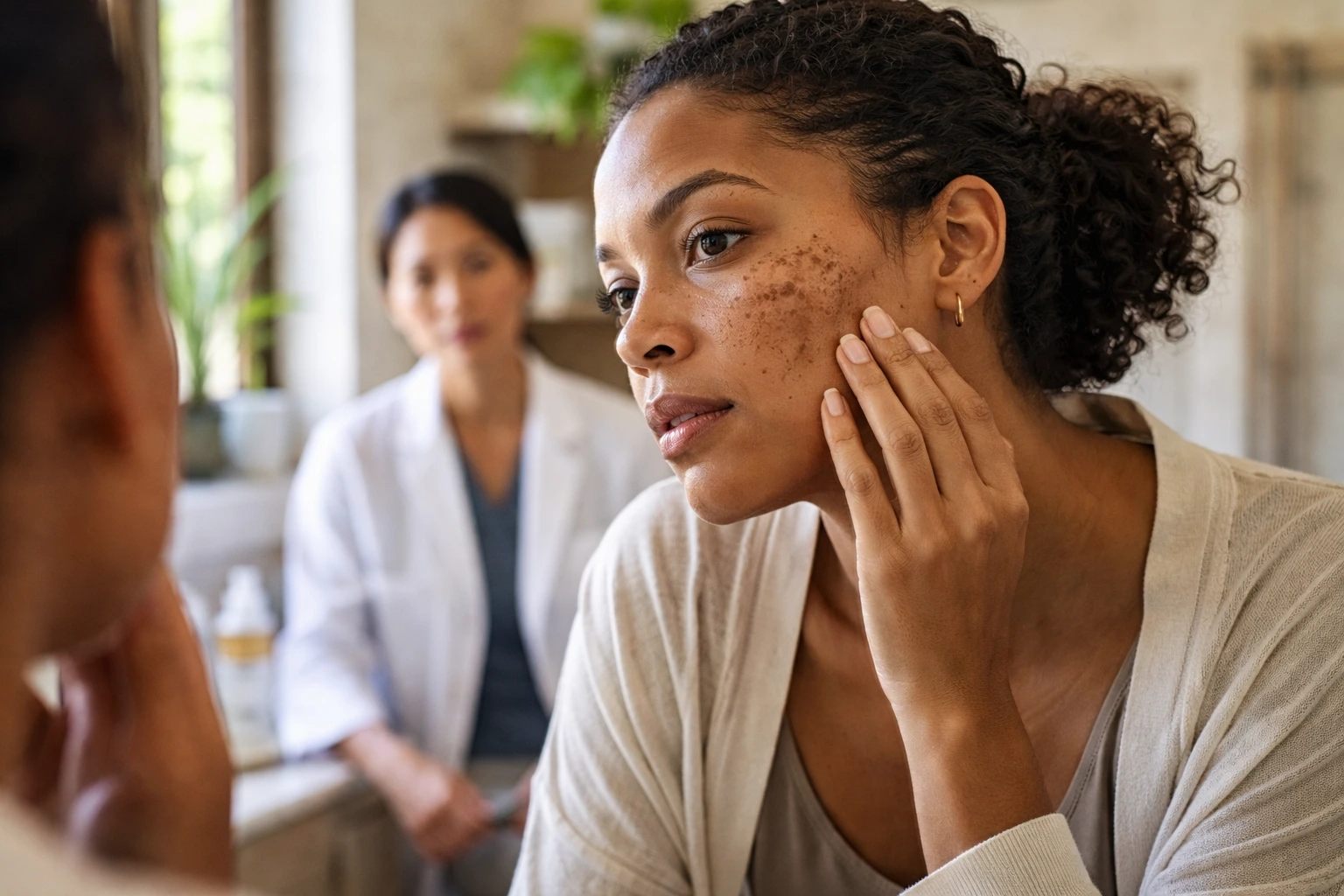
You catch your reflection in the mirror and those stubborn dark spots staring back at you feel like they’ve taken over your entire face, but hyperpigmentation treatment options are finally giving women real, visible results that actually stick.
Topical treatments for hyperpigmentation
When Sarah started noticing dark patches creeping across her cheekbones in her mid-thirties, she felt that familiar frustration of watching her skin change without permission. She wasn’t alone. Many women discover that topical treatments offer an accessible first line of defense against hyperpigmentation. Hydroquinone, a powerhouse ingredient found in prescription and over-the-counter creams, works by gently inhibiting melanin production at the source. Retinoids like tretinoin or adapalene speed up your skin’s natural cell turnover, essentially encouraging those pigmented cells to shed faster and reveal fresher skin underneath. Alpha hydroxy acids such as glycolic acid act like a gentle chemical exfoliant, dissolving the bonds between dead skin cells and revealing the more evenly toned skin hiding beneath. The beauty of these options is that they’re often affordable and can be incorporated into your evening routine without major lifestyle changes. Most women see gradual improvement over eight to twelve weeks of consistent use.
- Hydroquinone is a commonly used ingredient that inhibits melanin production, which causes dark spots.
- Retinoids work by speeding up cell turnover, promoting the fading of pigmented areas over time.
- Alpha hydroxy acids, such as glycolic acid, exfoliate the skin, revealing fresh, more evenly pigmented skin underneath.
Professional treatments for hyperpigmentation
Sometimes topical creams just aren’t cutting it, and that’s when many women turn to professional treatments. Chemical peels involve applying a carefully formulated acid solution to your face, which essentially dissolves the outer layers of skin where pigmentation sits deepest. Microdermabrasion uses tiny crystals or a diamond tip to physically buff away damaged skin, and while it sounds intense, most women describe it as feeling like a gentle massage. Laser therapy targets pigmented cells directly, breaking them apart so your body can naturally eliminate them. Women with deeper skin tones often prefer certain laser wavelengths to minimize risk of further pigmentation issues. These in-office procedures typically show results faster than topical treatments, sometimes within just a few sessions. The trade-off is cost and recovery time, but for stubborn spots that have resisted months of creams, the investment often feels worth it.
💬 Ready to feel better in 2 minutes?choose where to begin:
Natural remedies for hyperpigmentation
Not every woman feels comfortable with chemical ingredients or professional procedures, and that’s completely valid. Some prefer exploring natural remedies that have been used for generations. Aloe vera contains compounds believed to inhibit melanin production while soothing irritated skin. Green tea extract is packed with antioxidants and has shown promise in some studies for reducing pigmentation. Vitamin C serums brighten skin and may help fade spots over time, plus they work beautifully under sunscreen. Licorice root extract is another gentle option that some women swear by for evening out their complexion. The honest truth is that natural remedies typically work more slowly than prescription treatments, but they appeal to women who want a gentler, more holistic approach. Many find success combining a natural remedy with consistent sun protection, creating a sustainable routine they can stick with long-term.
Sun protection for preventing hyperpigmentation
Here’s the hard truth that every dermatologist will tell you: sun exposure is the number one culprit behind hyperpigmentation, and it undoes all your treatment progress faster than you’d think. UV rays trigger melanin production as a protective response, which means that dark spot you’ve been treating can darken again in just one afternoon at the beach. Daily broad-spectrum sunscreen with at least SPF 30 is non-negotiable, even on cloudy days when UV rays still penetrate through clouds. Many women find that mineral sunscreens feel lighter on their skin than chemical ones. Beyond sunscreen, consider protective clothing like lightweight long sleeves, wide-brimmed hats, and seeking shade during peak sun hours between ten in the morning and four in the afternoon. Think of sun protection not as a chore but as the foundation that makes every other treatment actually work. Without it, you’re essentially fighting an uphill battle.
Exploring a variety of hyperpigmentation treatment options can help women find the solution that works best for their skin. From topical treatments and professional procedures to natural remedies and sun protection, there are many ways to address this common skin concern.
Are over-the-counter products effective for treating hyperpigmentation?
Over-the-counter products containing ingredients like hydroquinone, retinoids, and alpha hydroxy acids can be effective for treating mild to moderate hyperpigmentation. It is best to consult with a dermatologist for personalized recommendations.
Can hyperpigmentation be completely erased?
While hyperpigmentation can be significantly improved with treatment, complete erasure may not always be possible. Consistent use of effective treatment options and diligent sun protection can help manage and reduce the appearance of dark spots over time.
Others also read:
Disclaimer: This article is for informational purposes only and is not a substitute for professional medical advice. Always consult a healthcare professional for personal guidance.
This article presents an experience-based perspective and has been reviewed by the GlobalHealthBeacon editorial team in 2026. It provides structured, evidence-based information to support informed health decisions.
