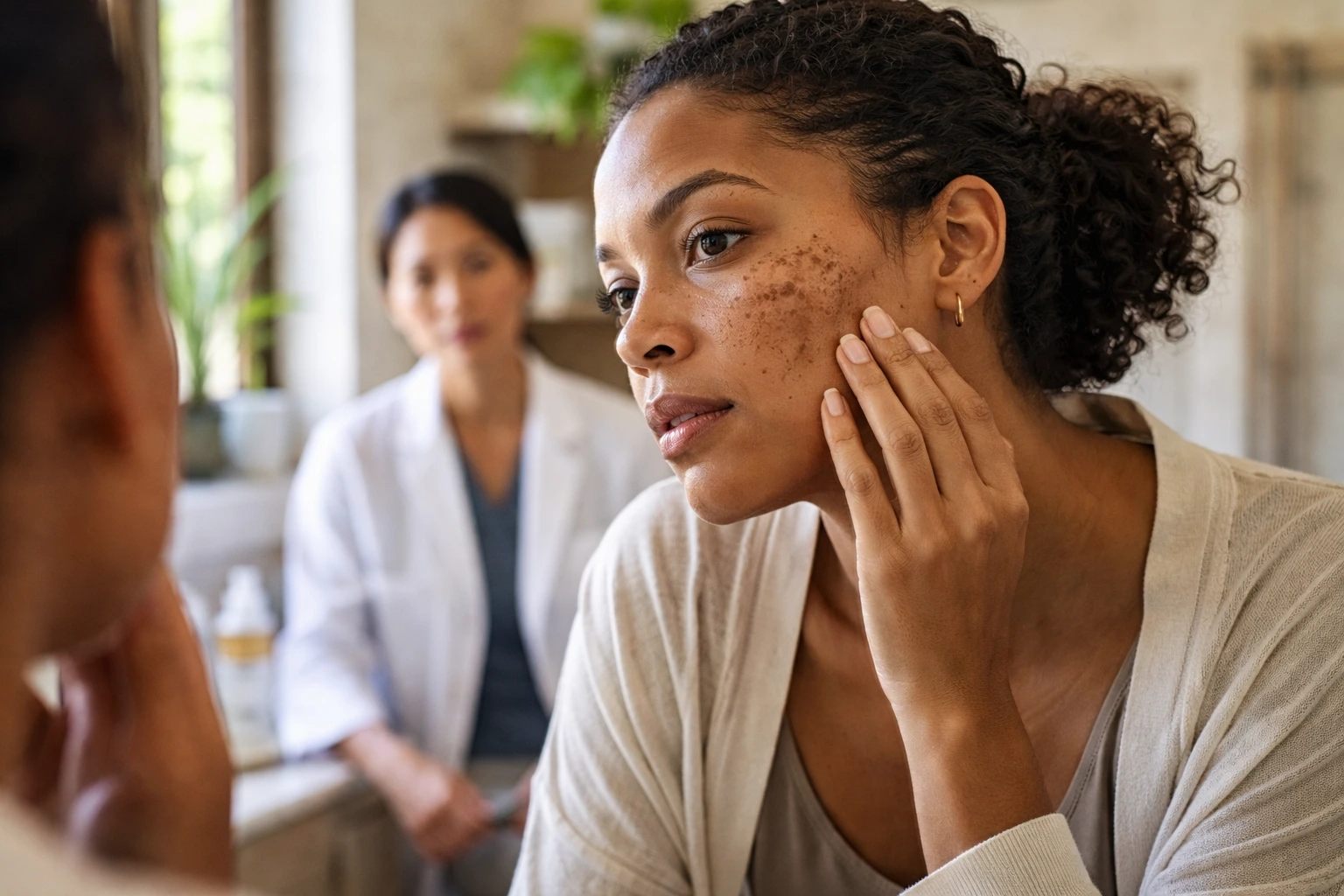
Those stubborn dark patches creeping across your face and hands are making you feel older than you actually are, and you’re tired of watching hyperpigmentation treatment options that promise results but leave you confused about what actually works.
Understanding hyperpigmentation
Hyperpigmentation happens when melanin, the pigment that gives your skin its color, accumulates unevenly in certain areas. Think of it like sun damage building up over decades. You might notice flat brown or gray patches on your cheeks, forehead, or the backs of your hands. For seniors, this is incredibly common because your skin has spent 60, 70, or 80 years exposed to the sun. Hormonal shifts during menopause can trigger it too. Even old acne scars or a minor injury from years ago can leave behind darker marks. The good news is understanding what causes these spots helps you prevent new ones from forming. Sun exposure remains the biggest culprit, but aging skin also loses its ability to distribute melanin evenly. Certain medications and medical conditions can worsen it as well. Once you recognize what triggers your hyperpigmentation, you can take control.
- Protect your skin from harmful UV rays by wearing sunscreen daily with at least SPF 30, and reapply every two hours if you are outdoors.
- Stay hydrated and maintain a healthy diet rich in antioxidants to support skin health and reduce inflammation.
- Consider topical treatments like retinoids, hydroquinone, or vitamin C serums to fade dark spots over time with consistent use.
Natural remedies for hyperpigmentation
Natural ingredients have been used for centuries to lighten skin, and many seniors find them gentler than prescription treatments. Aloe vera contains compounds that may inhibit melanin production when applied regularly. Green tea is packed with antioxidants that protect skin cells and reduce pigmentation. Licorice extract has been studied for its ability to fade dark spots without irritating sensitive skin. Apple cider vinegar contains acids that gently exfoliate and may lighten patches over weeks of use. Imagine applying a simple aloe vera gel each evening for three months and noticing your age spots gradually fade. That is realistic with consistent natural remedies. Turmeric mixed with yogurt creates a mask that many find soothing and effective. Vitamin E oil nourishes while supporting skin repair. The trade-off is patience. Natural remedies work slowly, often taking two to three months to show visible results. But they rarely cause irritation, making them ideal if your skin is sensitive or reactive to stronger treatments.
📘 Fix your day in under 2 minuteschoose where to begin:
Professional treatments for hyperpigmentation
When natural remedies and topical creams are not enough, dermatologists offer targeted procedures that deliver faster, more dramatic results. Chemical peels use controlled acids to remove the outer layer of skin where pigmentation sits, revealing clearer skin beneath. Laser therapy targets melanin directly, breaking it apart so your body can naturally eliminate it. Microneedling creates tiny controlled injuries that trigger your skin to produce collagen and fade dark spots as it heals. Microdermabrasion physically buffs away the darkened outer layer. A 68-year-old might try a series of three laser treatments spaced four weeks apart and see 70 to 80 percent improvement in age spots. Professional treatments work faster because they penetrate deeper than creams. Your dermatologist can assess your skin type and recommend the safest option for you. Some procedures require downtime, meaning redness or peeling for a few days. Others have minimal recovery. The investment is higher, but results are often dramatic and long-lasting when combined with sun protection.
Skincare routine for hyperpigmentation
A consistent routine is your foundation for fading hyperpigmentation and preventing new spots. Start each morning by gently cleansing with a mild, non-stripping cleanser that does not leave your skin tight or dry. Follow with a vitamin C serum, which brightens and protects against future damage. Apply a moisturizer suitable for your skin type, then sunscreen every single day, even on cloudy days. In the evening, cleanse again, then apply a retinoid product two to three times per week. Retinoids increase cell turnover, pushing out pigmented cells faster. Add niacinamide or kojic acid serums to target pigmentation directly. Alpha hydroxy acids used once or twice weekly gently exfoliate and fade spots. A typical routine takes ten minutes morning and night. Many seniors see improvement within six to eight weeks of consistent use. The key is not switching products constantly. Your skin needs time to adjust and respond. Write down what you use and how your skin reacts so you can track progress and know what works for you.
Lifestyle changes for hyperpigmentation prevention
Your skin reflects your overall health, so lifestyle habits matter as much as topical treatments. Regular exercise increases blood flow to your skin, delivering oxygen and nutrients that support healing and brightness. Aim for 30 minutes of activity most days, whether that is walking, swimming, or gentle yoga. Sleep is when your skin repairs itself. Seven to nine hours nightly allows your body to regenerate cells and fade pigmentation faster. Stress triggers inflammation and hormonal changes that worsen hyperpigmentation, so practice relaxation techniques like meditation or deep breathing. A balanced diet rich in fruits, vegetables, and omega-3 fatty acids supports skin barrier function. Limit sugar and processed foods, which accelerate aging and inflammation. Minimize exposure to environmental pollutants by using air purifiers indoors if you live in a polluted area. Be mindful of skincare products that contain irritating ingredients like alcohol or fragrance, which can trigger sensitivity and worsen pigmentation. Wear protective clothing like wide-brimmed hats and long sleeves when outdoors for extended periods. These habits work together to slow new pigmentation and support the effectiveness of treatments you are using.
Hyperpigmentation treatment options involve a multi-faceted approach including sun protection, natural remedies, professional treatments, a targeted skincare routine, and lifestyle modifications to address pigmentation concerns effectively.
Are natural remedies effective for treating hyperpigmentation?
Natural remedies like aloe vera, green tea, and apple cider vinegar can help lighten hyperpigmented skin gradually. While results may vary, these ingredients are generally safe and well-tolerated. Most seniors see noticeable fading after two to three months of consistent daily use.
What are the benefits of professional treatments for hyperpigmentation?
Professional treatments like chemical peels and laser therapy offer targeted solutions to address stubborn pigmentation issues. These procedures can provide noticeable improvements in skin tone and texture when performed by experienced dermatologists. Results are often visible after one to three sessions.
Others also read:
Disclaimer: This article is for informational purposes only and is not a substitute for professional medical advice. Always consult a healthcare professional for personal guidance.
This guide has been prepared and reviewed by the GlobalHealthBeacon editorial team and reflects current medical research as of 2026. It provides structured, evidence-based information to support informed health decisions.
