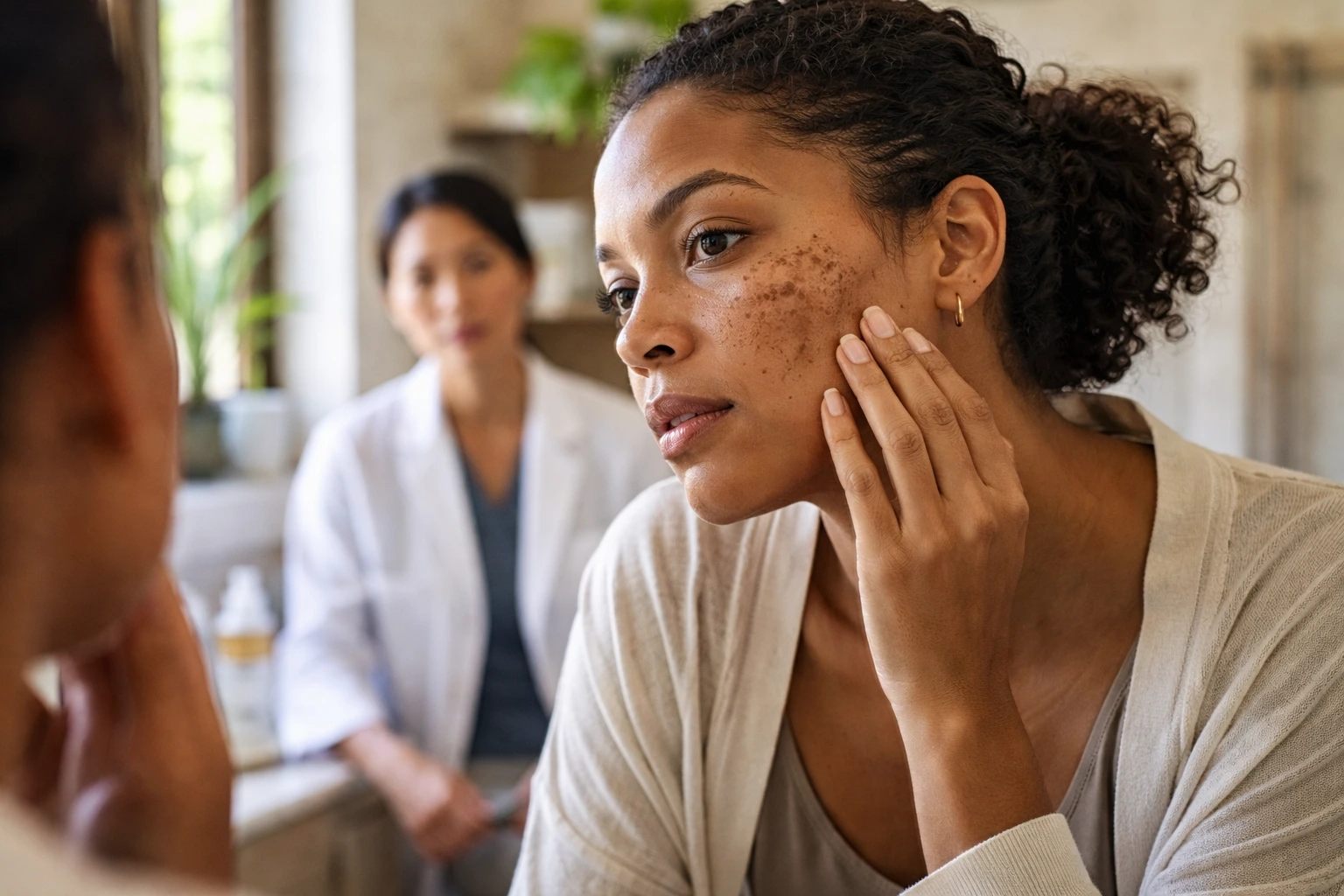
You look in the mirror and notice dark patches spreading across your face, and suddenly you’re googling hyperpigmentation treatment options at 2 AM because nothing feels normal anymore.
Understanding hyperpigmentation
Hyperpigmentation happens when your skin produces too much melanin in specific areas, creating dark patches or spots that stand out against your normal skin tone. Think of it like this: imagine your skin cells have a dimmer switch for color, and in certain spots, that switch gets stuck on high. This can happen for several reasons. Sun exposure is the most common culprit, especially if you’ve spent years in the sun without proper protection. Hormonal changes, particularly during puberty or when taking birth control, can trigger melanin overproduction. Even skin injuries like acne scars or cuts can lead to post-inflammatory hyperpigmentation as your skin heals. Young adults often notice these changes during their twenties and thirties, sometimes wondering where they came from. The condition is more common in people with darker skin tones, though it affects all ethnicities. Understanding what causes it is the first step toward managing it effectively.
Melanin production and skin color
Melanin is essentially your skin’s natural sunscreen, produced by cells called melanocytes deep within your skin’s epidermis. This pigment does more than just determine your skin tone; it actively protects your DNA from ultraviolet radiation. Your body produces two main types of melanin: eumelanin, which creates brown and black tones, and pheomelanin, which produces red and yellow tones. The balance between these two types determines your unique skin color and how your skin responds to sun exposure. When melanocytes work normally, melanin distributes evenly across your skin, creating uniform color. But sometimes these cells become overactive in specific areas, dumping excess melanin into localized spots. This is where hyperpigmentation begins. Genetics play a huge role here; if your parents experienced hyperpigmentation, you’re more likely to as well. Environmental factors like repeated sun exposure can also train your melanocytes to overproduce in certain areas. Understanding this process helps explain why some people develop dark spots while others don’t, even with similar sun exposure.
Effective hyperpigmentation treatments
Treatment options range from gentle natural approaches to medical interventions, and what works best depends on your skin type, the severity of hyperpigmentation, and your lifestyle. Natural remedies like aloe vera contain compounds that may gently lighten skin over time, though results are typically subtle and require consistent use for months. Licorice extract has shown promise in some studies for reducing melanin production without irritating sensitive skin. For faster, more noticeable results, dermatologists often recommend chemical peels that use acids like glycolic or salicylic acid to remove the outer skin layer where pigmentation concentrates. Laser therapy targets melanin directly, breaking up pigmented cells so your body can naturally clear them away; this works particularly well for stubborn spots. Prescription creams containing hydroquinone inhibit tyrosinase, the enzyme responsible for melanin production, effectively slowing down pigment formation. Retinoids, derived from vitamin A, speed up cell turnover and can fade hyperpigmentation while improving overall skin texture. Many young adults find that combining approaches works best; for example, using a prescription cream during the day with sunscreen and a gentle retinoid at night. A common mistake is expecting overnight results; most treatments require 8 to 12 weeks of consistent use before noticeable improvement appears.
- Schedule a consultation with a dermatologist who can assess your specific hyperpigmentation type and recommend personalized treatments based on your skin tone and medical history.
- Establish a consistent skincare routine using gentle, non-irritating products that support your treatment plan without causing inflammation that worsens pigmentation.
- Commit to your chosen treatment for at least 8 to 12 weeks before evaluating results, as melanin changes take time and patience is essential for success.
🔬 Science-backed benefits in 2 minuteschoose where to begin:
Preventing hyperpigmentation
Prevention is genuinely easier than treatment, which is why dermatologists emphasize sun protection as the foundation of any hyperpigmentation strategy. Daily sunscreen with at least SPF 30, applied generously and reapplied every two hours, blocks the UV rays that trigger melanocyte overactivity. But sunscreen alone isn’t enough; physical barriers matter too. Wearing wide-brimmed hats, seeking shade during peak sun hours (10 AM to 4 PM), and choosing lightweight long-sleeved clothing can dramatically reduce your risk. Young adults who spend time outdoors for work or recreation should treat sun protection like brushing their teeth: non-negotiable daily habit. Beyond sun exposure, managing hormonal triggers helps prevent new hyperpigmentation. If you’re on birth control and notice worsening pigmentation, discussing alternatives with your doctor might help. Stress management also plays a role; chronic stress elevates cortisol, which can trigger inflammatory skin responses and worsen existing hyperpigmentation. Regular exercise, adequate sleep, and stress-reduction practices like meditation or yoga support overall skin health. Avoiding picking at acne or skin injuries prevents post-inflammatory hyperpigmentation from developing in the first place. These preventive measures work best when combined into a lifestyle approach rather than isolated actions.
Professional consultation and follow-up
Working with a dermatologist transforms hyperpigmentation management from guesswork into a science-backed plan tailored specifically to you. During your consultation, a dermatologist examines your hyperpigmentation pattern, assesses your skin type, reviews your medical history, and discusses your lifestyle and sun exposure habits. This information helps them recommend treatments with the highest success rate for your situation. Some hyperpigmentation requires combination therapy; for example, a dermatologist might prescribe a hydroquinone cream for daytime use, a retinoid for nighttime application, and recommend quarterly laser treatments for stubborn spots. Regular follow-up appointments, typically scheduled every 4 to 8 weeks, allow your dermatologist to monitor your progress, adjust treatments if needed, and catch any adverse reactions early. Young adults sometimes feel embarrassed discussing skin concerns, but dermatologists have seen everything and approach hyperpigmentation as a straightforward medical issue. They can also screen for underlying conditions that might cause hyperpigmentation, ensuring you’re treating the root cause rather than just symptoms. Professional guidance significantly increases treatment success rates and helps you avoid wasting time and money on ineffective approaches.
The science simplified
Hyperpigmentation isn’t a sign that something is seriously wrong with your health; it’s simply your skin responding to triggers like sun exposure, hormones, or inflammation. The science behind it is straightforward: melanocytes overproduce pigment in specific areas, creating visible dark spots. What’s encouraging is that modern treatments work by either slowing melanin production, removing pigmented skin cells, or preventing future overproduction. Understanding the mechanisms behind these treatments helps you make informed decisions about your skin care. You’re not stuck with hyperpigmentation forever; countless young adults have successfully reduced or eliminated their dark spots through consistent treatment and prevention. The key is patience, consistency, and professional guidance. By staying informed about what causes hyperpigmentation and exploring evidence-based treatment options, you take control of your skin health rather than feeling helpless about changes you notice. This proactive approach, combined with daily sun protection and a solid skincare routine, positions you to manage hyperpigmentation effectively throughout your life.
Hyperpigmentation develops when melanocytes overproduce pigment, often triggered by sun exposure, hormonal changes, or skin inflammation. Understanding melanin production and the factors that influence it helps you recognize why hyperpigmentation occurs. Treatment options range from natural remedies to medical interventions like chemical peels, laser therapy, and prescription creams, with combination approaches often yielding the best results. Prevention through consistent sun protection and lifestyle management is equally important as treatment. Professional dermatological guidance ensures you receive personalized recommendations and monitoring for optimal outcomes.
Can hyperpigmentation be completely cured?
While complete eradication of hyperpigmentation may not be possible in all cases, modern treatments can significantly reduce its visibility and prevent further darkening of the skin. Many young adults achieve dramatic improvements with consistent treatment over 8 to 12 weeks. Some hyperpigmentation may return if sun protection isn’t maintained, which is why prevention remains crucial even after successful treatment.
Are home remedies as effective as medical treatments for hyperpigmentation?
Home remedies like aloe vera and licorice extract may show mild improvements over several months, but medical treatments such as chemical peels, laser therapy, and prescription creams are significantly more targeted and effective. Medical treatments work faster and produce more noticeable results, though they may require professional administration. Many dermatologists recommend combining gentle home remedies with professional treatments for optimal outcomes.
Others also read:
Disclaimer: This article is for informational purposes only and is not a substitute for professional medical advice. Always consult a healthcare professional for personal guidance.
This article has been prepared and reviewed by the GlobalHealthBeacon editorial team and is based on current medical research and published scientific literature available in 2026. It provides structured, evidence-based information to support informed health decisions.
← Back to the Main page on: hyperpigmentation treatment options
