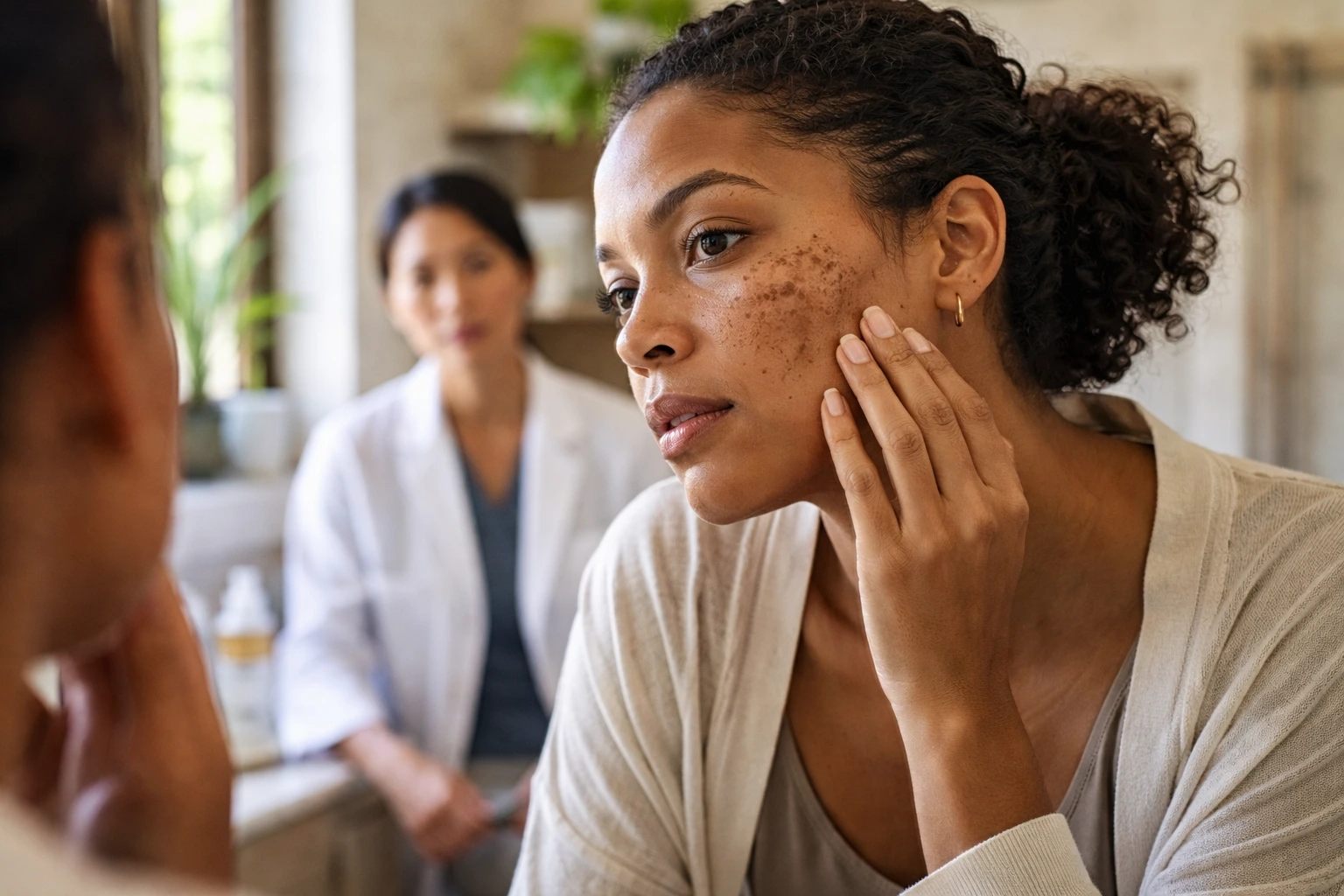
Those stubborn brown spots creeping across your face and hands are more than just a cosmetic nuisance, and you’re definitely not alone in feeling frustrated by them, but the good news is that hyperpigmentation treatment options have come a long way and can actually work.
Understanding hyperpigmentation
Hyperpigmentation develops when your skin produces too much melanin in specific areas, creating those dark patches or spots that seem to appear overnight. For seniors, this condition is incredibly common because decades of sun exposure accumulate over time, but hormonal shifts, certain medications, and even minor skin injuries can trigger it too. Think of it like this: your skin has memory, and years of sun exposure without proper protection leave their mark. Understanding what caused your hyperpigmentation matters because the treatment that works best depends on the root cause. Post-inflammatory hyperpigmentation from an old acne scar responds differently than sun-induced age spots. Some seniors develop melasma, those larger patches often triggered by hormonal changes or genetics, which requires a different approach than simple sun spots. Before you start any treatment, getting clear on what type of hyperpigmentation you have makes all the difference in choosing something that will actually work for your skin.
- Identify the triggers for your hyperpigmentation.
- Consult a dermatologist for an accurate diagnosis.
- Consider lifestyle changes to prevent further pigmentation.
Topical treatments
Topical treatments are often the first line of defense because they work directly on the affected areas and fit easily into your daily routine. Hydroquinone, a gold-standard ingredient, works by slowing melanin production and is available in different strengths depending on severity. Retinoids like tretinoin speed up cell turnover, helping your skin shed the darkened cells faster and revealing fresher skin underneath, though they do require patience and consistent use. Vitamin C serums brighten and protect simultaneously, making them gentler for sensitive senior skin while still delivering results. Many seniors find success combining treatments, for example using hydroquinone in the morning and a retinoid at night, but this requires careful monitoring to avoid irritation. A common mistake is expecting overnight results, topical treatments typically need six to twelve weeks of consistent application before you see meaningful improvement. Your dermatologist can recommend the right combination for your specific skin type and sensitivity level, and they can also adjust your routine if you experience any redness or dryness along the way.
📘 Fix your day in under 2 minuteschoose where to begin:
Professional procedures
Professional procedures offer faster, more dramatic results than topicals alone, which appeals to many seniors who want visible improvement without waiting months. Chemical peels use controlled acids to remove the outer layers of skin where hyperpigmentation sits, revealing clearer skin beneath, and they range from gentle to intensive depending on your goals. Laser therapy targets melanin directly, breaking it down so your body can naturally eliminate it, and newer laser technologies are gentler on aging skin with less downtime. Microdermabrasion physically exfoliates the skin surface, working well for mild to moderate spots, though it requires multiple sessions spaced weeks apart. A realistic example: a senior with significant sun damage might start with a series of three to four laser treatments spaced four to six weeks apart, seeing gradual improvement with each session. The trade-off is that professional procedures cost more upfront and may require time off for healing, but many seniors find the faster results worth the investment. Your dermatologist will discuss realistic timelines, potential side effects like temporary redness or sensitivity, and whether your skin type is suitable for each procedure before you commit.
Natural remedies
Natural remedies appeal to many seniors who prefer gentler approaches or want to complement professional treatments. Aloe vera contains compounds that may help lighten spots while soothing irritated skin, making it a good choice if your skin is sensitive or reactive. Green tea extract offers antioxidant protection and has mild skin-lightening properties, often found in serums or used as a simple brewed tea applied topically. Licorice root contains glabridin, which inhibits melanin production without the irritation that stronger chemicals sometimes cause. The reality is that natural remedies work more slowly than prescription treatments, typically requiring three to six months of consistent use before noticeable fading occurs. A practical approach many seniors use is applying natural remedies during the day and reserving stronger treatments like retinoids for evening, creating a layered strategy. Common mistakes include expecting natural ingredients to work as fast as professional treatments or using them inconsistently, which undermines results. Natural doesn’t automatically mean safe for everyone, so patch testing first and discussing any new ingredients with your dermatologist prevents unexpected reactions, especially if you’re already using other skincare products.
Sun protection
Sun protection isn’t just about preventing new spots, it’s about stopping existing hyperpigmentation from getting darker and more stubborn. UV rays trigger melanin production as a defense mechanism, so every unprotected sun exposure deepens the spots you already have, making treatment less effective. Broad-spectrum sunscreen with SPF 30 or higher should become non-negotiable, applied generously every morning and reapplied every two hours if you’re outdoors. Many seniors underestimate how much sunscreen they need, typically using only a quarter of the recommended amount, which significantly reduces protection. Physical barriers matter too, a wide-brimmed hat, long sleeves, and seeking shade during peak sun hours (10am to 4pm) provide additional defense that sunscreen alone cannot match. Consider this scenario: a senior treating hyperpigmentation with laser therapy but neglecting sun protection will see the spots return or darken again within months, essentially wasting the treatment investment. The most common mistake is thinking that once you’ve treated hyperpigmentation, you’re done, but sun exposure is relentless and will undo your progress if you’re not vigilant. Making sun protection a daily habit, regardless of weather or season, is what separates lasting results from temporary improvements.
Hyperpigmentation can be effectively managed through various treatment options such as topical products, professional procedures, natural remedies, and sun protection. Understanding the causes and choosing the right approach for your skin type are essential steps in achieving clearer and more even-toned skin.
Are natural remedies safe for treating hyperpigmentation?
Natural remedies can be safe and effective in managing hyperpigmentation, but results may vary. Consult with a dermatologist before trying any new skincare ingredients to ensure they are suitable for your skin type and condition.
How long does it take to see results from hyperpigmentation treatments?
The timeline for visible results from hyperpigmentation treatments varies depending on the severity of the condition and the chosen treatment method. Topical products may show improvement in a few weeks, while professional procedures could yield quicker outcomes.
Others also read:
Disclaimer: This article is for informational purposes only and is not a substitute for professional medical advice. Always consult a healthcare professional for personal guidance.
This guide has been prepared and reviewed by the GlobalHealthBeacon editorial team and reflects current medical research as of 2026. It provides structured, evidence-based information to support informed health decisions.
