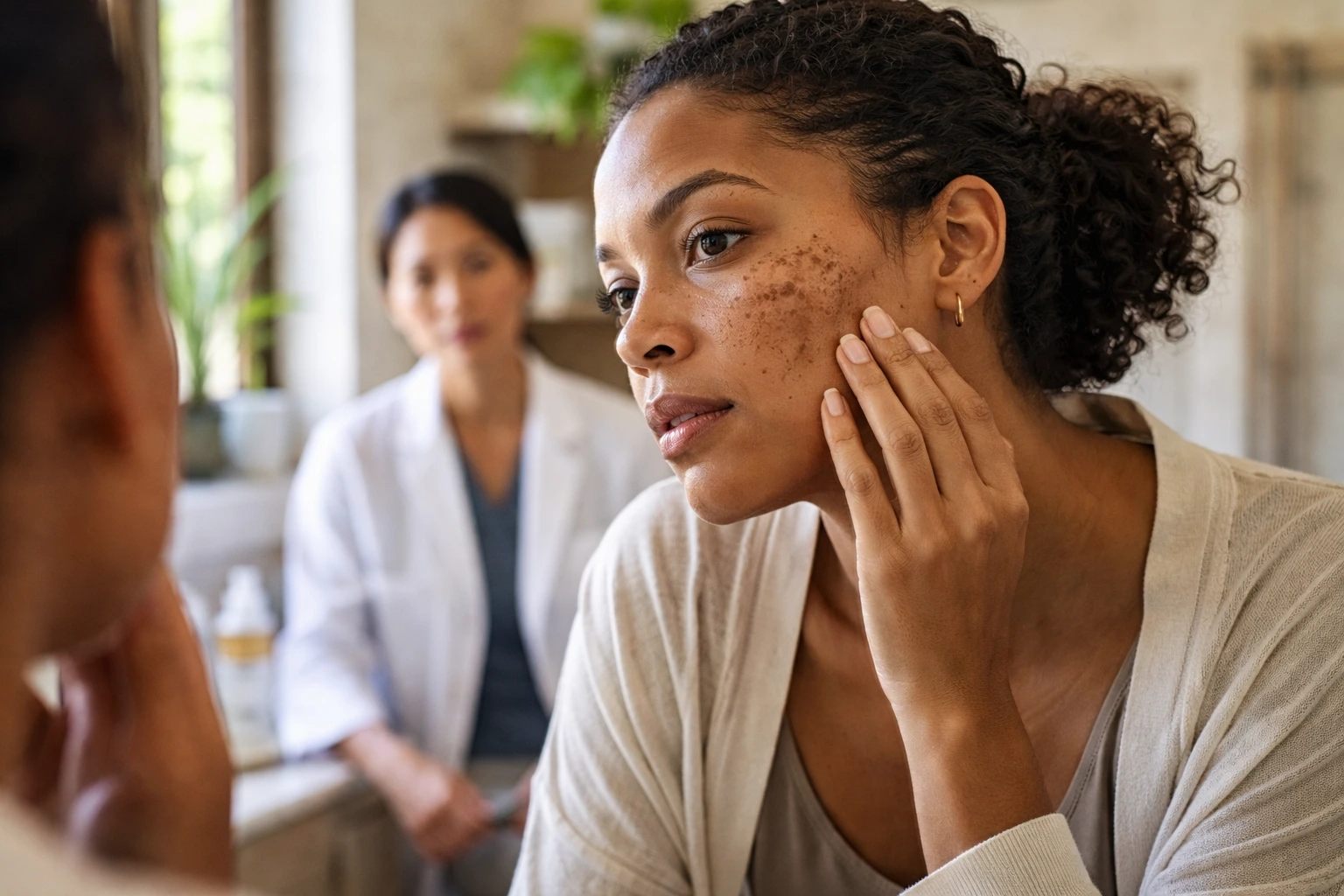
Dark spots won’t fade, your skin tone looks uneven no matter what you try, and you’re tired of feeling like you need concealer just to feel confident in your own skin – but there are hyperpigmentation treatment options that actually work, and women are using them to reclaim their complexion.
Chemical peels
Chemical peels work by dissolving the bonds between dead skin cells and revealing the fresh, unblemished layer underneath. Think of it like resetting your skin’s surface. When you apply a chemical peel, whether it’s a gentle glycolic acid or a stronger TCA formula, the solution penetrates the epidermis and triggers controlled exfoliation. Women report that after their first peel, they notice their dark spots look noticeably lighter within days. The process takes about 30 minutes, and you’ll experience some peeling and redness for 3 to 7 days afterward. Many women schedule peels every 4 to 6 weeks for cumulative results. A common mistake is expecting perfection after one treatment – hyperpigmentation typically requires a series of peels to fade significantly. The key is consistency and patience.
- Gentle exfoliation for brighter skin
- Improves skin tone and texture
- Reduces hyperpigmentation over time
Retinol creams
Retinol is a powerhouse ingredient that works at the cellular level to speed up skin turnover and boost collagen. When you use retinol, your skin cells regenerate faster, pushing pigmented cells to the surface where they shed naturally. Start with a low concentration, like 0.25 percent, especially if your skin is sensitive. Apply it two to three times per week at night, always followed by a thick moisturizer and sunscreen during the day. Women often see subtle improvements within 4 to 8 weeks, but real transformation takes 12 to 16 weeks of consistent use. A common pitfall is using too much too soon, which causes irritation and peeling that discourages continued use. The sweet spot is finding the lowest concentration that your skin tolerates well, then gradually increasing frequency. Many women pair retinol with vitamin C serums for enhanced brightening effects.
📘 Fix your day in under 2 minuteschoose where to begin:
Laser treatment
Laser treatments like IPL and fractional lasers target melanin directly, breaking down pigment deposits without damaging surrounding skin. During the procedure, the laser emits pulses of light that the dark spots absorb, heating and fragmenting the pigment so your body can naturally eliminate it. Most women need 3 to 6 sessions spaced 4 to 6 weeks apart for optimal results. The procedure feels like tiny rubber bands snapping against your skin, and you can return to normal activities immediately, though your skin may be slightly red for a few hours. Results are often visible within 2 to 3 weeks as spots darken before fading away. The main advantage is speed – laser delivers faster results than topical treatments. However, laser isn’t suitable for all skin tones, so consultation with a dermatologist is essential to ensure safety and efficacy for your specific skin type.
Topical serums
Topical serums are lightweight, fast-absorbing formulas packed with brightening actives like vitamin C, kojic acid, niacinamide, and licorice extract. These ingredients work by inhibiting tyrosinase, the enzyme responsible for melanin production, essentially telling your skin to produce less pigment. Apply serum to clean, dry skin in the morning and evening before moisturizer. Vitamin C serums are particularly popular because they brighten immediately while fading spots over weeks of use. Kojic acid is gentler and works well for sensitive skin, while niacinamide strengthens your skin barrier as it lightens. Women typically notice a subtle glow within 2 to 3 weeks and more noticeable spot fading after 8 to 12 weeks. A common mistake is expecting dramatic results from serums alone – they work best as part of a comprehensive routine that includes sunscreen. Many women layer serums strategically, using vitamin C in the morning and retinol at night for synergistic brightening effects.
Microdermabrasion
Microdermabrasion uses tiny crystals or a diamond-tipped wand to physically buff away the outermost layer of dead skin, revealing fresher skin beneath and stimulating collagen renewal. The procedure feels like a gentle sanding sensation and takes about 30 to 45 minutes. Your skin will be slightly red and sensitive for 24 hours afterward, but there’s no downtime like with chemical peels. Women typically see immediate brightening and smoother texture, with hyperpigmentation fading gradually over a series of treatments. Most benefit from monthly sessions for 3 to 6 months. After each session, your skin is more vulnerable to sun damage, so diligent sunscreen use is non-negotiable. A critical mistake is skipping post-treatment sun protection, which can actually worsen hyperpigmentation. Many dermatologists recommend combining microdermabrasion with topical treatments like retinol or vitamin C serums for enhanced results, as the exfoliation increases product penetration.
Chemical peels, retinol creams, laser treatments, topical serums, and microdermabrasion are highly praised by women for their effectiveness in treating hyperpigmentation. These options offer various benefits like exfoliation, skin brightening, and dark spot reduction. The best choice depends on your skin type, the severity of your hyperpigmentation, your budget, and how quickly you want results. Professional treatments like lasers and peels deliver faster outcomes, while at-home options like retinol and serums require patience but offer affordability and convenience. Many women find success combining approaches, such as using a professional peel quarterly while maintaining a daily retinol routine.
Are at-home hyperpigmentation treatments effective?
At-home treatments like retinol creams and topical serums can be effective for mild hyperpigmentation. However, for more severe cases, professional treatments like chemical peels and laser therapy may be more suitable.
How long does it take to see results with hyperpigmentation treatments?
The timeline for seeing results with hyperpigmentation treatments varies depending on the method used and the severity of the condition. Some treatments may show improvement in a few weeks, while others may take several months.
Others also read:
Disclaimer: This article is for informational purposes only and is not a substitute for professional medical advice. Always consult a healthcare professional for personal guidance.
This guide has been prepared and reviewed by the GlobalHealthBeacon editorial team and reflects current medical research as of 2026. It provides structured, evidence-based information to support informed health decisions.
