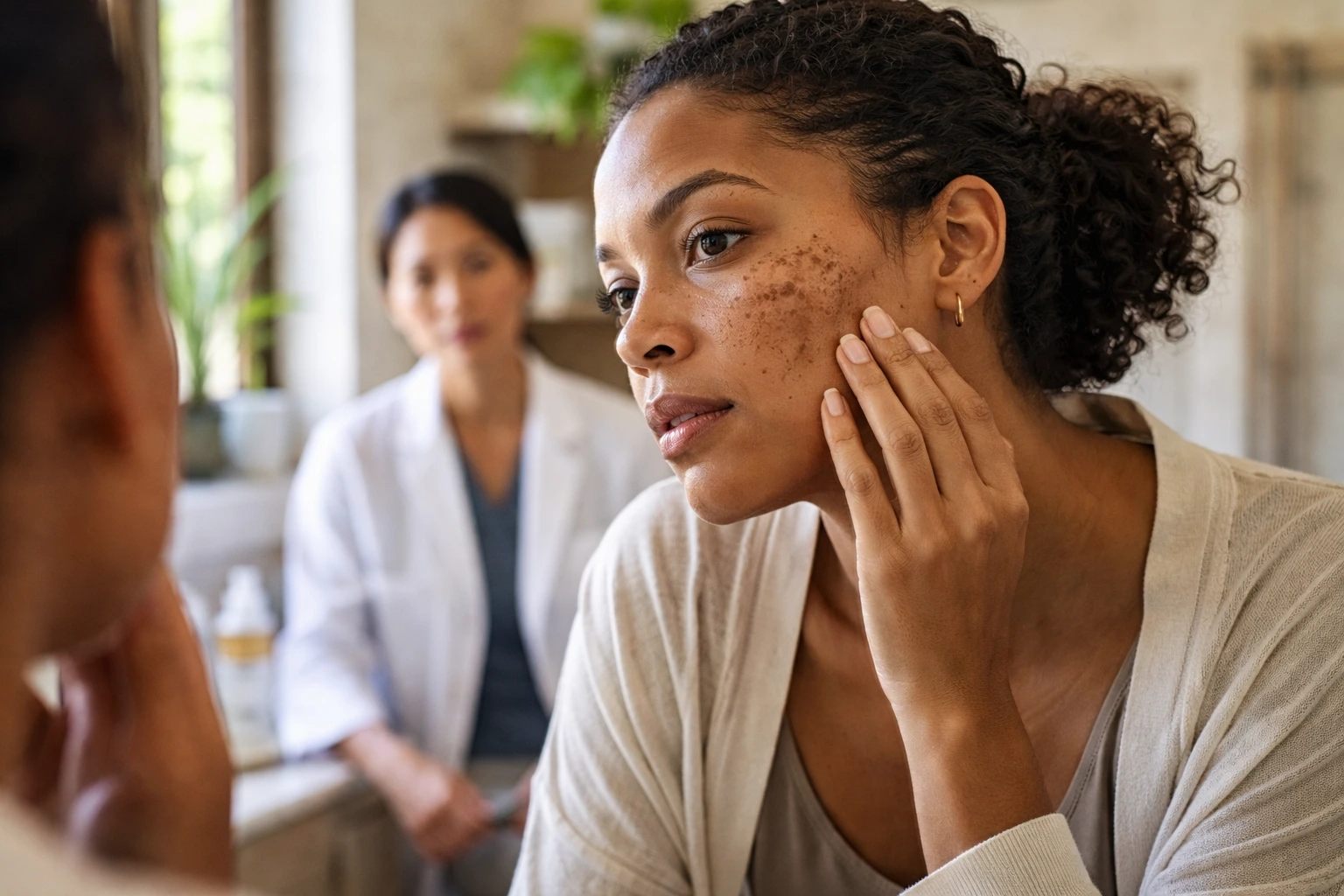
You look in the mirror and see those stubborn dark patches staring back at you, and no amount of concealer seems to cover what feels like a permanent mark on your skin, but understanding hyperpigmentation treatment options is actually the first real step toward getting your confidence back.
Understanding hyperpigmentation
Hyperpigmentation happens when your skin produces too much melanin, the pigment that gives your skin its natural color. Think of melanin as your skin’s built-in sunscreen and color provider. When something triggers your melanin-producing cells, called melanocytes, they go into overdrive and concentrate pigment in specific areas rather than spreading it evenly. This overproduction can be sparked by sun exposure, which damages skin cells and signals your body to produce more protective melanin. Hormonal shifts, particularly during pregnancy or while taking hormonal contraceptives, can also trigger this response. Inflammation from acne, eczema, or even aggressive skincare can leave behind darker patches as your skin heals. Understanding this biological process helps explain why the dark spots appeared in the first place and why treating them requires patience and the right approach.
Types of hyperpigmentation
Not all dark spots are created equal, and identifying which type you have matters tremendously for treatment success. Post-inflammatory hyperpigmentation appears after your skin heals from injury or inflammation, like acne scars or eczema flare-ups. It typically affects people with darker skin tones more noticeably and can fade naturally over time, though treatment speeds up the process. Melasma presents as larger, symmetric patches usually on the cheeks, bridge of nose, or forehead, and is strongly linked to hormonal changes and sun exposure. It’s particularly common in women of reproductive age and in people with darker skin types living in sunny climates. Sunspots, also called solar lentigines, are the result of cumulative sun damage over years and appear as discrete brown spots on sun-exposed areas. Each type responds differently to treatment, which is why a dermatologist’s assessment is invaluable before you invest time and money in any approach.
Treatment options overview
Your hyperpigmentation treatment journey has multiple pathways, and the right one depends on your specific situation, skin type, and how quickly you want results. Topical treatments work gradually by inhibiting melanin production at the cellular level, making them ideal for mild to moderate cases and for maintenance after procedures. Procedural treatments like chemical peels, laser therapy, and microdermabrasion work faster by removing or disrupting the pigmented layers of skin, stimulating your body’s natural healing response and collagen production. Many dermatologists recommend starting with topical treatments to assess your skin’s response, then adding procedures if needed. The timeline varies significantly: topical treatments might take eight to twelve weeks to show meaningful results, while laser treatments can show improvement within weeks but require multiple sessions. Your dermatologist will consider your skin tone, the depth of pigmentation, your medical history, and your lifestyle when recommending the best path forward.
- Consult with a dermatologist for an accurate diagnosis and to rule out other skin conditions.
- Follow a personalized treatment plan tailored to your specific pigmentation type and skin needs.
- Adhere to sun protection practices daily to prevent further pigmentation and protect treated skin.
- Monitor the progress and adjust the treatment as needed based on your skin’s response.
🔬 Science-backed benefits in 2 minuteschoose where to begin:
Topical treatments
Topical treatments are often the first line of defense because they’re accessible, non-invasive, and can be used at home as part of your daily routine. Hydroquinone, the gold standard ingredient, works by inhibiting the enzyme tyrosinase, which is essential for melanin production. It’s available in different strengths, from over-the-counter formulations at two percent to prescription-strength versions at four percent or higher. Retinoids increase cell turnover, helping shed pigmented skin cells faster while boosting collagen production for overall skin health. Vitamin C acts as an antioxidant and can help fade discoloration while brightening your complexion. Kojic acid and azelaic acid are gentler alternatives that work well for sensitive skin or those who don’t tolerate stronger ingredients. Most topical treatments require consistent use for at least eight to twelve weeks before you see noticeable improvement, and results plateau after about four to six months of use. The key is patience and consistency; skipping applications or stopping too early undermines the entire process.
Procedural treatments
When topical treatments alone aren’t delivering the results you want, procedural options offer more dramatic and faster improvements by working at deeper skin layers. Chemical peels use acids like glycolic, salicylic, or trichloroacetic acid to dissolve the outer layers of skin, removing pigmented cells and triggering controlled healing. Microdermabrasion uses tiny crystals or a diamond tip to physically exfoliate the skin surface, which works well for superficial pigmentation but may require multiple sessions. Laser therapy targets melanin directly using specific wavelengths of light that penetrate to the pigmented cells without damaging surrounding tissue. Different laser types suit different skin tones and pigmentation depths; your dermatologist will choose based on your individual needs. Intense pulsed light therapy works similarly to laser but uses broader wavelengths and is often gentler for sensitive skin. Most procedures require a series of treatments spaced weeks apart, and you’ll see progressive improvement rather than instant results. Recovery varies from minimal downtime with some lasers to several days of peeling and redness with stronger treatments.
Combination therapy
Many dermatologists have found that combining approaches yields superior results compared to using a single treatment method. A typical combination might start with a series of laser treatments to address deeper pigmentation, followed by topical treatments to maintain results and prevent recurrence. Some protocols use chemical peels monthly while patients use hydroquinone and retinoids at home, creating a comprehensive approach that tackles pigmentation from multiple angles. This strategy works because different treatments address different aspects of the problem: procedures remove existing pigmented cells and stimulate healing, while topical treatments prevent new pigmentation from forming and support skin barrier health. The combination approach also allows dermatologists to use lower concentrations of stronger ingredients, reducing irritation risk while maintaining efficacy. Your skin’s response to the first treatment often informs the next step, creating a dynamic plan that evolves with your progress. This personalized, layered approach typically produces the most dramatic and longest-lasting results, though it requires more time and financial investment than single treatments.
Understanding how hyperpigmentation treatments work empowers you to make informed decisions about your skin health and choose an approach that aligns with your goals and lifestyle. Whether you start with topical creams, explore procedural options, or combine multiple strategies, the biological mechanisms behind these treatments are well-established and effective. The journey to clearer, more even-toned skin is rarely overnight, but with the right treatment plan and consistent sun protection, meaningful improvement is absolutely achievable.
How long does it take to see results from hyperpigmentation treatments?
The timeline depends heavily on the treatment type and your individual skin response. Topical treatments typically show subtle improvements within four to six weeks, with more noticeable results by eight to twelve weeks of consistent use. Procedural treatments like laser or chemical peels often show visible improvement within two to three weeks after the first session, though full results emerge over several months as your skin completes its healing cycle and collagen remodels. Keep in mind that you may not see dramatic changes immediately; hyperpigmentation treatment is a gradual process that rewards patience and consistency.
Are hyperpigmentation treatments permanent?
While hyperpigmentation treatments can significantly lighten or eliminate existing dark spots, the results are not necessarily permanent because your skin can develop new pigmentation if the original triggers persist. Sun exposure remains the primary culprit for recurrence, which is why dermatologists emphasize daily broad-spectrum sunscreen as non-negotiable maintenance. Hormonal hyperpigmentation may return if hormonal triggers continue, and post-inflammatory hyperpigmentation can recur if your skin experiences new inflammation. Most people benefit from periodic maintenance treatments and consistent topical care to preserve their results long-term.
Others also read:
Disclaimer: This article is for informational purposes only and is not a substitute for professional medical advice. Always consult a healthcare professional for personal guidance.
This article has been prepared and reviewed by the GlobalHealthBeacon editorial team and is based on current medical research and published scientific literature available in 2026. It provides structured, evidence-based information to support informed health decisions.
← Back to the Main page on: hyperpigmentation treatment options
