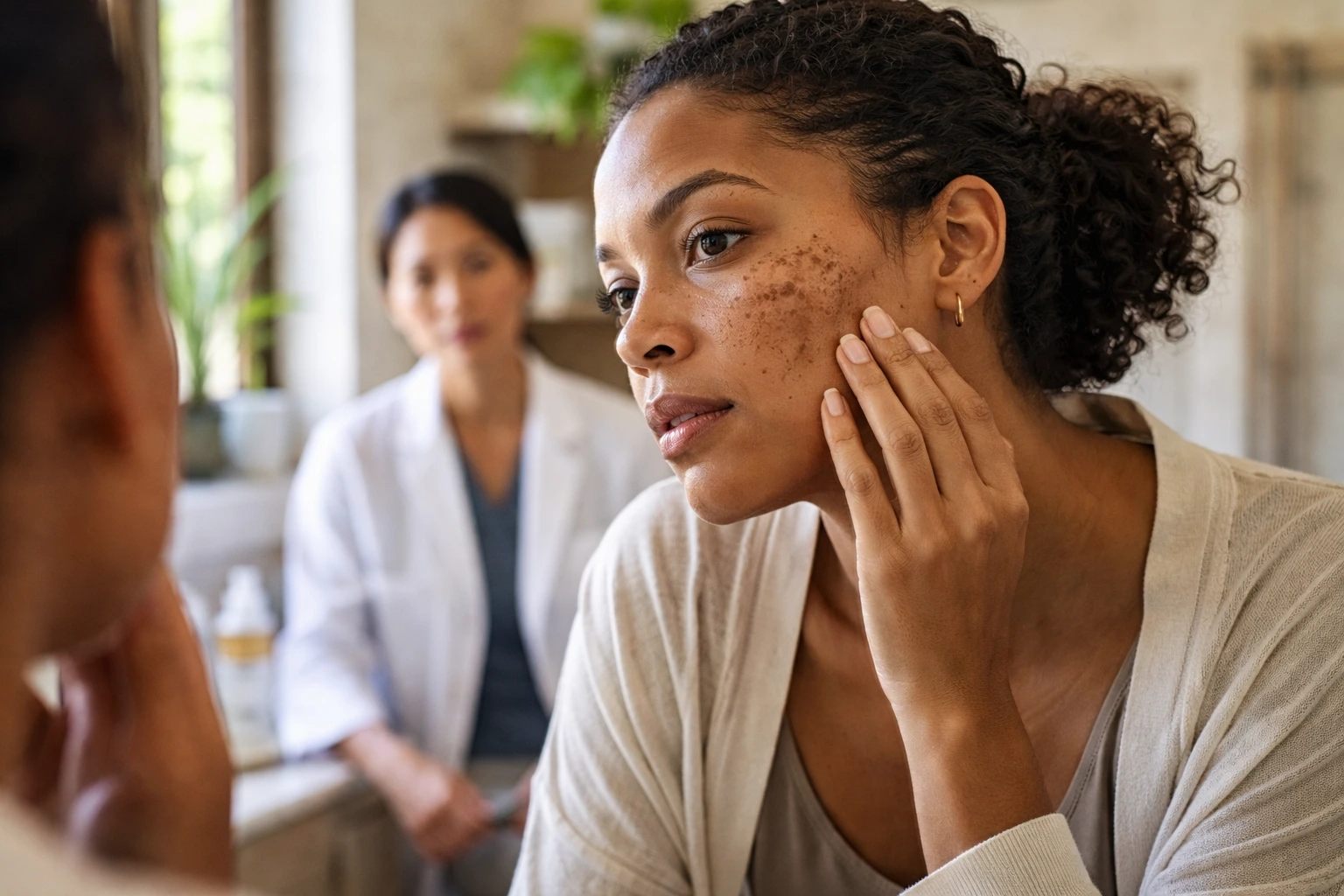
Those stubborn brown patches creeping across your face and hands aren’t just a cosmetic nuisance, they’re a sign your skin is telling a story, and understanding hyperpigmentation treatment options can finally help you take back control of how your skin looks and feels.
Understanding hyperpigmentation
Hyperpigmentation develops when your skin produces too much melanin, the pigment responsible for your skin’s color. Think of melanin as your skin’s natural sunscreen, but sometimes it goes into overdrive. This overproduction creates those frustrating dark patches, often appearing on the face, hands, or other sun-exposed areas. For seniors, this becomes increasingly common because decades of sun exposure accumulate over time. The process starts at the cellular level: when UV rays hit your skin, they trigger melanocytes (pigment-producing cells) to work harder, creating more melanin as a protective response. But sometimes this protective mechanism misfires, leaving behind patches that don’t fade even after sun exposure stops. Other triggers include hormonal shifts, certain medications like some blood pressure drugs, inflammation from skin injuries or acne, and even genetic predisposition. Understanding this biological process helps explain why the dark spots appeared in the first place and why prevention matters just as much as treatment.
Treatment options overview
The landscape of hyperpigmentation treatments has expanded significantly, offering seniors multiple pathways depending on severity and skin type. Topical creams work by inhibiting melanin production or accelerating skin cell turnover, making them ideal for mild cases you can manage at home. Chemical peels use controlled acids to dissolve the outer skin layers where excess pigment concentrates, revealing fresher skin beneath. Laser therapy targets pigmented cells directly with concentrated light energy, breaking down melanin clusters without damaging surrounding tissue. Microdermabrasion physically exfoliates the skin’s surface, encouraging new cell growth and fading discoloration gradually. For someone with age spots on their hands, a dermatologist might recommend starting with a gentler topical approach, then progressing to laser if needed. Each method works differently: some address melanin production itself, while others simply remove the pigmented skin layer so new, clearer skin emerges. The choice depends on how deep the pigmentation sits, your skin’s sensitivity, and how quickly you want results. Some seniors combine approaches for better outcomes, using a topical cream alongside periodic laser sessions.
Natural remedies and lifestyle changes
Many seniors prefer exploring gentler approaches first, and several natural compounds have scientific backing for fading hyperpigmentation. Vitamin C serums work by neutralizing free radicals and inhibiting an enzyme called tyrosinase, which melanocytes need to produce pigment. Licorice extract contains glabridin, a compound that blocks melanin formation at the cellular level. Alpha hydroxy acids (AHAs) from sources like glycolic acid gently dissolve the bonds holding dead skin cells together, revealing less pigmented skin underneath. A 65-year-old woman might start by applying a vitamin C serum each morning, then add sunscreen, and notice subtle fading over three to four months. Lifestyle factors matter enormously: sun exposure is the primary culprit, so consistent sunscreen use prevents new spots from forming. A healthy diet rich in antioxidants from berries, leafy greens, and nuts supports skin repair from within. Stress management through walking, meditation, or hobbies reduces inflammation that can worsen pigmentation. Proper hydration helps your skin cells function optimally and regenerate more efficiently. These approaches work slowly but gently, making them suitable for sensitive senior skin.
- Apply sunscreen with at least SPF 30 daily, reapplying every two hours if outdoors.
- Integrate antioxidant-rich foods into your diet such as blueberries, spinach, and almonds.
- Stay hydrated to support overall skin health and regeneration by drinking adequate water throughout the day.
🔬 Science-backed benefits in 2 minuteschoose where to begin:
Medical treatments
When natural remedies and lifestyle changes aren’t enough, prescription-strength treatments offer more dramatic results. Hydroquinone is a gold-standard depigmenting agent that works by suppressing melanin production at the enzyme level, often showing visible results within four to six weeks. Retinoids (vitamin A derivatives) accelerate skin cell turnover and boost collagen production, helping fade spots while improving overall skin texture. Corticosteroids reduce inflammation that can trigger or worsen pigmentation, particularly useful for post-inflammatory hyperpigmentation following acne or injury. For more resistant cases, intense pulsed light (IPL) therapy uses broad-spectrum light to target melanin, breaking it down into smaller particles your body naturally eliminates. Fractional laser resurfacing creates microscopic channels in the skin, triggering healing responses that fade pigmentation while stimulating collagen renewal. A 70-year-old man with stubborn liver spots might receive IPL treatments monthly for three to four sessions, seeing progressive lightening with each visit. These medical approaches work faster than natural remedies but require professional administration and careful monitoring for side effects like temporary redness or sensitivity.
Consulting a dermatologist
A dermatologist brings expertise that transforms guesswork into precision. During your consultation, they examine your skin under magnification, determining whether your pigmentation is epidermal (surface level), dermal (deeper), or mixed, which fundamentally changes treatment recommendations. They review your medical history, current medications, and skin sensitivities to avoid treatments that might trigger adverse reactions. A dermatologist can identify whether your hyperpigmentation stems from sun damage, melasma (a hormonal condition), post-inflammatory changes, or medication side effects, each requiring different approaches. They explain realistic timelines: surface pigmentation might fade in weeks, while deeper pigmentation takes months. They also discuss risks specific to your skin type, as darker skin tones face higher risks of post-inflammatory hyperpigmentation from certain procedures. Your dermatologist becomes your partner in this journey, adjusting treatment plans based on how your skin responds. Many seniors find this professional guidance invaluable because it eliminates trial-and-error, saving time and money while maximizing safety and results.
Preventive measures for future protection
Prevention truly is easier than treatment, and seniors who adopt protective habits now avoid future pigmentation problems. Daily sunscreen application is non-negotiable, not just for hyperpigmentation but for overall skin health and cancer prevention. Seek shade during peak sun hours (10 AM to 4 PM), wear protective clothing like long sleeves and wide-brimmed hats, and consider UV-blocking sunglasses. Managing chronic conditions like diabetes or thyroid disorders helps, as these can contribute to pigmentation changes. If you take medications that increase sun sensitivity, discuss timing with your doctor to minimize exposure during peak effect periods. A holistic skincare routine using gentle cleansers, moisturizers, and antioxidant products supports your skin’s natural barrier and healing capacity. Regular dermatology check-ups catch new pigmentation early when treatment is simplest. Some seniors use preventive retinoids or vitamin C serums year-round, not just for treatment but as maintenance. Think of prevention as an investment: the effort you invest now in sun protection and skincare prevents the frustration and expense of treating advanced hyperpigmentation later.
Hyperpigmentation, characterized by darkened skin patches from excess melanin, affects many seniors but responds well to treatment when you understand your options. Natural remedies like vitamin C and licorice extract offer gentle starting points, while lifestyle changes including consistent sunscreen use and stress management provide foundational support. For more significant results, medical treatments ranging from prescription creams to laser therapy deliver faster fading under professional guidance. Consulting a dermatologist ensures you receive personalized recommendations based on your specific pigmentation type and skin characteristics. Prevention through diligent sun protection and holistic skincare prevents future spots from forming, making this a manageable condition throughout your senior years.
Are natural remedies effective in treating hyperpigmentation?
Natural remedies like vitamin C serums and licorice extract can help fade hyperpigmentation to some extent but may not produce drastic results, particularly for deep or stubborn spots. These compounds work by inhibiting melanin production or gently exfoliating surface pigmentation, making them ideal for mild cases or prevention. Results typically appear over three to four months of consistent use. Combining natural remedies with preventive measures like daily sunscreen and a healthy diet enhances effectiveness. For severe or resistant hyperpigmentation, consulting a dermatologist about prescription creams or professional procedures yields faster, more dramatic improvements.
What are the risks associated with medical treatments for hyperpigmentation?
Medical treatments for hyperpigmentation, such as prescription creams or laser therapy, may carry risks including temporary skin irritation, redness, or sensitivity, particularly in the days following treatment. In some cases, especially for darker skin tones, treatments can paradoxically cause post-inflammatory hyperpigmentation if not performed carefully. Scarring is rare but possible with aggressive laser resurfacing if not done by experienced professionals. Prescription retinoids can cause peeling and increased sun sensitivity, requiring strict sunscreen adherence. Dermatologists mitigate these risks through careful patient selection, patch testing, and detailed pre-treatment counseling. They adjust treatment intensity based on your skin type and monitor healing to catch complications early.
Others also read:
Disclaimer: This article is for informational purposes only and is not a substitute for professional medical advice. Always consult a healthcare professional for personal guidance.
This article has been prepared and reviewed by the GlobalHealthBeacon editorial team and is based on current medical research and published scientific literature available in 2026. It provides structured, evidence-based information to support informed health decisions.
← Back to the Main page on: hyperpigmentation treatment options
