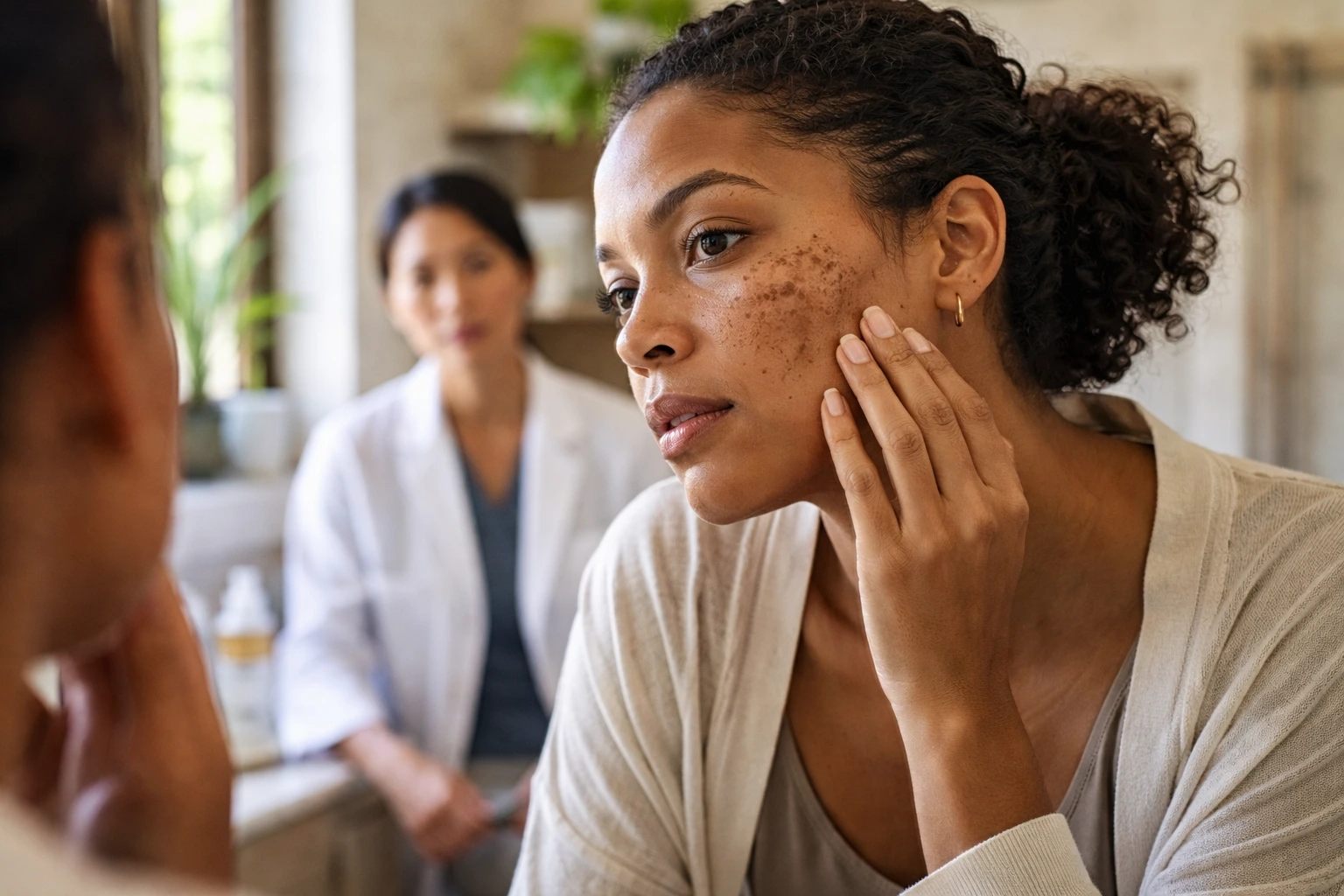
Those stubborn dark patches on your face and hands aren’t just cosmetic frustration, they’re a sign your skin has been through something, and finding the right hyperpigmentation treatment options can feel overwhelming when you’re navigating conflicting advice and endless product claims.
Understanding hyperpigmentation
Hyperpigmentation develops when melanin, the pigment responsible for skin color, accumulates unevenly in certain areas of the skin. Think of melanin as your skin’s natural sunscreen, produced by cells called melanocytes. When these cells become overactive or damaged, they pump out excess melanin in concentrated patches, creating those darker spots you see in the mirror. For seniors, this process often accelerates due to decades of cumulative sun exposure. A 65-year-old woman might notice brown spots appearing on her cheekbones and forehead, areas that received the most UV radiation over her lifetime. Sun exposure is the primary culprit, but hormonal shifts, certain medications, skin injuries from previous treatments, or even inflammatory conditions can trigger it. Understanding this biological mechanism helps explain why prevention and early intervention matter so much.
Treatment options overview
The medical field offers a spectrum of approaches to address hyperpigmentation, each working through different biological pathways. Topical creams containing hydroquinone inhibit tyrosinase, an enzyme essential for melanin production, essentially slowing down the melanocytes’ output. Chemical peels use acids like glycolic or salicylic acid to dissolve the outer skin layers where pigmentation concentrates, promoting cellular turnover. Laser therapy targets melanin directly with focused light energy, breaking down pigment clusters beneath the skin surface. Microdermabrasion physically exfoliates the epidermis, removing pigmented cells mechanically. More advanced options like fractional lasers create controlled micro-injuries that stimulate collagen remodeling while addressing pigmentation. Each method has different recovery times, effectiveness rates, and suitability depending on skin type and pigmentation depth. A dermatologist evaluates factors like skin tone, pigment location, and overall skin health to recommend the most appropriate approach for individual cases.
Effective treatments for seniors
Seniors often benefit from a layered approach combining gentle daily care with periodic professional treatments. Vitamin C serums work as antioxidants, protecting skin from free radical damage that worsens pigmentation, while also brightening existing spots over weeks of consistent use. Retinoids increase cell turnover, helping shed pigmented cells faster, though they require careful introduction since older skin can be more sensitive. Hydroquinone creams remain a gold standard, with concentrations ranging from two to four percent available over-the-counter or higher strengths by prescription. Gentle exfoliation using soft brushes or mild acids removes surface pigmentation without aggressive trauma. Sun protection becomes non-negotiable, as UV exposure darkens existing spots and creates new ones. Consider a 70-year-old man who starts with daily broad-spectrum SPF 30, adds a vitamin C serum in the morning, and uses a retinoid cream three nights weekly. After three months of consistency, his age spots noticeably fade. The key is patience and adherence, as skin cell turnover slows with age.
- Consult a dermatologist for personalized treatment recommendations based on your specific pigmentation pattern, skin type, and medical history.
- Follow a consistent skincare routine to maximize treatment effectiveness, applying products at the same time each day to build the habit.
- Stay hydrated and maintain a healthy diet rich in antioxidants for overall skin health, supporting your skin’s natural repair processes from within.
🔬 Science-backed benefits in 2 minuteschoose where to begin:
Side effects and risks
While hyperpigmentation treatments are generally safe, they carry potential side effects that seniors should understand before starting. Topical treatments may cause mild irritation, redness, or temporary dryness as skin adjusts. Hydroquinone, when used long-term, rarely causes ochronosis, a darkening of the skin, though this is uncommon with proper use and monitoring. Chemical peels can result in temporary peeling, sensitivity to sun, and in rare cases, post-inflammatory hyperpigmentation, especially in darker skin tones. Laser treatments may cause temporary swelling, crusting, or paradoxical darkening of spots before they fade. Retinoids commonly cause initial redness and flaking as skin acclimates. Microdermabrasion can leave skin temporarily raw and sensitive. Seniors with thin, fragile skin or those taking blood thinners need extra caution. A 68-year-old woman starting hydroquinone might experience mild stinging for the first week, which typically subsides. Discussing these possibilities with a healthcare provider beforehand allows you to distinguish normal adjustment from concerning reactions.
Long-term management
Successfully managing hyperpigmentation requires viewing it as an ongoing commitment rather than a one-time fix. The biological reality is that melanocytes can reactivate if triggers persist, so maintenance becomes essential. Daily broad-spectrum sunscreen with SPF 30 or higher prevents new pigmentation from forming, addressing the root cause of most age spots. Hydration supports skin barrier function, making treatments more effective and reducing irritation. A consistent skincare routine signals to your skin that you’re committed, and consistency itself improves outcomes. Many seniors find that after achieving desired results with professional treatments, they maintain them through monthly or quarterly touch-ups combined with diligent home care. A 72-year-old woman who underwent laser treatment for extensive sun damage might use a vitamin C serum daily, retinoid cream twice weekly, and sunscreen religiously, then return for a maintenance laser session annually. This integrated approach prevents regression and keeps skin looking clearer year after year.
Advanced treatment options
When conventional treatments plateau, advanced dermatological procedures offer more intensive solutions. Fractional laser therapy creates thousands of microscopic treatment zones, stimulating collagen while addressing pigmentation, with results visible over several weeks as skin remodels. Microneedling uses fine needles to create controlled micro-injuries, triggering the skin’s natural healing response and promoting collagen production while breaking up pigment. Intense pulsed light (IPL) therapy emits broad-spectrum light that targets melanin and hemoglobin simultaneously, effective for mixed pigmentation and redness. These procedures typically require multiple sessions spaced weeks apart and involve downtime ranging from a few days to a week. A 75-year-old with stubborn melasma might undergo four fractional laser sessions over three months, experiencing progressive fading as new collagen forms. These advanced options work best when combined with rigorous sun protection afterward, as new UV exposure can reverse gains. Dermatologists assess whether seniors are candidates based on skin health, healing capacity, and realistic expectations about results.
Understanding the science behind hyperpigmentation treatments empowers seniors to make informed decisions about their skin health. From everyday topical solutions like vitamin C and retinoids to advanced procedures like fractional lasers and microneedling, each approach targets melanin production or removal through distinct biological mechanisms. The most successful outcomes combine professional treatments with disciplined daily care, sun protection, and realistic expectations about timing and maintenance. Hyperpigmentation is manageable, though rarely permanently curable, making long-term consistency the true key to maintaining clearer, more even-toned skin.
Are hyperpigmentation treatments permanent?
Hyperpigmentation treatments can significantly fade dark spots, but permanence depends on ongoing sun protection and maintenance. The biological reality is that melanocytes can reactivate if UV exposure continues, so results require sustained effort. Many seniors maintain results through periodic touch-ups and consistent daily skincare, viewing it as part of their long-term routine rather than a one-time solution.
Can hyperpigmentation be completely cured?
Complete cure is rarely achievable because hyperpigmentation stems from melanocyte activity that can be triggered again by sun exposure or hormonal factors. However, effective management through treatments combined with rigorous sun protection and skincare can minimize visible spots and prevent new ones from forming, creating the appearance of clear skin with consistent effort.
Others also read:
Disclaimer: This article is for informational purposes only and is not a substitute for professional medical advice. Always consult a healthcare professional for personal guidance.
This article has been prepared and reviewed by the GlobalHealthBeacon editorial team and is based on current medical research and published scientific literature available in 2026. It provides structured, evidence-based information to support informed health decisions.
← Back to the Main page on: hyperpigmentation treatment options
