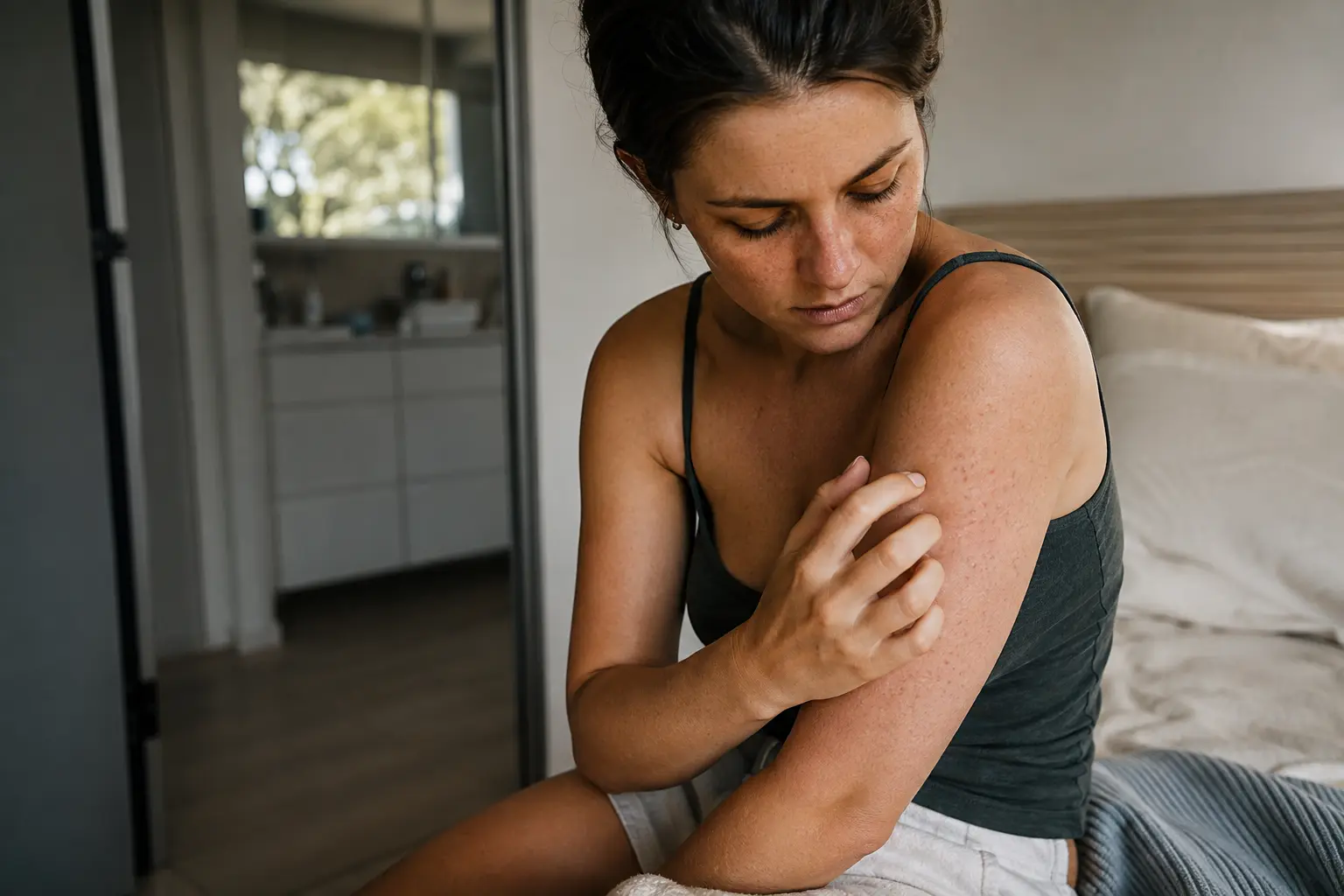
Those rough, bumpy patches creeping across your arms and legs feel like they’re mocking you, and you’re not alone in wondering if a solid keratosis pilaris routine can actually make them disappear.
Understanding keratosis pilaris
Keratosis pilaris, often called chicken skin, is something millions of young adults deal with but rarely talk about openly. The condition happens when keratin, a protective protein your body naturally produces, builds up around hair follicles and creates those characteristic small, rough bumps. Picture this: you’re getting ready for summer, excited to wear that sleeveless top, and suddenly you’re staring at your arms thinking about canceling plans. The bumps are usually harmless and painless, but they can feel incredibly frustrating when they show up on visible areas like your upper arms, thighs, or cheeks. Understanding what’s actually happening beneath your skin helps you stop blaming yourself and start taking action. These bumps aren’t a sign you’re not clean enough or that you’re doing something wrong. It’s simply your skin’s way of overproducing keratin, and the good news is that once you understand the mechanics, you can work with your skin instead of against it.
- Exfoliate gently to remove dead skin cells
- Use a moisturizer to keep the skin hydrated
- Avoid hot showers that can strip the skin of its natural oils
Uncovering skincare mistakes
Here’s where most young adults go wrong: they see those bumps and think aggressive action is the answer. You grab that rough loofah or body scrub, scrub hard, and feel like you’re finally doing something productive. But then your skin gets angrier, redder, and the bumps seem even more pronounced. This is the mistake trap so many fall into. Picking at the bumps, using harsh chemical peels without guidance, or switching products every week because you’re desperate for results actually makes keratosis pilaris worse. Your skin barrier gets compromised, inflammation increases, and suddenly you’re dealing with irritation on top of the original condition. Another common mistake is skipping moisturizer because you think oily products will make bumps worse. The reality is the opposite: dehydrated skin actually worsens keratosis pilaris. Hot showers feel amazing, but they strip away your skin’s natural protective oils, leaving it dry and more prone to visible bumps. The key is understanding that gentleness, consistency, and patience are your actual weapons here, not force.
💬 Ready to feel better in 2 minutes?choose where to begin:
Embracing a routine for better skin
Building a keratosis pilaris routine that actually works starts with committing to consistency rather than chasing quick fixes. Imagine waking up and following the same gentle steps every single day, knowing that each action is working toward smoother, calmer skin. Your routine should include gentle exfoliation using products with alpha hydroxy acids or urea, applied two to three times weekly, not daily. After exfoliating, apply a rich moisturizer while your skin is still slightly damp to lock in hydration. This is non-negotiable. Within two to three weeks of consistent effort, you’ll start noticing the bumps feel softer and look less angry. By two months, many young adults report significant improvement in texture and appearance. The routine becomes something you look forward to, a form of self-care that shows results. Some people add a hydrating body oil or cream with ceramides to their nighttime routine for extra nourishment. The point isn’t to have a complicated ten-step process. It’s about finding three to four products that work for your skin and using them faithfully, even when you don’t see immediate changes.
The journey to skin confidence
Dealing with keratosis pilaris is honestly a mental game as much as a physical one. You start this journey feeling self-conscious, maybe avoiding certain clothes or declining beach invitations, and somewhere along the way with the right routine, something shifts. Your skin starts improving, yes, but more importantly, you stop obsessing over it. You realize that most people aren’t scrutinizing your skin the way you are. Young adults who stick with their keratosis pilaris routine for three to four months often report not just smoother skin, but a genuine boost in confidence. They wear sleeveless shirts without thinking twice. They stop comparing their skin to filtered Instagram photos. They accept that their skin has a story and a texture that’s uniquely theirs. The journey teaches you patience, self-compassion, and the power of showing up for yourself consistently. It’s not about achieving perfect skin. It’s about respecting your skin enough to care for it gently and reaping the rewards of that commitment. That’s where real confidence comes from.
Exploring the world of keratosis pilaris routines uncovers common mistakes, the importance of a consistent skincare routine, and the journey towards skin confidence for many young adults.
Can keratosis pilaris be cured?
While there is no cure for keratosis pilaris, establishing a proper skincare routine can help manage the condition and improve skin appearance.
Are there specific ingredients to look for in skincare products for keratosis pilaris?
Look for products that contain gentle exfoliating ingredients like alpha hydroxy acids or urea, as well as moisturizers with ingredients such as ceramides or hyaluronic acid to help improve skin texture.
Others also read:
Disclaimer: This article is for informational purposes only and is not a substitute for professional medical advice. Always consult a healthcare professional for personal guidance.
This article presents an experience-based perspective and has been reviewed by the GlobalHealthBeacon editorial team in 2026. It provides structured, evidence-based information to support informed health decisions.
