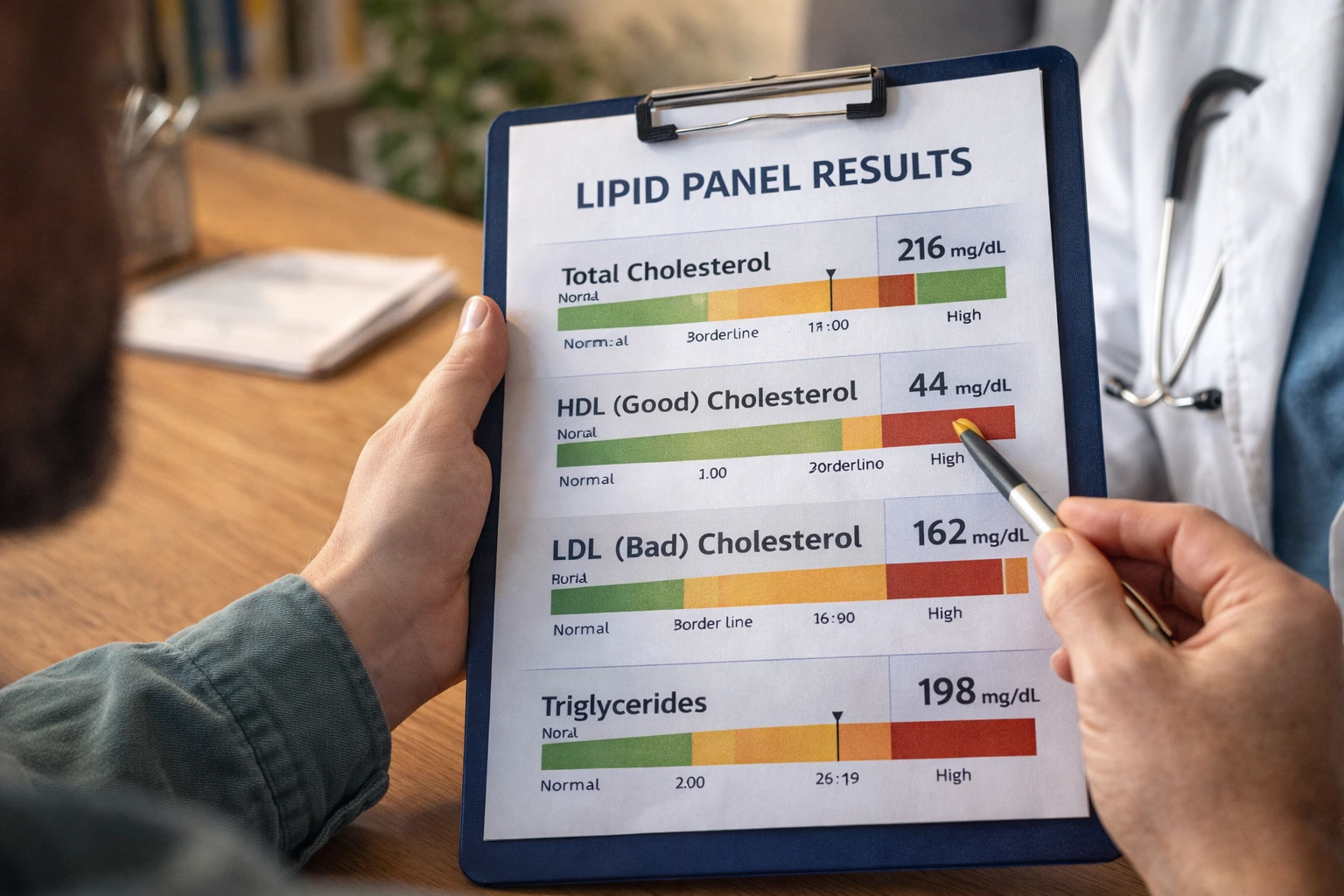
Your doctor hands you a lab report filled with numbers and abbreviations, and suddenly you’re staring at words like LDL and triglycerides wondering if you should be worried or relieved, so let’s cut through the confusion and get your lipid panel results explained in plain language that actually makes sense.
Interpreting lipid panel results
When you receive your lipid panel results, you’re looking at a snapshot of how well your cardiovascular system is functioning. Think of it like a health report card for your heart and arteries. Your lipid panel measures four key markers, and each one tells a different part of the story. Total cholesterol adds up everything circulating in your blood. LDL cholesterol, the troublemaker, sticks to artery walls and builds up over time like sediment in a pipe. HDL cholesterol works like a cleanup crew, removing that buildup. Triglycerides are another fat type that, when elevated, signals your body isn’t processing energy efficiently. For seniors, these numbers become increasingly important because decades of lifestyle habits show up in these results. A typical healthy total cholesterol sits below 200 mg/dL, LDL below 100 mg/dL, HDL above 40 mg/dL for men and 50 mg/dL for women, and triglycerides below 150 mg/dL. But your personal targets depend on your individual risk factors, medical history, and what your doctor recommends based on your complete health picture.
- Total cholesterol: The sum of all the cholesterol in your blood. High levels may indicate an increased risk of heart disease.
- LDL cholesterol: Known as ‘bad’ cholesterol, high levels can lead to a buildup of plaque in your arteries, increasing the risk of heart disease.
- HDL cholesterol: Considered ‘good’ cholesterol, higher levels are beneficial as they help remove LDL cholesterol from the bloodstream.
- Triglycerides: A type of fat in the blood. Elevated levels can contribute to hardening of the arteries.
- Understanding the optimal ranges for each of these markers is essential for maintaining heart health.
Factors influencing lipid levels
Your lipid numbers aren’t carved in stone. They shift based on what you eat, how much you move, your family history, medications you take, and even your stress levels. Imagine two seniors with identical genetics but different lifestyles. One eats fried foods regularly, sits most of the day, and carries extra weight. The other walks daily, fills their plate with vegetables and fish, and maintains a healthy weight. Their lipid panels will look dramatically different despite starting with the same genetic blueprint. Diet plays a massive role, especially saturated fats and trans fats that push LDL higher. Exercise, even moderate activity like 30 minutes of walking most days, raises protective HDL cholesterol and lowers triglycerides. Age itself affects lipid levels, which is why your doctor may adjust targets as you get older. Hormonal changes, sleep quality, and how you handle stress all influence these numbers too. Some medications can raise cholesterol as a side effect, while others help lower it. Understanding these factors means you have real control over improving your results through lifestyle choices.
📘 Fix your day in under 2 minuteschoose where to begin:
Managing abnormal lipid levels
If your results come back outside the healthy range, you’re not facing a dead end. Your doctor will work with you to create a management plan tailored to your situation. Some people respond beautifully to lifestyle changes alone. A 72-year-old woman might lower her LDL by 30 points just by swapping butter for olive oil, adding more beans to her diet, and starting a walking routine. Others need medication alongside lifestyle changes to reach their targets. Statins are the most commonly prescribed cholesterol medications, and they work by blocking the enzyme your liver uses to make cholesterol. Your doctor might also recommend other medications like ezetimibe, which reduces cholesterol absorption, or PCSK9 inhibitors for those with very high cholesterol. The key is consistency. Taking your medication as prescribed, attending follow-up appointments, and making sustainable dietary changes work together. Many seniors worry about side effects, but your doctor can adjust dosages or try different medications if problems arise. Regular blood work every three to six months helps track whether your current approach is working or needs adjustment.
Preventive measures for heart health
Heart disease develops slowly over decades, which means prevention starts now, regardless of your current lipid numbers. Seniors have a real advantage: you can see the results of your past choices in your lipid panel, and you still have time to change the trajectory. A heart-healthy diet emphasizes whole grains, fatty fish rich in omega-3s, nuts, seeds, olive oil, and plenty of colorful vegetables. Limit red meat, processed foods, and added sugars. Exercise doesn’t mean running marathons. Brisk walking, swimming, cycling, or even dancing for 150 minutes weekly strengthens your heart and improves cholesterol profiles. Weight management matters because excess body fat, especially around the midsection, drives up triglycerides and LDL. Smoking damages artery walls and worsens lipid imbalances, so quitting brings immediate benefits. Stress management through meditation, hobbies, social connection, or counseling reduces inflammation that damages arteries. Sleep quality affects metabolism and cholesterol production, so aim for seven to nine hours nightly. These preventive measures work synergistically, meaning each healthy choice amplifies the benefits of others.
Seeking professional guidance
Your lipid panel results are just one piece of information. Your doctor interprets them within the context of your age, family history, existing conditions like diabetes or high blood pressure, and your overall cardiovascular risk. A cholesterol level that concerns one person might be acceptable for another based on these factors. Regular consultations every six to twelve months help you stay on track and adjust your plan as needed. Bring your questions to appointments, even if they seem basic. Ask why your doctor recommends specific targets, what lifestyle changes would help most, and whether your current medications are the best fit. If you experience side effects from cholesterol medications, tell your doctor immediately. Many alternatives exist, and finding the right one matters for long-term compliance. Consider asking for a referral to a registered dietitian who specializes in heart health. They can create personalized meal plans that fit your preferences and lifestyle. Building a healthcare team that understands your goals and concerns gives you the best chance of maintaining healthy lipid levels and preventing heart disease as you age.
Understanding your lipid panel results, including total cholesterol, LDL cholesterol, HDL cholesterol, and triglycerides, is vital for managing your heart health as a senior. Lifestyle modifications, medication, and regular follow-ups with your healthcare provider play a crucial role in preventing heart disease and maintaining optimal well-being.
What should I do if my lipid panel results are abnormal?
If your lipid panel results are outside the optimal range, consult your healthcare provider for personalized recommendations. Your doctor may suggest lifestyle changes or prescribe medications to help manage your lipid levels.
How often should seniors get a lipid panel test?
Seniors should discuss the frequency of lipid panel tests with their healthcare provider. In general, it is recommended to have a lipid panel test at least once every five years, or more frequently based on individual risk factors.
Others also read:
Disclaimer: This article is for informational purposes only and is not a substitute for professional medical advice. Always consult a healthcare professional for personal guidance.
This guide has been prepared and reviewed by the GlobalHealthBeacon editorial team and reflects current medical research as of 2026. It provides structured, evidence-based information to support informed health decisions.
