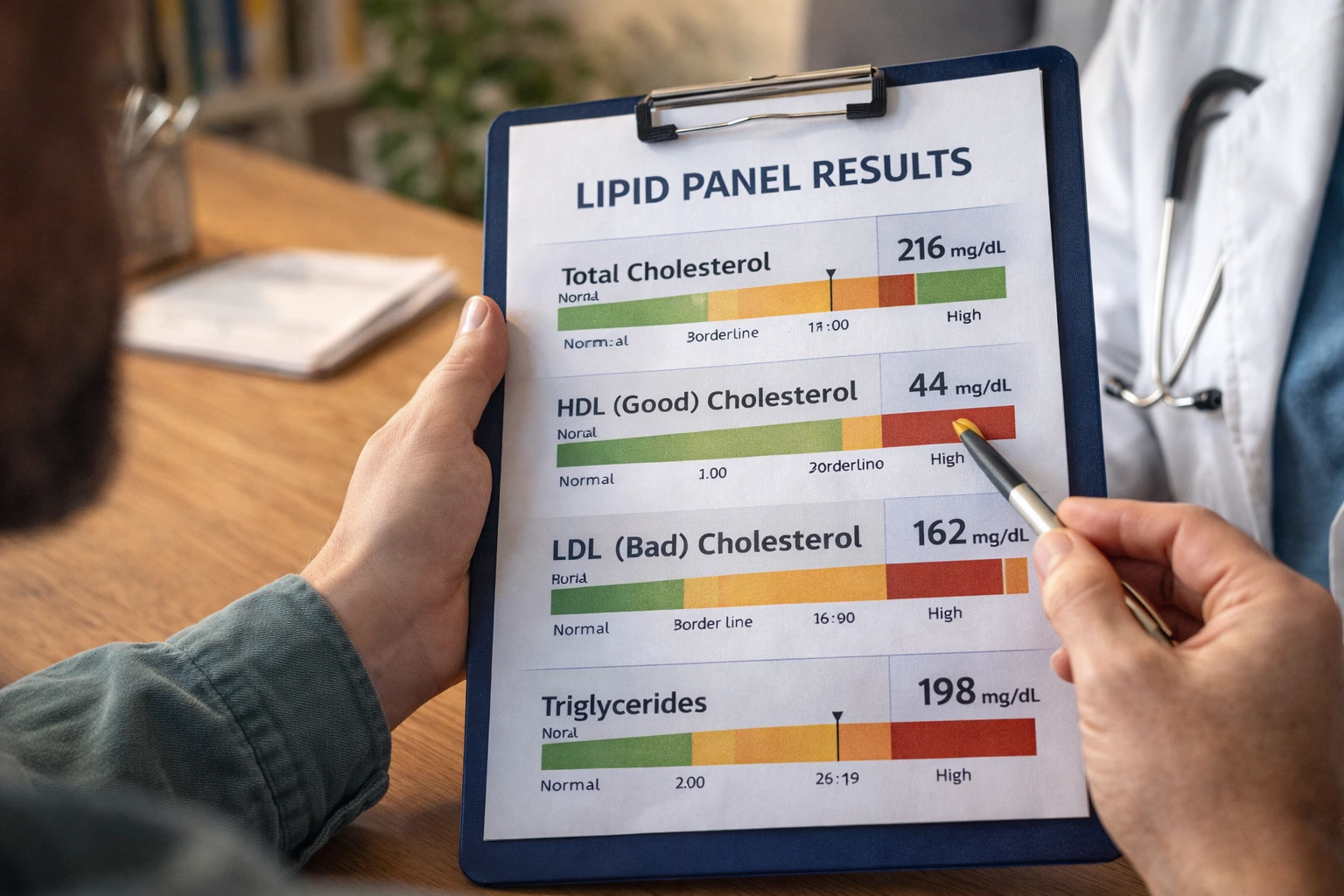
You’re staring at numbers on a lab report that feel like a personal attack, wondering why your doctor suddenly seems concerned about cholesterol you didn’t even know you had, and honestly, you just need someone to explain what lipid panel results actually mean so you can stop spiraling.
Decoding lipid panel results
After receiving your lipid panel results, it’s common to feel a mix of confusion and concern. Understanding what these numbers mean is essential for making informed decisions about your health. Total cholesterol, LDL (bad) cholesterol, HDL (good) cholesterol, and triglycerides are key markers that provide insights into your heart health. Imagine sitting in your doctor’s office and hearing terms thrown around like LDL and triglycerides without any real context. It’s like being handed a puzzle with no picture on the box. Total cholesterol reflects the overall amount of cholesterol in your blood, while LDL cholesterol is known as the ‘bad’ cholesterol that can build up in your arteries over time. HDL cholesterol is the ‘good’ cholesterol that helps remove LDL cholesterol from your arteries, acting like a cleanup crew. Triglycerides are a type of fat found in your blood that can increase your risk of heart disease if elevated. When you finally understand what each number represents, the results stop feeling like a judgment and start feeling like useful information you can actually work with.
- Total cholesterol reflects the overall amount of cholesterol in your blood.
- LDL cholesterol is known as the ‘bad’ cholesterol that can build up in your arteries.
- HDL cholesterol is the ‘good’ cholesterol that helps remove LDL cholesterol from your arteries.
- Triglycerides are a type of fat found in your blood that can increase your risk of heart disease if elevated.
Taking control of your health
Interpreting your lipid panel results can empower you to take proactive steps towards improving your heart health. Lifestyle changes such as adopting a heart-healthy diet, exercising regularly, managing stress, and avoiding tobacco products can positively impact your lipid profile. Consider Sarah, a 42-year-old woman who received results showing elevated LDL and low HDL. Instead of feeling defeated, she started small: swapping her afternoon snacks for almonds and berries, taking 20-minute walks three times a week, and actually sleeping eight hours instead of six. Within three months, her numbers shifted noticeably. The key is not overhauling your entire life overnight but making sustainable swaps that feel doable. Consult with your healthcare provider to create a personalized plan that suits your needs and goals, because what works for your friend might not work for you.
💬 Ready to feel better in 2 minutes?choose where to begin:
The emotional journey
Receiving lipid panel results can trigger a range of emotions, from anxiety to relief. It’s normal to feel overwhelmed by the numbers on paper, but remember that these results are a snapshot of your current health status. Many women describe the moment they open their results as a gut punch, especially if they’ve been doing ‘everything right’ and still see unfavorable numbers. That feeling is valid. Your genetics, hormonal shifts, stress levels, and even sleep quality all play a role in your lipid profile. This isn’t about blame or failure. Use your results as a tool to guide your health decisions and track progress over time. Think of them as data points on a map, not a final destination. When you reframe these numbers from scary to informative, the emotional weight lightens considerably.
Navigating treatment options
Based on your lipid panel results, your healthcare provider may recommend lifestyle modifications, medications, or a combination of both to manage your cholesterol levels. Some women worry that medication means they’ve failed at the lifestyle approach, but that’s not how it works. Sometimes your body needs both strategies working together. If your doctor suggests medication like a statin, it’s not a surrender, it’s a tool. It’s crucial to follow your treatment plan diligently and attend regular follow-up appointments to monitor your progress. Keep a simple log of what you’re doing, how you’re feeling, and any side effects you notice. This information helps your doctor fine-tune your approach. Remember, small changes can lead to significant improvements in your lipid profile, and combining medical support with lifestyle shifts often produces the best results.
Understanding lipid panel results is key to taking charge of your heart health journey. By deciphering the numbers and implementing positive lifestyle changes, you can navigate the emotional rollercoaster of managing your lipid levels with confidence. Stay proactive, collaborate with your healthcare team, and prioritize self-care for a healthier future.
How often should I get a lipid panel test?
It’s recommended to have your lipid panel tested every four to six years as part of routine health screenings. However, if you have risk factors for heart disease or a history of high cholesterol, your healthcare provider may recommend more frequent testing.
Can I improve my lipid panel results through diet and exercise alone?
Yes, making changes to your diet and exercise habits can have a significant impact on your lipid levels. A heart-healthy diet rich in fruits, vegetables, whole grains, and lean proteins, combined with regular physical activity, can help lower cholesterol levels and reduce your risk of heart disease.
Others also read:
Disclaimer: This article is for informational purposes only and is not a substitute for professional medical advice. Always consult a healthcare professional for personal guidance.
This article presents an experience-based perspective and has been reviewed by the GlobalHealthBeacon editorial team in 2026. It provides structured, evidence-based information to support informed health decisions.
