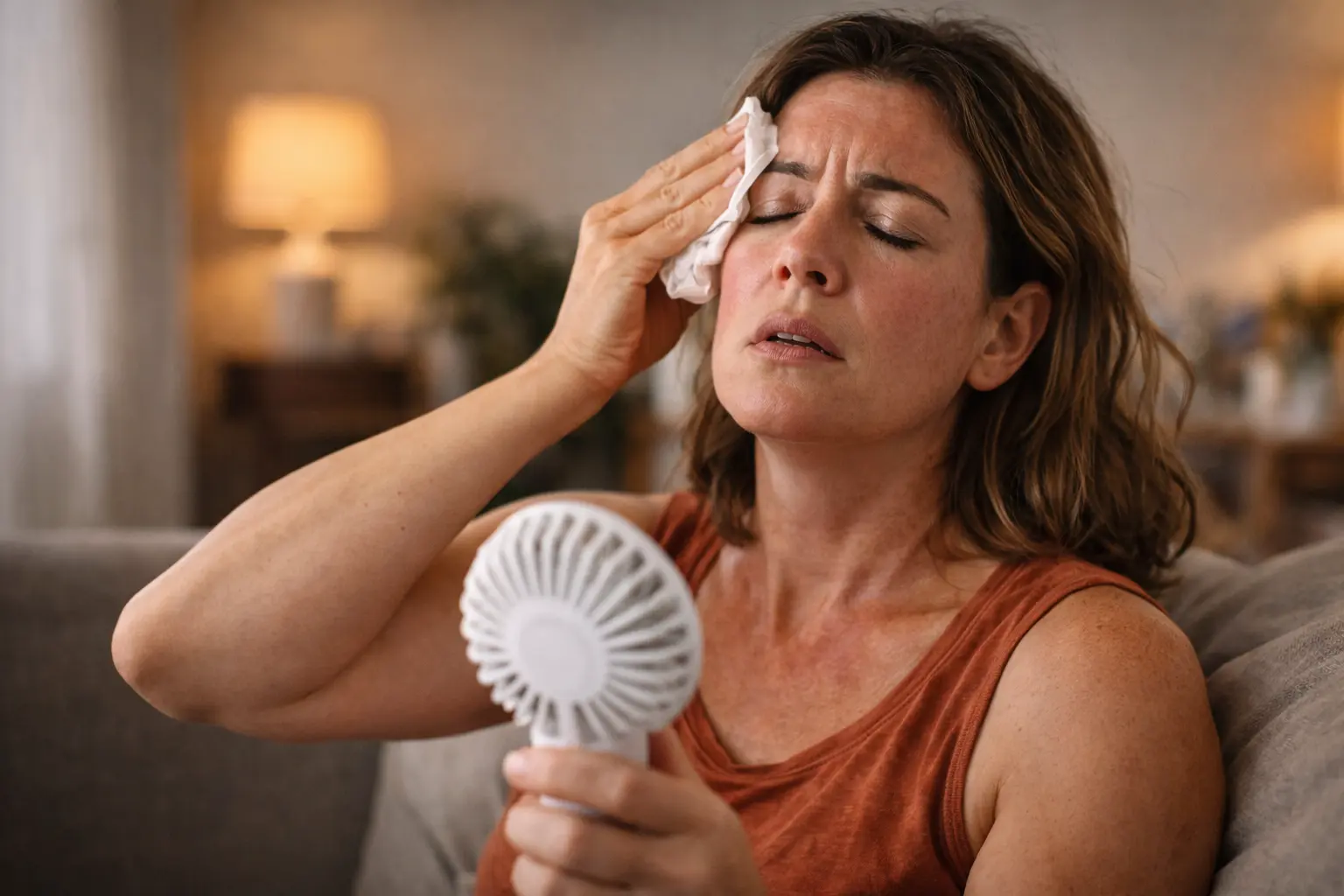
One minute you’re fine, the next your face is burning, sweat is pouring down, and you’re desperately peeling off layers while everyone around you looks confused—menopause hot flashes are exhausting, unpredictable, and they’re stealing your peace.
Understanding menopause hot flashes
Menopause hot flashes happen when your body’s temperature regulation gets confused during hormonal shifts. Picture this: your estrogen levels drop, and your brain’s thermostat misfires, triggering sudden waves of intense heat that can last anywhere from a few seconds to several minutes. These episodes aren’t just uncomfortable—they can wake you at night, make you sweat through your clothes, and leave you feeling drained. The tricky part is that hot flashes are highly individual. What triggers one woman’s flashes might not affect another at all. Some women report that stress, caffeine, alcohol, spicy foods, or even warm environments set them off. Others notice patterns around certain times of day or specific activities. Understanding your personal triggers is the foundation of managing hot flashes effectively. Start by noticing patterns: Does it happen after your morning coffee? When you’re stressed about work? After eating something spicy? This awareness becomes your roadmap for relief.
- Identify trigger factors: Keep a diary to track what makes your hot flashes worse.
- Stay cool: Dress in layers, use a fan, and keep your living space cool.
- Practice relaxation techniques: Deep breathing and meditation can help reduce stress levels.
Managing hot flashes with lifestyle changes
Lifestyle adjustments are often the first line of defense and can make a real difference in how often and intensely you experience hot flashes. Start with your wardrobe: choose breathable fabrics like cotton and linen, and embrace layering so you can quickly adjust when a flash hits. Many women find that dressing in layers gives them a sense of control. Next, look at your diet and habits. Caffeine is a common culprit—even one extra cup of coffee can trigger flashes in sensitive women. Alcohol, particularly red wine, affects your body’s temperature regulation. Spicy foods, hot beverages, and even large meals can set off episodes. Regular exercise, especially moderate cardio and strength training, helps stabilize hormone levels and improves overall temperature regulation. Aim for 30 minutes most days. A balanced diet rich in whole grains, fruits, vegetables, and lean proteins supports hormonal balance. Maintaining a healthy weight matters too—extra weight can intensify hot flashes. Finally, prioritize sleep and stress management. Poor sleep worsens symptoms, and chronic stress keeps your nervous system in overdrive. Even small changes like taking a 10-minute walk, practicing yoga, or setting a consistent bedtime can reduce flash frequency.
📘 Fix your day in under 2 minuteschoose where to begin:
Natural remedies for hot flashes
Many women turn to natural supplements hoping to ease symptoms without hormonal intervention. Black cohosh, a plant used for decades, has shown mixed results in studies but some women swear by it. Evening primrose oil contains compounds that may help with hormonal balance, though evidence is modest. Soy isoflavones, found in tofu and tempeh, mimic estrogen in the body and help some women reduce hot flash intensity. Red clover is another herbal option women explore. Sage tea has become popular in recent years, with some women reporting fewer flashes after regular use. The challenge with natural remedies is that they work differently for everyone—what brings relief to your friend might do nothing for you. Before starting any supplement, talk to your healthcare provider. Some herbs interact with medications, and dosages matter. Your doctor can help you understand whether a remedy is safe for your specific health situation and medical history. Keep realistic expectations: natural remedies typically provide modest relief, not complete elimination of symptoms. Many women use them alongside lifestyle changes for better results.
Hormone replacement therapy (HRT)
When hot flashes severely disrupt your life—waking you multiple times nightly, causing embarrassment at work, or affecting your mental health—hormone replacement therapy becomes worth discussing with your doctor. HRT works by replacing the estrogen your body no longer produces, which directly addresses the root cause of hot flashes. For many women, HRT provides significant relief, sometimes eliminating flashes entirely. The decision to use HRT isn’t simple. It offers real benefits: improved sleep, better mood, reduced flashes, and sometimes improved bone health. However, it carries potential risks including increased risk of blood clots, stroke, and breast cancer in some women, particularly with long-term use. The risk level depends on your age, health history, family history, and the type of HRT used. Modern HRT comes in various forms: pills, patches, creams, and gels. Your doctor can help determine which option suits your needs and health profile. Many women use HRT short-term, just during the worst years of menopause, then gradually reduce dosage. Others use it longer. The key is having an informed conversation with your healthcare provider about your specific situation, weighing benefits against risks for you personally.
Seeking professional help
If you’ve tried lifestyle changes, natural remedies, and home strategies for several weeks without meaningful improvement, it’s time to see your healthcare provider. Persistent or worsening hot flashes deserve professional attention. Your doctor can rule out other conditions that cause similar symptoms, review your medications to see if any trigger flashes, and discuss all available treatment options. Don’t minimize your experience or feel like you’re bothering your doctor. Hot flashes that disrupt sleep, affect work performance, or impact your quality of life are legitimate medical concerns worth addressing. Your provider might recommend prescription medications like SSRIs or SNRIs, which can reduce hot flash frequency even without hormone replacement. They might suggest gabapentin, which helps some women significantly. They can also refer you to specialists like a gynecologist or menopause specialist if your situation is complex. Beyond medication, your doctor can connect you with resources like menopause support groups, cognitive behavioral therapy, or acupuncture—all of which have evidence supporting their effectiveness for some women. Remember, managing menopause is a partnership between you and your healthcare team.
Relief from menopause hot flashes comes from understanding your personal triggers and taking a multi-layered approach. Start with lifestyle changes like dressing in layers, avoiding caffeine, managing stress, and exercising regularly. Explore natural remedies if interested, but consult your doctor first. Consider hormone replacement therapy if symptoms are severe and affecting your quality of life. Most importantly, don’t suffer silently—reach out to your healthcare provider if symptoms persist despite your efforts. Effective management is possible, and you deserve to feel comfortable again.
Are hot flashes a normal part of menopause?
Yes, hot flashes are one of the most common menopause symptoms, affecting up to 80 percent of women. They typically last a few minutes and can occur multiple times daily or several times weekly. While they’re normal, that doesn’t mean you have to endure them without relief. Many effective strategies exist to reduce their frequency and intensity.
Can hot flashes be triggered by certain foods?
Absolutely. Spicy foods, caffeine, alcohol, and hot beverages are common triggers for many women. However, triggers are highly individual—what affects one woman might not bother another. Keeping a food and symptom diary for two weeks helps you identify your specific triggers so you can make informed dietary choices.
Others also read:
Disclaimer: This article is for informational purposes only and is not a substitute for professional medical advice. Always consult a healthcare professional for personal guidance.
This guide has been prepared and reviewed by the GlobalHealthBeacon editorial team and reflects current medical research as of 2026. It provides structured, evidence-based information to support informed health decisions.
