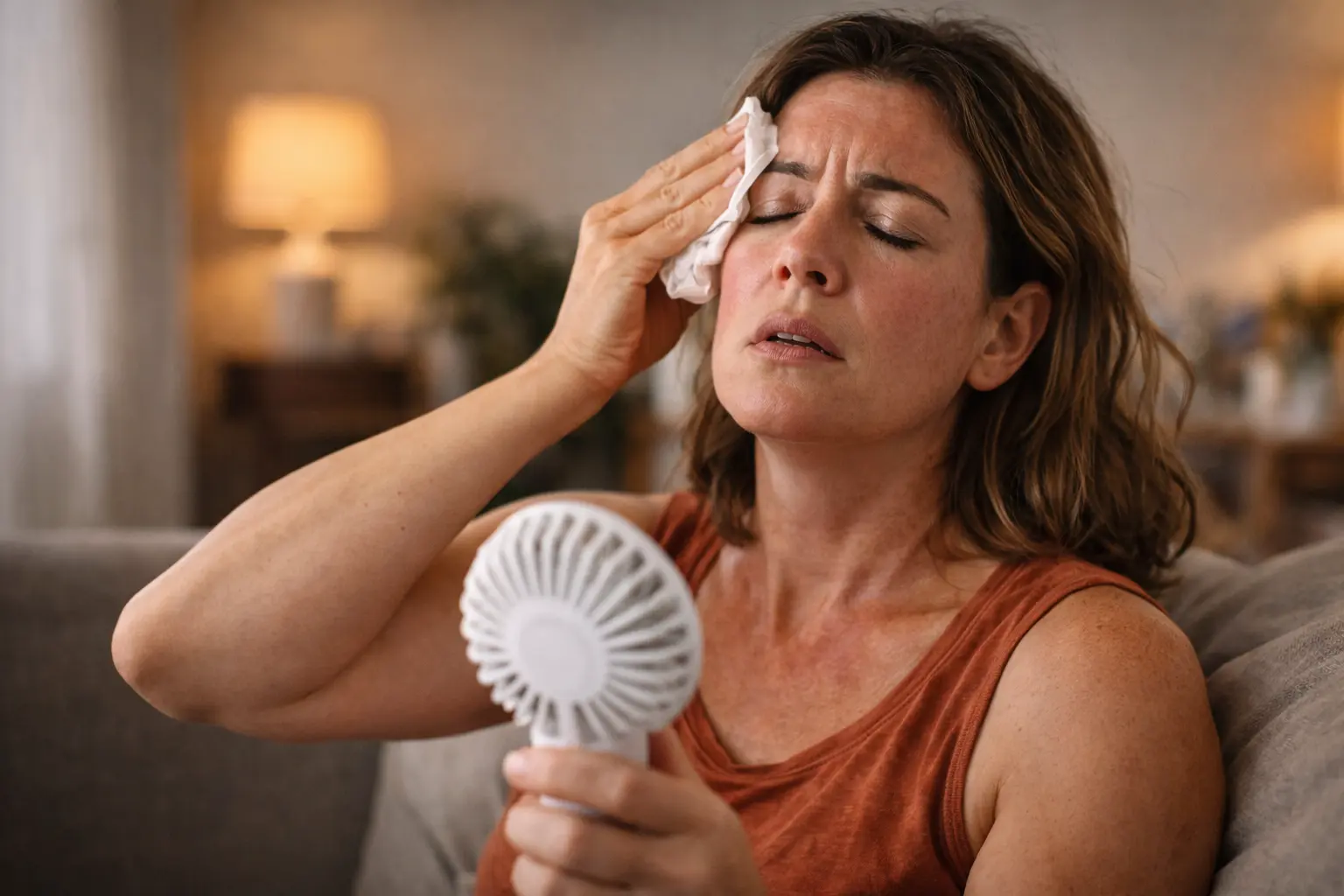
One minute you’re sitting peacefully, the next you’re drenched in sweat and your face is burning like you’ve stepped into an oven, and menopause hot flashes are stealing your comfort, your sleep, and your confidence.
Understanding menopause hot flashes
Menopause hot flashes represent one of the most commonly reported symptoms during the menopausal transition, affecting roughly 75 percent of women in developed countries. These episodes involve sudden, intense sensations of heat that typically begin in the chest or face and spread throughout the body within seconds. A woman might be reading a book or having a conversation when suddenly her heart races, her skin flushes bright red, and perspiration begins dripping down her back. The episodes can last anywhere from 30 seconds to several minutes, leaving her exhausted and often drenched in sweat. Beyond the physical discomfort, hot flashes frequently disrupt sleep patterns, interfere with work concentration, and create social anxiety about appearing in public or attending gatherings. Understanding that these experiences are a normal biological response to hormonal shifts, rather than a sign of illness or weakness, is the first step toward managing them effectively.
Biological causes of menopause hot flashes
The hypothalamus, a small but crucial region at the base of the brain, functions as your body’s internal thermostat. During menopause, declining estrogen levels cause this temperature-regulating center to become hypersensitive and miscalibrate. The hypothalamus begins perceiving your actual body temperature as too high, even when it is perfectly normal. In response, it triggers a cascade of physiological events: blood vessels near the skin dilate rapidly to release heat, the sweat glands activate intensely, and your heart rate increases. This thermoregulatory dysfunction is not imaginary or psychological, but rather a measurable change in how the brain processes temperature signals. Researchers have documented that the temperature range the hypothalamus considers comfortable narrows significantly during menopause, meaning even slight variations trigger a full hot flash response. This explains why a woman might feel freezing one moment and burning up the next, as her body’s internal thermostat struggles to maintain equilibrium during this hormonal transition.
Effective relief methods
Managing menopause hot flashes often requires a multi-layered approach tailored to individual triggers and preferences. Dressing in layers allows you to quickly shed clothing when a hot flash begins and add layers back when the episode passes, preventing the uncomfortable cycle of chilling after sweating. Many women find that keeping a small handheld fan nearby, whether at home or in the car, provides immediate relief during an episode. Deep breathing exercises, particularly slow diaphragmatic breathing at a rate of five to six breaths per minute, activate the parasympathetic nervous system and can reduce both the frequency and intensity of hot flashes over time. Staying consistently hydrated throughout the day helps your body regulate temperature more effectively, while keeping cold water or ice-cold beverages nearby during episodes provides both internal and external cooling. Some women benefit from taking cool showers or splashing cold water on their wrists and neck when a hot flash strikes. Keeping your bedroom cool at night, using moisture-wicking bedding, and maintaining a consistent sleep schedule can significantly improve nighttime hot flash management and overall sleep quality.
- Dress in layers to easily adjust for temperature changes.
- Practice relaxation techniques like deep breathing to reduce stress.
- Stay well-hydrated to help manage hot flashes.
🔬 Science-backed benefits in 2 minuteschoose where to begin:
Natural remedies for menopause hot flashes
Many women explore natural plant-based remedies in hopes of finding relief without pharmaceutical interventions. Black cohosh, a plant native to North America, has been used traditionally for centuries and some clinical studies suggest it may reduce hot flash frequency and severity, though results remain mixed across different research populations. Soy products contain isoflavones, compounds with weak estrogenic properties that some women report help ease symptoms, though the evidence is inconsistent and individual responses vary widely. Evening primrose oil, rich in omega-6 fatty acids, is another popular choice among women seeking natural alternatives. Red clover, sage leaf extract, and ginseng have also gained attention in recent years, with some small studies showing modest benefits. However, it is essential to understand that natural does not automatically mean safe or effective for everyone. These remedies can interact with medications, may not be appropriate for women with certain health conditions, and their quality and potency vary significantly between manufacturers. Before starting any natural remedy, consulting with a healthcare provider ensures that your chosen approach aligns with your overall health profile and existing treatments.
Lifestyle adjustments
Identifying and avoiding personal hot flash triggers can dramatically reduce how often episodes occur and how severely they impact daily life. Common triggers include spicy foods, caffeine, alcohol, hot beverages, and even stress or anxiety. A woman might notice that her morning coffee consistently triggers a hot flash within 20 minutes, or that eating Thai food at dinner guarantees nighttime sweating. Keeping a simple log of when hot flashes occur and what preceded them reveals patterns unique to each individual. Regular physical activity, particularly aerobic exercise like brisk walking or swimming, has been shown in multiple studies to reduce hot flash frequency and improve overall menopausal symptoms. Maintaining a healthy weight through balanced nutrition and exercise also helps, as excess body weight can intensify hot flashes due to increased heat retention. Stress management techniques such as yoga, meditation, or tai chi not only reduce hot flash triggers but also improve sleep quality and emotional resilience during this transitional life stage. Creating a cool, comfortable sleep environment and establishing a consistent bedtime routine supports better rest and fewer nighttime episodes.
Seeking medical advice
When menopause hot flashes significantly disrupt your quality of life, sleep, work performance, or emotional well-being, professional medical guidance becomes invaluable. A healthcare provider can assess your individual situation, discuss the severity and frequency of your symptoms, and explore treatment options tailored to your specific needs and health history. Hormone replacement therapy, or HRT, remains one of the most effective medical interventions for moderate to severe hot flashes, though it requires careful consideration of personal risk factors and ongoing monitoring. Non-hormonal prescription medications such as certain antidepressants or blood pressure medications have also demonstrated effectiveness in reducing hot flash symptoms for many women. Your doctor can discuss the benefits and potential risks of each option, helping you make an informed decision that aligns with your values and health goals. Some women benefit from a combination approach, using both lifestyle modifications and medical treatment for optimal symptom management. Regular follow-up appointments allow your healthcare provider to monitor how well your chosen strategy is working and adjust your plan as needed throughout your menopausal journey.
Menopause hot flashes stem from hormonal fluctuations that affect the brain’s temperature regulation center, creating sudden and intense episodes of heat and sweating. By understanding the biological mechanisms behind these symptoms and implementing evidence-based relief strategies, women can regain comfort and control during this natural life transition. Options range from practical lifestyle adjustments and natural remedies to medical interventions, with the most effective approach often combining multiple strategies tailored to individual needs and preferences.
Are hot flashes during menopause normal?
Yes, hot flashes are an extremely common symptom affecting the majority of women during menopause, caused by hormonal changes affecting the brain’s temperature regulation. While they are a normal biological response, if they significantly impact your sleep, work, or daily activities, seeking medical advice helps you explore management options that can improve your quality of life.
Can lifestyle changes alleviate menopause hot flashes?
Yes, many women experience meaningful relief through lifestyle adjustments including dressing in layers, practicing deep breathing, staying hydrated, and identifying personal triggers like caffeine or spicy foods. Regular exercise, stress management, and maintaining a healthy weight also contribute to reducing hot flash frequency and intensity. For some women, lifestyle changes alone provide sufficient relief, while others benefit from combining these strategies with natural remedies or medical treatments.
Others also read:
Disclaimer: This article is for informational purposes only and is not a substitute for professional medical advice. Always consult a healthcare professional for personal guidance.
This article has been prepared and reviewed by the GlobalHealthBeacon editorial team and is based on current medical research and published scientific literature available in 2026. It provides structured, evidence-based information to support informed health decisions.
