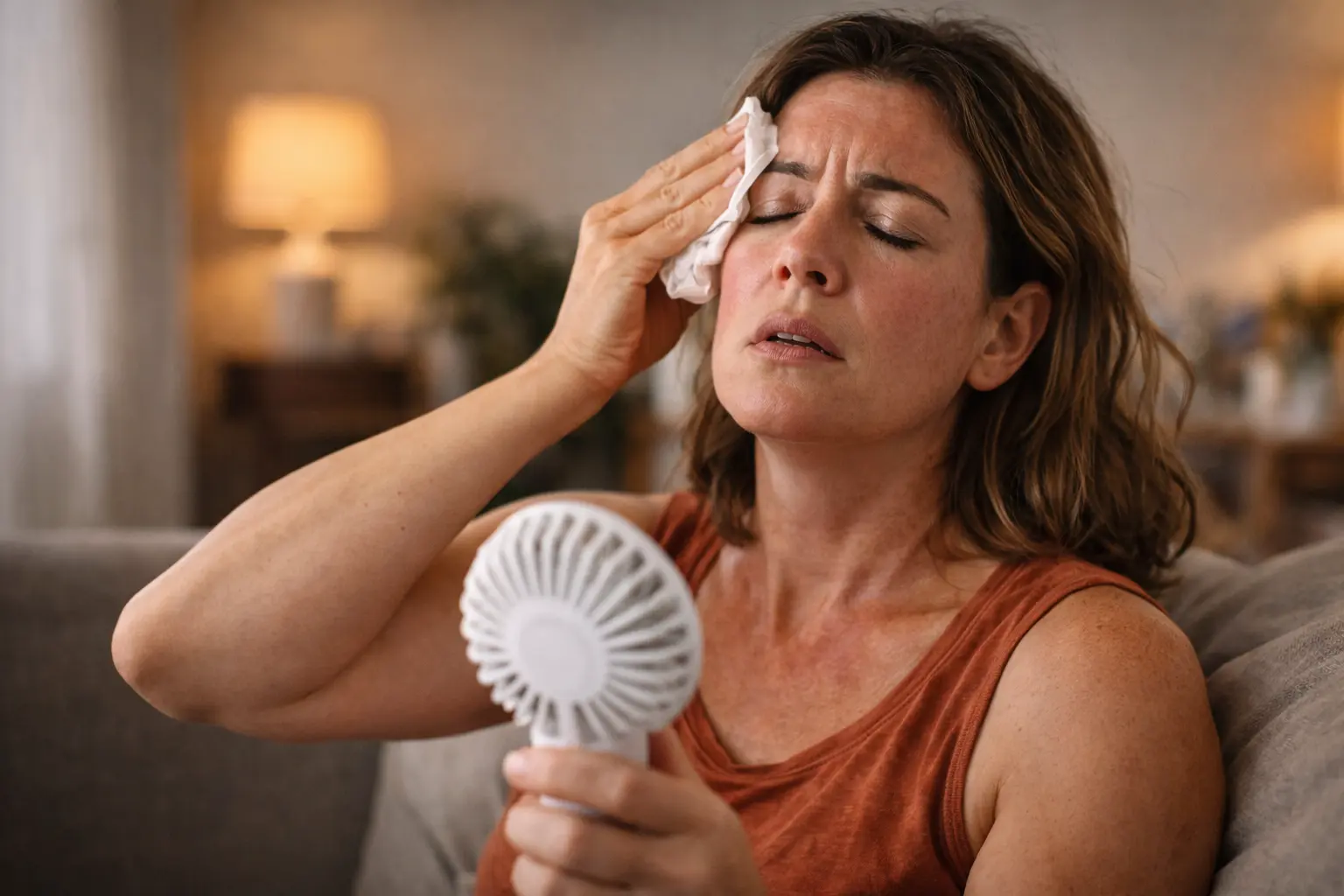
One minute you’re fine, the next your face is burning, sweat is pouring down your back, and you’re desperately peeling off layers while everyone around you shivers in the air conditioning – menopause hot flashes are the unwelcome reality that millions of women face, and understanding what’s actually happening in your body can finally help you take back control.
Defining menopause hot flashes
Menopause hot flashes are sudden episodes of intense warmth that radiate across the body, typically lasting anywhere from 30 seconds to several minutes. Most women describe them as an overwhelming surge of heat that starts in the chest or face and spreads outward, often accompanied by visible flushing, profuse sweating, and sometimes heart palpitations. Imagine sitting in a meeting and suddenly feeling like someone turned up the thermostat to 100 degrees, except only you can feel it. These episodes can happen multiple times daily or occasionally throughout the week, making them unpredictable and disruptive. The intensity varies widely between women – some experience mild warmth while others report drenching sweats that soak through clothing. Night sweats, a related phenomenon, can interrupt sleep patterns and leave bedding soaked, affecting overall quality of life and daytime functioning.
Biological mechanisms at play
The science behind hot flashes centers on the hypothalamus, a tiny but powerful gland in the brain that functions as your body’s internal thermostat. During menopause, estrogen levels fluctuate dramatically as the ovaries wind down production, and this hormonal shift confuses the hypothalamus about what your actual body temperature should be. The gland essentially misinterprets normal body temperature as too high and triggers cooling mechanisms like vasodilation, where blood vessels near the skin’s surface suddenly expand to release heat. Your heart rate increases, blood rushes to the skin, and sweat glands activate in response. Think of it like a thermostat malfunction in a house – the system keeps trying to cool down even when the temperature is already comfortable. Certain triggers can amplify this response: caffeine constricts blood vessels initially then dilates them, alcohol affects temperature regulation, spicy foods raise core temperature, and stress hormones can sensitize the hypothalamus to temperature changes.
Effective strategies for managing hot flashes
Managing hot flashes often starts with environmental and behavioral adjustments that give you immediate relief without medical intervention. Keeping your bedroom cool at night, around 65-68 degrees Fahrenheit, can significantly reduce nighttime episodes and improve sleep quality. Layering clothing allows you to quickly remove pieces when a flash hits without being left underdressed. Consider moisture-wicking fabrics like cotton or specialized athletic materials that pull sweat away from skin rather than trapping it. Hydration is crucial – drinking plenty of water throughout the day helps regulate body temperature and prevents dehydration from sweating. Identifying and avoiding personal triggers requires some detective work. For many women, eliminating caffeine after noon, reducing alcohol consumption, and avoiding very hot foods or drinks makes a noticeable difference within days. Some women find that keeping a small fan at their desk or carrying a portable cooling device provides psychological comfort and practical relief when a flash strikes unexpectedly.
- Maintain a cool environment
- Dress in layers
- Avoid triggers like caffeine
🔬 Science-backed benefits in 2 minuteschoose where to begin:
Medical interventions and therapies
When lifestyle changes alone don’t provide sufficient relief, several medical options exist, each with distinct mechanisms and considerations. Hormone replacement therapy (HRT) remains one of the most effective treatments, working by stabilizing estrogen levels and preventing the hypothalamic confusion that triggers hot flashes. Women taking HRT often report significant symptom reduction within weeks. However, HRT carries potential risks including increased blood clot formation, slightly elevated breast cancer risk with long-term use, and cardiovascular considerations that require careful medical evaluation. Selective serotonin reuptake inhibitors (SSRIs) like sertraline or paroxetine work differently, affecting neurotransmitters that influence temperature regulation rather than replacing hormones. Gabapentin, originally developed for nerve pain, has shown effectiveness in reducing hot flash frequency by about 50 percent in clinical studies. Other options include clonidine, a blood pressure medication that can reduce hot flashes, and newer treatments like fezolinetant that target specific brain pathways. Each option requires discussion with a healthcare provider to weigh benefits against individual health history and risk factors.
Lifestyle modifications for relief
Beyond managing immediate triggers, broader lifestyle changes create an environment where your body is more resilient to hot flashes. Regular aerobic exercise, even 30 minutes of brisk walking most days, improves cardiovascular stability and helps regulate body temperature more effectively. Strength training builds muscle mass, which influences metabolic rate and hormone metabolism. Stress reduction techniques matter significantly because cortisol and adrenaline can trigger or worsen hot flashes – yoga, meditation, or deep breathing exercises calm the nervous system and reduce hypothalamic sensitivity. A balanced diet rich in phytoestrogens from sources like soy, flaxseeds, and legumes provides plant-based compounds that weakly mimic estrogen and may help some women. Maintaining a healthy weight reduces overall heat production and metabolic stress. Sleep quality directly impacts hot flash severity, creating a cycle where poor sleep worsens symptoms, which further disrupts sleep. Addressing sleep through consistent bedtime routines, cool sleeping environments, and sometimes sleep aids can break this pattern and provide cumulative relief over weeks.
Research on alternative remedies
Many women explore complementary approaches alongside or instead of conventional treatments, though scientific evidence varies considerably. Acupuncture has shown promise in some studies, with practitioners suggesting it rebalances energy pathways and reduces hypothalamic reactivity, though high-quality research remains limited. Herbal supplements like black cohosh, red clover, and sage have traditional use for menopausal symptoms, but clinical trials show mixed results and quality varies widely between brands. Paced breathing techniques, where you deliberately slow your breathing to 5-6 breaths per minute, can interrupt the physiological cascade of a hot flash by calming the nervous system. Mindfulness-based stress reduction programs have demonstrated measurable reductions in hot flash frequency in some research. The challenge with alternative remedies is that individual responses vary dramatically – what provides significant relief for one woman may have no effect for another. This variability reflects the complex, multifactorial nature of hot flashes and the importance of personalized approaches. Before starting any supplement or alternative therapy, consulting with a healthcare provider ensures safety, especially if you take other medications or have underlying health conditions.
Menopause hot flashes result from complex hormonal and neurological changes during the menopausal transition, specifically involving estrogen fluctuations and hypothalamic sensitivity. Understanding these biological mechanisms empowers women to choose management strategies that align with their preferences and health profiles. Options range from environmental and lifestyle modifications that provide immediate relief to medical interventions like hormone replacement therapy and SSRIs that address underlying physiological causes. Alternative remedies offer additional possibilities, though evidence quality varies. The most effective approach often combines multiple strategies tailored to individual circumstances, with regular reassessment as symptoms evolve and new research emerges.
Can menopause hot flashes be prevented?
While hot flashes are a natural part of menopause for most women, their frequency and severity can be significantly reduced through preventive strategies. Maintaining a healthy weight, avoiding known personal triggers like alcohol and caffeine, staying physically active with regular exercise, managing stress through relaxation techniques, and keeping core body temperature stable through environmental control all contribute to fewer and milder episodes. Some women experience fewer hot flashes if they maintain consistent sleep schedules and avoid sudden temperature changes. However, complete prevention isn’t realistic for most women since hormonal fluctuations during menopause are a biological inevitability. The goal is management and mitigation rather than elimination.
Are there natural remedies that effectively relieve hot flashes?
Some women find meaningful relief through natural approaches including yoga and meditation, which calm the nervous system and reduce stress-related triggers. Foods rich in phytoestrogens like soy products, flaxseeds, and legumes provide plant-based compounds that may help some women. Herbal supplements such as black cohosh and sage have traditional use, though scientific evidence is mixed and quality varies between products. Acupuncture and paced breathing techniques show promise in some research. Individual responses to natural remedies vary considerably, and what works for one woman may not work for another. Consulting a healthcare provider before starting supplements ensures safety and helps identify which approaches might be most beneficial for your specific situation.
Others also read:
Disclaimer: This article is for informational purposes only and is not a substitute for professional medical advice. Always consult a healthcare professional for personal guidance.
This article has been prepared and reviewed by the GlobalHealthBeacon editorial team and is based on current medical research and published scientific literature available in 2026. It provides structured, evidence-based information to support informed health decisions.
