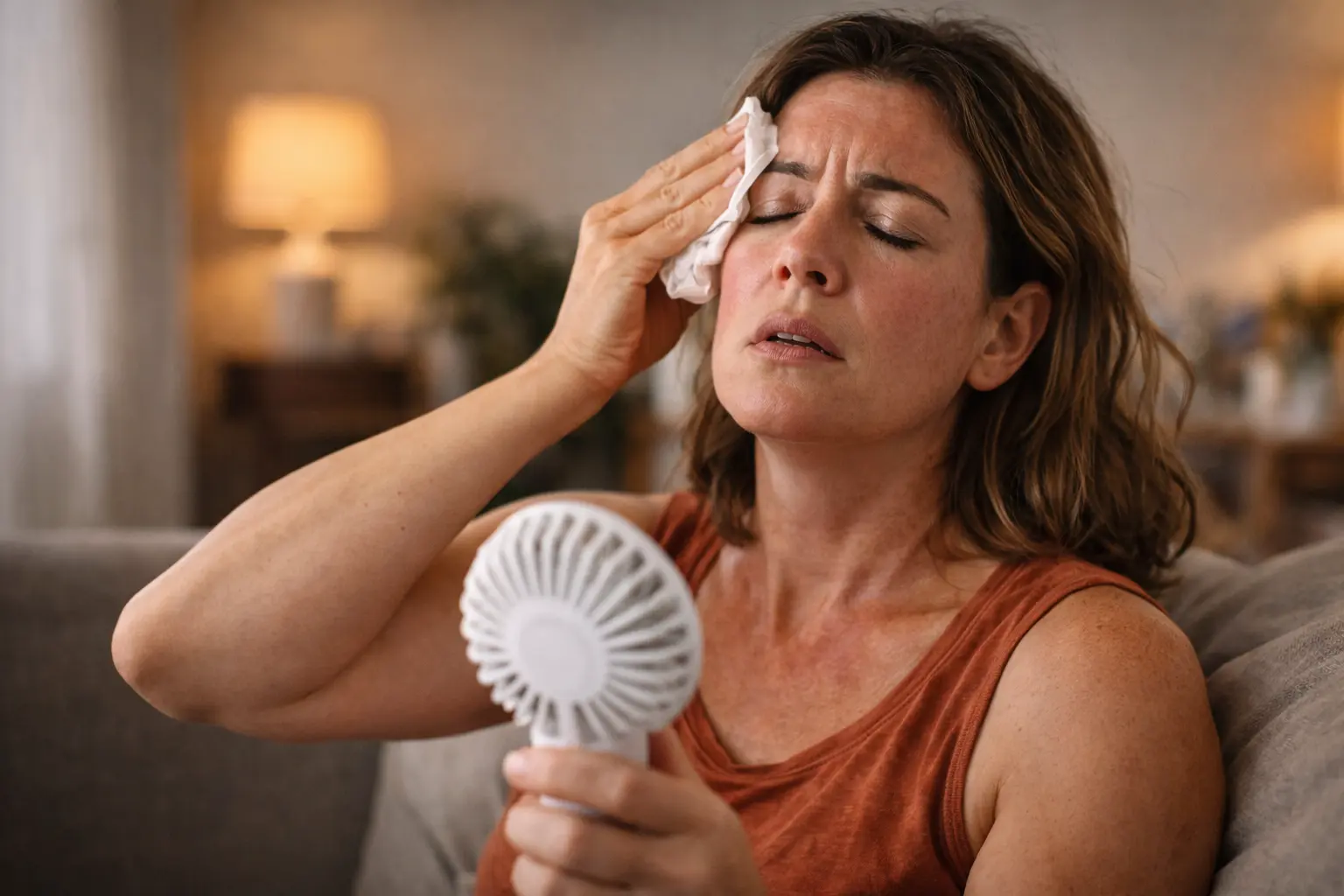
One minute you’re fine, the next your face is burning and sweat is pouring down your back for no reason – menopause hot flashes hit different, and if you’re experiencing them or watching someone you care about go through it, you know how disruptive and confusing they can be.
What are hot flashes?
Hot flashes, medically termed vasomotor symptoms, are sudden episodes of intense heat that radiate across your body, often accompanied by visible flushing, perspiration, and sometimes heart palpitations. Imagine sitting in a meeting or at dinner when your core temperature suddenly spikes by several degrees without any external trigger. These episodes typically last anywhere from 30 seconds to several minutes, though some people report longer durations. What makes them particularly disruptive is their unpredictability. You might experience one hot flash in the morning and then have several clustered together in the evening, or go days without any. The intensity varies dramatically too – some people describe mild warmth, while others experience drenching sweats that soak through clothing. Understanding that this is a physiological response, not something you’re imagining or doing wrong, is the first step toward managing them effectively.
Hormonal imbalance and hot flashes
Your body’s temperature regulation system, controlled by the hypothalamus in your brain, relies heavily on stable estrogen levels to function properly. During menopause, estrogen production drops significantly and fluctuates erratically, essentially sending mixed signals to your thermostat. Think of it like your body’s internal temperature gauge losing its calibration. The hypothalamus misinterprets these hormonal changes and perceives your core temperature as too high, even when it’s actually normal. In response, it triggers your body’s cooling mechanisms: blood vessels dilate to push blood toward the skin’s surface, your sweat glands activate, and your heart rate increases. This cascade of responses happens rapidly and intensely, which is why hot flashes feel so sudden and overwhelming. Research shows that the fluctuation itself matters more than the absolute estrogen level, which explains why hot flashes can be unpredictable and why some people experience them more severely than others. The good news is that this is a temporary biological adjustment, not a permanent malfunction.
Triggers and management
While hot flashes aren’t entirely preventable, identifying your personal triggers can significantly reduce their frequency and intensity. Common culprits include caffeine, which stimulates your nervous system and raises heart rate; alcohol, especially red wine and spicy foods that increase metabolism; stress and anxiety, which activate your fight-or-flight response; and even environmental heat or tight clothing that traps body warmth. Some people notice patterns around specific times of day or in response to certain situations. For example, you might find that your afternoon coffee consistently triggers an episode two hours later, or that stressful work meetings reliably bring on a hot flash. Keeping a simple log for a week or two can reveal your unique pattern. Beyond trigger avoidance, practical strategies include dressing in layers so you can adjust quickly, using a personal fan at your desk or bedside, keeping your bedroom cool at night, staying hydrated since dehydration can worsen symptoms, and practicing stress-reduction techniques like deep breathing or short walks. Many people find that a combination of these approaches works better than relying on any single strategy.
- Identify and avoid personal triggers such as caffeine, alcohol, spicy foods, and high-stress situations by tracking patterns over one to two weeks.
- Maintain a cool environment using fans, air conditioning, or opening windows, especially during nighttime when hot flashes often intensify.
- Wear breathable fabrics like cotton and linen in layers so you can remove clothing quickly without disrupting your day or feeling self-conscious.
- Stay hydrated by drinking water consistently throughout the day, as dehydration can amplify vasomotor symptoms.
- Practice relaxation techniques such as deep breathing, progressive muscle relaxation, or brief meditation when you feel a hot flash starting.
🔬 Science-backed benefits in 2 minuteschoose where to begin:
Medical interventions
When hot flashes significantly impact daily life, sleep, or work performance, medical options exist. Hormone replacement therapy (HRT) remains one of the most effective treatments, working by stabilizing estrogen levels and recalibrating your hypothalamus. However, HRT isn’t suitable for everyone and carries considerations that deserve careful discussion with your doctor, including individual health history, family medical background, and personal risk factors. Non-hormonal prescription medications like selective serotonin reuptake inhibitors (SSRIs) or serotonin-norepinephrine reuptake inhibitors (SNRIs), originally developed for depression, have shown effectiveness in reducing hot flash frequency by 50-60% in clinical studies. Other options include gabapentin, typically used for nerve pain, which can help regulate temperature perception. The timeline matters too – some medications take weeks to show benefit, so patience and close communication with your healthcare provider are essential. Your doctor can help weigh the benefits and potential side effects of each option based on your specific situation, medical history, and preferences.
Holistic approaches
Many people explore complementary strategies alongside or instead of medical interventions. Acupuncture, based on traditional Chinese medicine principles, has shown promise in some research studies for reducing hot flash frequency, though results vary significantly between individuals. Yoga and regular physical activity, particularly aerobic exercise and strength training, appear to help some people by improving overall stress resilience and cardiovascular health. Herbal supplements like black cohosh, red clover, and sage have traditional use and anecdotal support, but scientific evidence remains mixed and inconsistent. Mindfulness-based stress reduction programs have demonstrated measurable benefits in clinical trials, helping people manage the psychological impact even if symptoms don’t completely disappear. Dietary approaches emphasizing plant-based foods, adequate protein, and stable blood sugar may help some individuals. The challenge with holistic approaches is that what works dramatically for one person might have minimal effect for another, making it important to track your personal response. If you’re considering supplements, discussing them with your healthcare provider ensures they won’t interact with other medications or health conditions.
Research and future insights
Scientists continue investigating the underlying mechanisms of hot flashes to develop more targeted and personalized treatments. Recent research explores genetic factors that might predispose some people to more severe symptoms, as well as the role of other neurotransmitters beyond estrogen in temperature regulation. Emerging studies examine whether certain lifestyle interventions, when combined strategically, might be as effective as medication for some individuals. Advanced imaging studies are revealing exactly how the brain responds during hot flashes, potentially leading to more precise interventions. Clinical trials are testing novel medications designed specifically for vasomotor symptoms rather than adapting drugs developed for other conditions. The trajectory of research suggests that future treatment will likely be more personalized, with doctors able to predict who will respond best to which interventions based on individual characteristics. Staying informed about these developments and maintaining open conversations with your healthcare provider positions you to benefit from advances as they emerge. The combination of rigorous science and your own self-awareness creates the best path forward.
Menopause hot flashes result from hormonal fluctuations that disrupt your body’s temperature regulation system, creating sudden episodes of intense heat and perspiration. While you cannot entirely prevent them, identifying personal triggers like caffeine, stress, and spicy foods, combined with practical strategies such as dressing in layers and maintaining a cool environment, can meaningfully reduce their frequency and intensity. Medical options ranging from hormone therapy to non-hormonal medications offer effective relief for those experiencing severe symptoms, while complementary approaches like yoga, acupuncture, and stress reduction provide additional tools. Ongoing research continues to deepen our understanding of the mechanisms involved and develop more targeted treatments. Working closely with healthcare providers while tracking your personal patterns empowers you to navigate this phase with confidence and support.
Are hot flashes a sign of a serious health condition?
Hot flashes are a normal physiological response to hormonal changes during menopause and are not inherently indicative of serious illness. However, if hot flashes are severe, accompanied by other concerning symptoms like chest pain or shortness of breath, or if they persist long after menopause, consulting a healthcare provider for evaluation is wise. They can rule out other conditions and help determine the best management approach for your situation.
Can hot flashes be prevented?
Complete prevention isn’t realistic, but you can significantly reduce their frequency and intensity through proactive strategies. Avoiding known personal triggers like caffeine and alcohol, managing stress through relaxation techniques, staying hydrated, maintaining a cool environment, and dressing in breathable layers all contribute to fewer and milder episodes. Some people find that combining multiple approaches works better than relying on any single strategy, so experimentation and tracking help identify what works best for your body.
Others also read:
Disclaimer: This article is for informational purposes only and is not a substitute for professional medical advice. Always consult a healthcare professional for personal guidance.
This article has been prepared and reviewed by the GlobalHealthBeacon editorial team and is based on current medical research and published scientific literature available in 2026. It provides structured, evidence-based information to support informed health decisions.
