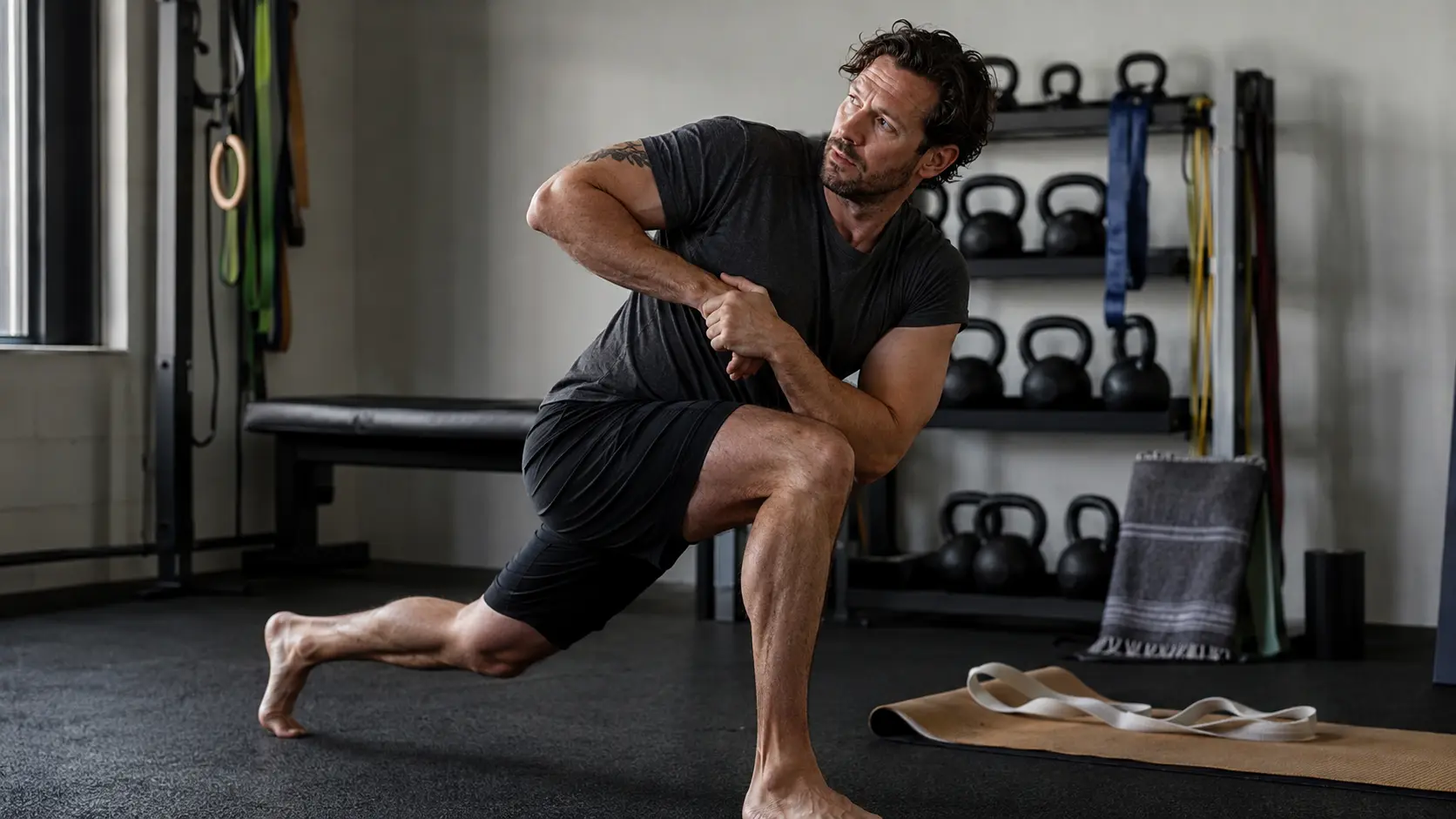
You finish your workout feeling tight, spend the day hunched over your desk, and by evening your shoulders are screaming – but you have no idea if the problem is mobility versus flexibility, and honestly, that confusion is making everything worse.
Understanding mobility and flexibility
Here’s where most people get confused: mobility and flexibility sound like the same thing, but they’re actually playing different games in your body. Mobility is about how freely your joints can move through their full range of motion – think of it as your body’s ability to access all the positions it’s designed to reach. Flexibility, on the other hand, is purely about muscle length and elasticity. You can be incredibly flexible and still have terrible mobility, or vice versa. A young adult might nail a deep yoga stretch but struggle to squat properly because their hips lack the mobility needed for that movement pattern. Understanding this distinction changes everything about how you approach your training and daily comfort. When you know which one you’re actually lacking, you stop wasting time on the wrong exercises and start seeing real progress in how your body feels and performs.
- Mobility is joint-specific, affecting how freely you can move in different directions.
- Flexibility involves muscle elasticity and the ability to stretch without causing injury.
- Balancing both mobility and flexibility can improve posture, reduce risk of injuries, and enhance athletic performance.
Experiencing constraints with mobility
Limited mobility sneaks up on you slowly. It starts with that nagging feeling when you try to reach something on a high shelf, or when you notice you can’t quite sit cross-legged anymore without discomfort. Maybe you’re at the gym and your shoulder won’t cooperate during overhead presses, or your hips feel locked when you attempt a deep squat. These aren’t just minor inconveniences – they’re signals that your joints aren’t moving the way they should. For young adults juggling desk jobs, workouts, and daily stress, mobility restrictions compound quickly. Your posture suffers, your workouts become less effective, and simple tasks like bending down to pick something up start feeling awkward. The frustrating part is that stretching alone won’t fix it. You need targeted mobility work that addresses the specific joints and movement patterns causing the problem.
💬 Ready to feel better in 2 minutes?choose where to begin:
Flexibility’s impact on everyday life
When your muscles are actually flexible, life feels easier. You move with less tension, your muscles recover faster after workouts, and that constant low-level soreness that seemed normal suddenly disappears. Enhanced flexibility means your muscles can lengthen properly, which reduces the constant pulling sensation many young adults experience from sitting too much. You might notice you can finally touch your toes without wincing, or that your lower back stops aching after long study sessions. The real magic happens when flexibility combines with good mobility – suddenly you’re not just able to stretch further, you’re able to move through your entire range of motion with control and ease. Your athletic performance improves because your muscles aren’t constantly fighting against themselves. Daily comfort increases because your body isn’t compensating for tight muscles by moving in awkward ways.
Finding the balance for optimal health
The sweet spot isn’t choosing one over the other – it’s building both strategically. Start by assessing where you actually are. Can you move through full ranges of motion, or do certain positions feel restricted? That’s mobility. Can you hold those positions comfortably, or do your muscles feel tight and limited? That’s flexibility. Young adults benefit most from a mixed approach: dynamic stretching and mobility flows before workouts to prep your joints, then static stretching and flexibility work afterward. Yoga and Pilates excel at building both simultaneously because they demand controlled movement through full ranges of motion while also lengthening muscles. Foam rolling addresses muscle tension that limits flexibility, while exercises like shoulder dislocations and hip circles directly improve mobility. The key is consistency – even fifteen minutes daily of intentional mobility and flexibility work transforms how you feel within weeks.
Understanding the difference between mobility and flexibility can positively impact your physical abilities and daily comfort levels. By incorporating exercises that improve both aspects, you can achieve optimal health and well-being.
How can I improve my mobility?
To enhance your mobility, incorporate exercises that focus on joint range of motion and functional movements like squats, lunges, or shoulder rotations. Regular stretching and foam rolling can also help improve mobility.
What are some ways to increase flexibility?
To boost flexibility, engage in regular stretching routines, yoga practices, and Pilates exercises. These activities can help increase muscle elasticity, improve posture, and reduce the risk of injuries.
Others also read:
Disclaimer: This article is for informational purposes only and is not a substitute for professional medical advice. Always consult a healthcare professional for personal guidance.
This article presents an experience-based perspective and has been reviewed by the GlobalHealthBeacon editorial team in 2026. It provides structured, evidence-based information to support informed health decisions.
