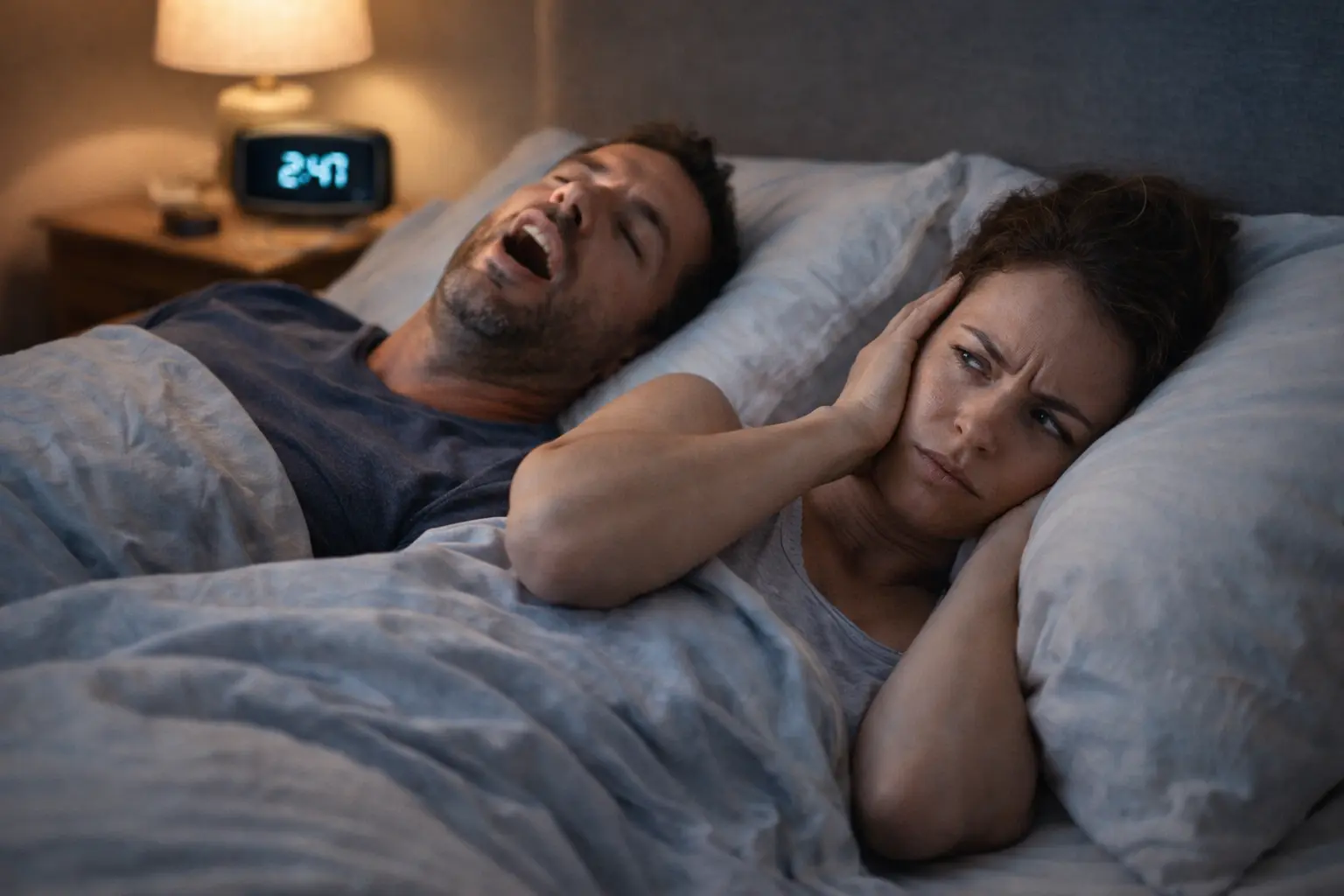
You’re exhausted all day, your partner says you stop breathing at night, and you wake up gasping for air, but nobody told you this was obstructive sleep apnea symptoms and that you could actually do something about it right now.
Understanding obstructive sleep apnea symptoms
Obstructive sleep apnea happens when your airway collapses during sleep, interrupting your breathing multiple times per night. You might not remember these interruptions, but your body does. Common signs include loud snoring that wakes your partner, waking up gasping or choking, extreme daytime fatigue that makes afternoon meetings feel impossible, morning headaches that feel like a hangover, mood swings and irritability, and difficulty concentrating at work. Imagine trying to focus on a presentation when you’ve had 40 micro-awakenings the night before. Your brain never gets deep, restorative sleep, so everything feels harder. Some young adults dismiss these symptoms as just being tired or stressed, but recognizing the pattern is your first step toward real change. Pay attention to when symptoms happen most, whether they’re worse on certain nights, and how they affect your daily performance.
- Pay attention to excessive daytime sleepiness, especially if you’re nodding off during meetings or while driving.
- Noticing pauses in breathing during sleep is a red flag, even if your partner only mentions it occasionally.
- Being told you snore loudly should prompt further investigation, especially if the snoring is disruptive or gasping sounds follow.
Risk factors and causes of sleep apnea
Sleep apnea isn’t just about being overweight, though excess weight around the neck can narrow your airway. Other risk factors include a naturally smaller or recessed jaw, large tonsils or adenoids, nasal congestion from allergies, smoking which inflames airways, drinking alcohol before bed which relaxes throat muscles, sleeping on your back, and family history of sleep apnea. Young adults sometimes have sleep apnea due to anatomical factors they can’t change, like jaw structure, rather than lifestyle alone. For example, a 28-year-old with a narrow airway might develop sleep apnea despite being fit and active. Understanding your specific risk factors helps you target the right interventions. If you smoke, quitting helps. If you’re overweight, even a 10 percent weight loss can improve symptoms significantly. If you have allergies, treating them reduces nighttime congestion. Genetics play a role too, so if a parent has sleep apnea, your risk is higher and you should be more vigilant about symptoms.
📘 Fix your day in under 2 minuteschoose where to begin:
Diagnosis and seeking help
The first step is scheduling an appointment with your primary care doctor or a sleep specialist. Describe your symptoms clearly: how often you snore, whether you wake gasping, how tired you feel during the day, and how long this has been happening. Your doctor will likely recommend a sleep study, which can happen at a sleep lab or at home with a portable device. A home sleep test is convenient for young adults with busy schedules. You wear a small device that monitors your breathing, oxygen levels, and heart rate overnight. The test measures your apnea-hypopnea index (AHI), which counts breathing interruptions per hour. An AHI under 5 is normal, 5-15 is mild, 15-30 is moderate, and over 30 is severe. Results typically come back within a week. Don’t delay this step thinking symptoms will improve on their own. Early diagnosis prevents complications like high blood pressure and heart problems from developing.
Treatment options for sleep apnea
CPAP therapy is the gold standard treatment. A CPAP machine delivers pressurized air through a mask while you sleep, keeping your airway open. It sounds intimidating, but many young adults adjust within a few weeks. Start with a lower pressure setting and gradually increase it. Wear it every night, even when traveling. Oral appliances are custom-fitted devices that reposition your lower jaw forward, opening your airway. They work well for mild to moderate apnea and are less bulky than CPAP. Lifestyle changes matter too: lose weight if needed, sleep on your side using a body pillow, avoid alcohol and sedatives, treat nasal congestion, and establish a consistent sleep schedule. Some people benefit from positional therapy devices that vibrate when you roll onto your back. In severe cases, surgery to remove excess tissue or reposition jaw structures might be recommended. Your sleep specialist will discuss which option fits your situation, severity level, and lifestyle. Many young adults use CPAP successfully and report feeling like a new person within weeks.
Managing sleep apnea long-term
Successful long-term management requires consistency and regular monitoring. Use your CPAP machine every single night, even when you feel better, because apnea returns when you stop treatment. Track your usage and data through your machine’s app or your doctor’s portal. Maintain a healthy weight through balanced nutrition and regular exercise, which improves apnea severity independent of CPAP. Avoid alcohol at least three hours before bed, as it relaxes your throat muscles and worsens breathing interruptions. Sleep on your side by using a body pillow or positional device. Keep your bedroom cool, dark, and quiet to support better sleep quality. Schedule follow-up appointments with your sleep specialist every 6-12 months to assess your progress and adjust treatment if needed. If you’re not tolerating CPAP well, tell your doctor immediately so you can try a different mask style, machine type, or alternative treatment. Young adults who stay engaged with their treatment see the best outcomes and report improved energy, better mood, sharper focus, and reduced health risks.
Understanding obstructive sleep apnea symptoms and their causes is crucial for effective management. Seek help if you suspect you have sleep apnea, explore treatment options with your healthcare provider, and focus on long-term strategies to improve your sleep quality.
Can sleep apnea go away on its own?
Sleep apnea is a chronic condition that typically requires ongoing management. While some lifestyle changes can help alleviate symptoms, professional intervention is often necessary.
Is sleep apnea dangerous?
Untreated sleep apnea can lead to serious health issues like high blood pressure, heart disease, and diabetes. Seeking treatment is crucial to reduce these risks and improve overall well-being.
Others also read:
Disclaimer: This article is for informational purposes only and is not a substitute for professional medical advice. Always consult a healthcare professional for personal guidance.
This guide has been prepared and reviewed by the GlobalHealthBeacon editorial team and reflects current medical research as of 2026. It provides structured, evidence-based information to support informed health decisions.
