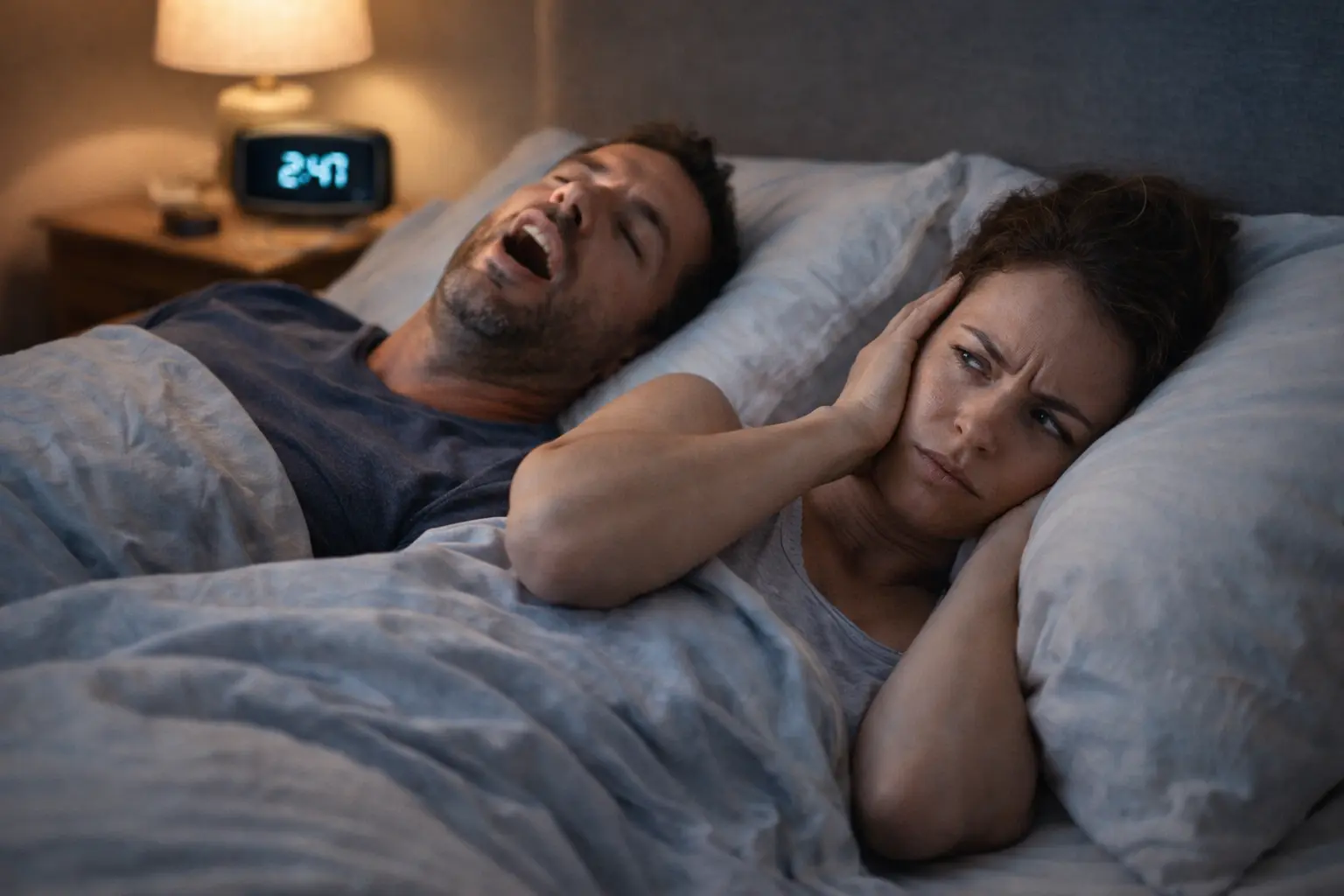
You’re waking up gasping for air, your throat feels crushed, and despite sleeping eight hours you’re absolutely wrecked all day long, and nobody seems to understand why obstructive sleep apnea symptoms might be silently destroying your health and your life.
What are the symptoms of obstructive sleep apnea?
Obstructive sleep apnea symptoms show up in ways that might seem unrelated at first. You might notice yourself snoring so loudly that your roommate or partner can hear you from another room, or you experience sudden gasping moments where you jolt awake feeling like you cannot breathe. During the day, you feel an overwhelming fatigue that coffee cannot fix, and you struggle to focus during work or classes. Morning headaches become routine, and you find yourself falling asleep at random moments. Some young adults describe it as feeling like their body is fighting itself all night. You might wake up with a dry mouth, experience mood swings, or notice difficulty concentrating during important tasks. These symptoms often develop gradually, so many people dismiss them as just being tired or stressed. The key is recognizing the pattern: loud snoring combined with daytime exhaustion is your body sending a clear signal that something needs attention.
- Loud and persistent snoring
- Intermittent breathing pauses during sleep
- Excessive daytime sleepiness
Understanding the causes of sleep apnea symptoms
Sleep apnea does not just happen randomly. Several factors work together to narrow your airway and trigger breathing interruptions. Excess weight is a major contributor because fatty tissue can accumulate around your neck and throat, physically blocking airflow. A naturally narrow airway, whether from genetics or anatomy, makes you more vulnerable. Family history matters too, so if your parents or siblings have sleep apnea, your risk increases significantly. Lifestyle habits amplify the problem: smoking irritates and inflames your airways, while alcohol relaxes the muscles that keep your airway open during sleep. Even your sleeping position matters. Consider a hypothetical scenario: a 24-year-old college student who gained weight during freshman year, started smoking socially, and drinks regularly might develop sleep apnea symptoms faster than expected. Understanding these root causes is not about blame, it is about identifying what you can actually change. Some factors like genetics you cannot control, but weight management, quitting smoking, limiting alcohol, and adjusting sleep position are all within your power.
📘 Fix your day in under 2 minuteschoose where to begin:
The impact of sleep apnea on quality of life
Untreated obstructive sleep apnea symptoms do more damage than just making you tired. Every time your breathing stops and restarts, your oxygen levels drop and your heart works harder to compensate. Over months and years, this repeated stress increases your risk of high blood pressure, heart disease, type 2 diabetes, and stroke. Young adults often think these conditions only happen to older people, but sleep apnea accelerates the timeline significantly. Beyond physical health, untreated sleep apnea affects your mental health, relationships, and performance. You might struggle in school or work because concentration becomes impossible. Your mood suffers, relationships strain when you are irritable or withdrawn, and your confidence takes a hit. Imagine missing important deadlines, struggling in exams, or having conflicts with people you care about, all because your brain is not getting enough oxygen at night. The good news is that early intervention stops this cascade. Seeking treatment now, while you are young, prevents years of accumulated damage and sets you up for better long-term health outcomes.
Diagnosis and treatment options
Getting diagnosed starts with talking to a healthcare provider about your symptoms. They will likely refer you for a sleep study, which can happen at a sleep clinic or sometimes at home with portable equipment. During the study, sensors monitor your breathing, oxygen levels, heart rate, and sleep stages to confirm whether you have sleep apnea and how severe it is. Once diagnosed, treatment options depend on severity. Mild cases often respond well to lifestyle changes: losing weight, changing sleep position, avoiding alcohol before bed, and treating nasal congestion. For moderate to severe cases, CPAP therapy (continuous positive airway pressure) is the gold standard. A CPAP machine delivers pressurized air through a mask, keeping your airway open throughout the night. It takes adjustment, but most people adapt within a few weeks. Other options include oral appliances that reposition your jaw to open your airway, or in severe cases, surgery to remove excess tissue. The key is not waiting. Young adults sometimes delay getting help because they feel embarrassed or think it is not serious, but early treatment prevents complications and improves your quality of life immediately.
Maintaining healthy sleep habits
Good sleep hygiene works alongside medical treatment to improve your results. Start by keeping a consistent sleep schedule, going to bed and waking at the same time daily, even on weekends. This trains your body to regulate sleep naturally. Create a relaxing bedtime routine about 30 minutes before sleep: dim the lights, put your phone away, and do something calming like reading or stretching. Your bedroom should be cool, dark, and quiet. Avoid caffeine after 2 PM and heavy meals within three hours of bedtime, as both interfere with sleep quality. Exercise regularly, but not close to bedtime. Sleep position matters too: side sleeping is better than back sleeping for keeping your airway open. If you use a CPAP machine, use it consistently every night, even if you feel better. Many young adults stop using it once symptoms improve, but that is a mistake because sleep apnea is a chronic condition. Consider tracking your sleep with a journal or app to notice patterns and share data with your doctor. These habits are not complicated, but consistency is everything.
Obstructive sleep apnea symptoms like loud snoring and daytime fatigue are not something to ignore or feel embarrassed about. They are your body’s way of signaling that something needs to change. Early diagnosis and treatment can transform your health, improve your energy, sharpen your focus, and prevent serious complications down the road. Whether through lifestyle changes, CPAP therapy, or other treatments, you have options that work. Taking action now sets you up for better health and a better life.
Is sleep apnea a serious condition?
Yes, obstructive sleep apnea is serious and gets worse without treatment. It strains your heart, raises your blood pressure, and increases your risk of heart attack and stroke. Young adults sometimes underestimate the danger because symptoms feel like just being tired, but the damage accumulates silently. Getting diagnosed and treated early prevents long-term complications and improves your quality of life immediately.
Can lifestyle changes improve sleep apnea symptoms?
Yes, lifestyle changes can significantly reduce or even resolve mild sleep apnea. Weight loss, regular exercise, quitting smoking, limiting alcohol, improving sleep hygiene, and changing your sleep position all help keep your airway open. For moderate to severe cases, lifestyle changes work best alongside medical treatment like CPAP therapy. The combination approach gives you the best results.
Others also read:
Disclaimer: This article is for informational purposes only and is not a substitute for professional medical advice. Always consult a healthcare professional for personal guidance.
This guide has been prepared and reviewed by the GlobalHealthBeacon editorial team and reflects current medical research as of 2026. It provides structured, evidence-based information to support informed health decisions.
