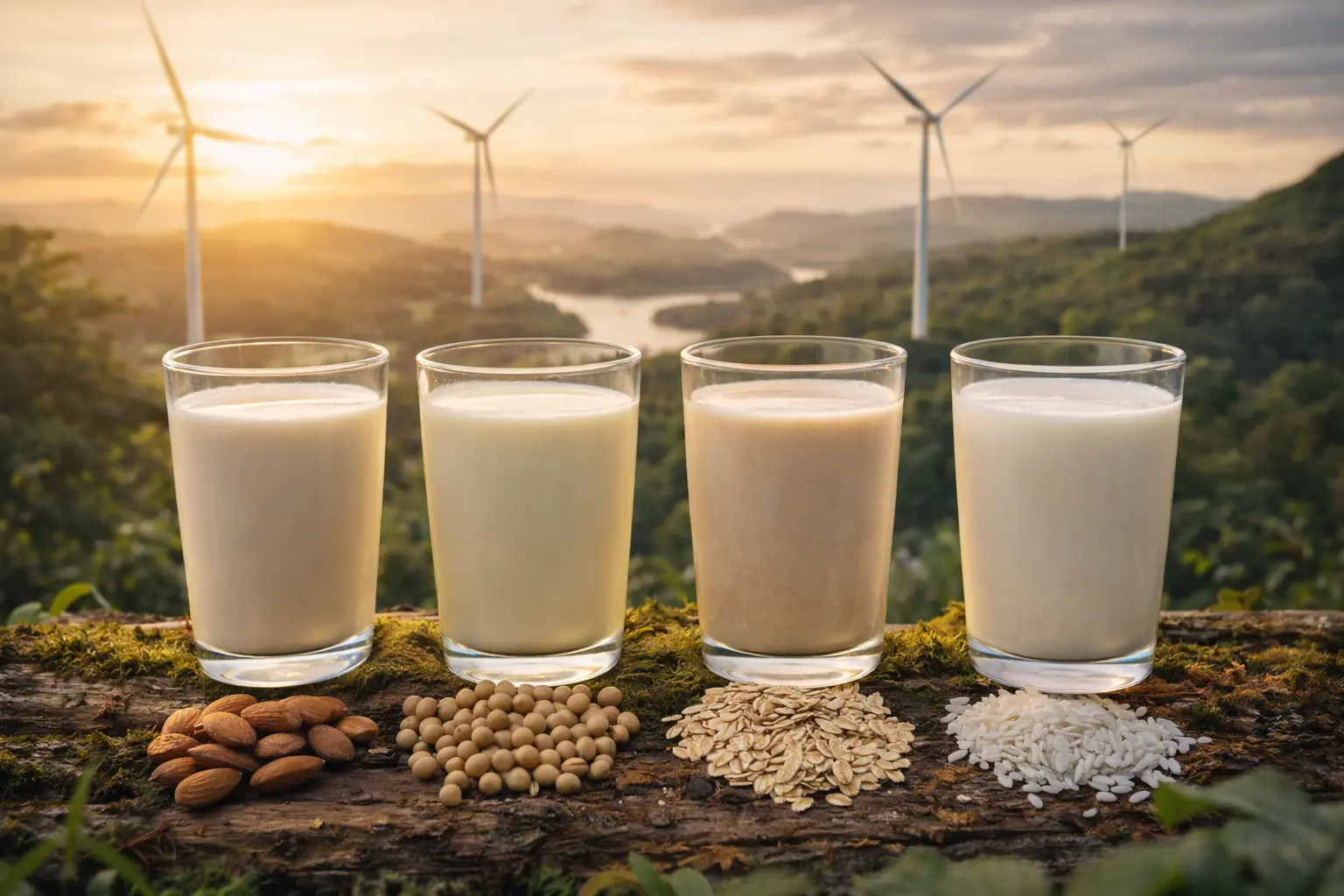
You’re standing in the grocery store staring at a wall of milk alternatives, wondering if switching actually matters for the planet, and honestly feeling a bit overwhelmed by the plant based milk environmental impact question that nobody seems to answer straight.
Understanding plant-based milk choices
When you first transition to plant-based milk, the sheer number of options can feel paralyzing. You’ve got almond, soy, oat, coconut, and now even pea and cashew varieties flooding the shelves. Here’s the reality: each one tastes different, feels different in your coffee or cereal, and brings different nutritional strengths to the table. Almond milk is light and won’t overpower your morning espresso, but it’s lower in protein. Soy milk is thick and creamy, almost matching dairy’s texture, and packs serious protein for post-workout smoothies. Oat milk has become the barista favorite because it froths beautifully and adds a subtle sweetness without any effort. The trick isn’t finding the perfect one immediately. Instead, buy a carton of three different types over the next month and actually use them. Notice which one you reach for naturally. Notice which one makes your cereal taste better. This isn’t about forcing yourself into a box. It’s about discovering what your taste buds actually want, not what you think you should like.
- Almond milk: Nutty flavor, low in calories, and suitable for cooking.
- Soy milk: Creamy texture, high in protein, and versatile in recipes.
- Oat milk: Naturally sweet, great for coffee, and rich in fiber.
- Coconut milk: Rich and creamy, perfect for desserts and curries.
- Blend different types for unique taste profiles and nutritional benefits.
Environmental impact of plant-based milk
Here’s what you need to know without the guilt trip: plant-based milk production genuinely uses less water, produces fewer emissions, and requires less land than dairy milk farming. A single liter of dairy milk can demand over 600 liters of water to produce. Oat milk? Around 10 liters. That’s not a small difference. The carbon footprint comparison is similarly stark. But here’s where it gets real: not all plant-based milks are created equal. Almond farming in California has raised concerns about water usage in drought-prone regions. Soy production sometimes involves deforestation in sensitive areas. This doesn’t mean you should panic or give up. It means you should look beyond the label. Seek out brands that source responsibly, that publish their environmental impact reports, and that actually care about where their ingredients come from. Some companies are doing the work. Others are just riding the trend. Your choice matters, but only if you’re choosing consciously.
📘 Fix your day in under 2 minuteschoose where to begin:
Practical tips for sustainable choices
Making sustainable choices doesn’t require perfection. It requires intention. Start by checking the packaging. Glass bottles are reusable and infinitely recyclable. Cartons made from sustainably harvested cardboard are your next best option. Avoid plastic bottles when you can, but don’t stress if that’s all available at your local store. Next, look for certifications. USDA Organic means the crops weren’t sprayed with synthetic pesticides. Fair Trade means farmers were paid fairly and working conditions were monitored. Rainforest Alliance certification indicates environmental and social standards were met. These labels aren’t perfect, but they’re signals that someone was paying attention. Finally, consider buying from brands that are transparent about their supply chain. If a company can tell you exactly where their oats come from or how they’re reducing water usage, that transparency is worth something. You don’t need to become an investigative journalist about milk. Just spend five extra minutes on your first purchase reading what a brand actually stands for.
Incorporating plant-based milk into your lifestyle
The real test of switching to plant-based milk isn’t whether you believe in it. It’s whether you actually use it consistently. Start small. If you drink coffee every morning, that’s your entry point. Buy one carton of oat milk and commit to using it for two weeks. You’ll quickly notice if it works for you. If you eat cereal, try plant-based milk there. If you bake, experiment in one recipe at a time. The beauty of plant-based milk is that it’s genuinely flexible. Smoothies? It works. Pasta sauces? Yes. Mashed potatoes? Absolutely. Pancake batter? Better than dairy, actually. The key is finding the three to five ways you actually use milk in your weekly routine, then making sure you have a plant-based option for those moments. Don’t try to overhaul your entire diet overnight. That’s how people quit. Instead, identify your milk moments, pick your favorite plant-based option for those moments, and let the habit build naturally. Within a month, you won’t even think about it anymore.
Final thoughts on going plant-based
Switching to plant-based milk isn’t about being perfect or proving something to anyone. It’s about making a choice that aligns with what you actually care about. You’re reducing your environmental footprint. You’re supporting companies that are (hopefully) thinking about sustainability. You’re experimenting with flavors and textures that might actually taste better to you than what you grew up with. The plant-based milk industry is moving fast. New options appear constantly. Innovations in packaging, sourcing, and taste are happening right now. Some of these new products will be genuinely better. Others will be marketing noise. Your job is to stay curious without becoming obsessive. Try new things when they interest you. Stick with what works. Read the occasional article about environmental impact so you’re not completely in the dark. But mostly, just make the choice that feels right for you and move forward. You don’t need permission. You don’t need to be perfect. You just need to care enough to try.
Plant-based milk offers a sustainable dairy alternative with various taste options and nutritional benefits. Make mindful choices by selecting eco-friendly brands and incorporating plant-based milk into your daily routine for a positive impact on the environment.
Does plant-based milk offer the same nutritional value as dairy milk?
Plant-based milk can be fortified to match the nutritional content of dairy milk, providing similar levels of calcium, vitamin D, and other essential nutrients.
How can I find the most sustainable plant-based milk brands?
Look for certifications like USDA Organic, Fair Trade, or Rainforest Alliance. Additionally, consider brands that prioritize eco-friendly packaging to reduce environmental impact.
Others also read:
Disclaimer: This article is for informational purposes only and is not a substitute for professional medical advice. Always consult a healthcare professional for personal guidance.
This guide has been prepared and reviewed by the GlobalHealthBeacon editorial team and reflects current medical research as of 2026. It provides structured, evidence-based information to support informed health decisions.
← Go to the plant based milk environmental impact main guide
