Your gut is screaming for help and you don’t even realize it – bloating, fatigue, brain fog, and that stubborn weight that won’t budge are all whispering the same message, and the answer might be as simple as adding the right prebiotics foods list to your meals starting today.
What are prebiotics and why are they important?
Prebiotics are a specific type of dietary fiber that your body cannot digest, but your gut bacteria absolutely thrive on them. Think of them as fertilizer for the good bacteria living in your digestive system. When you consume prebiotic foods, you’re essentially feeding the beneficial microorganisms that keep your digestion running smoothly, your immune system strong, and even your mood stable. Women in particular benefit from a robust gut microbiome because it influences hormone metabolism, nutrient absorption, and energy levels throughout your menstrual cycle. By incorporating prebiotic-rich foods into your diet, you can promote better digestion, enhance nutrient absorption, and support a strong immune system. The process starts working immediately as these fibers reach your colon and become food for your good bacteria, creating a healthier internal environment.
- Promote the growth of good bacteria in the gut
- Aid in the breakdown of food for easier digestion
- Support the body’s natural immune defenses
Top prebiotic foods for women
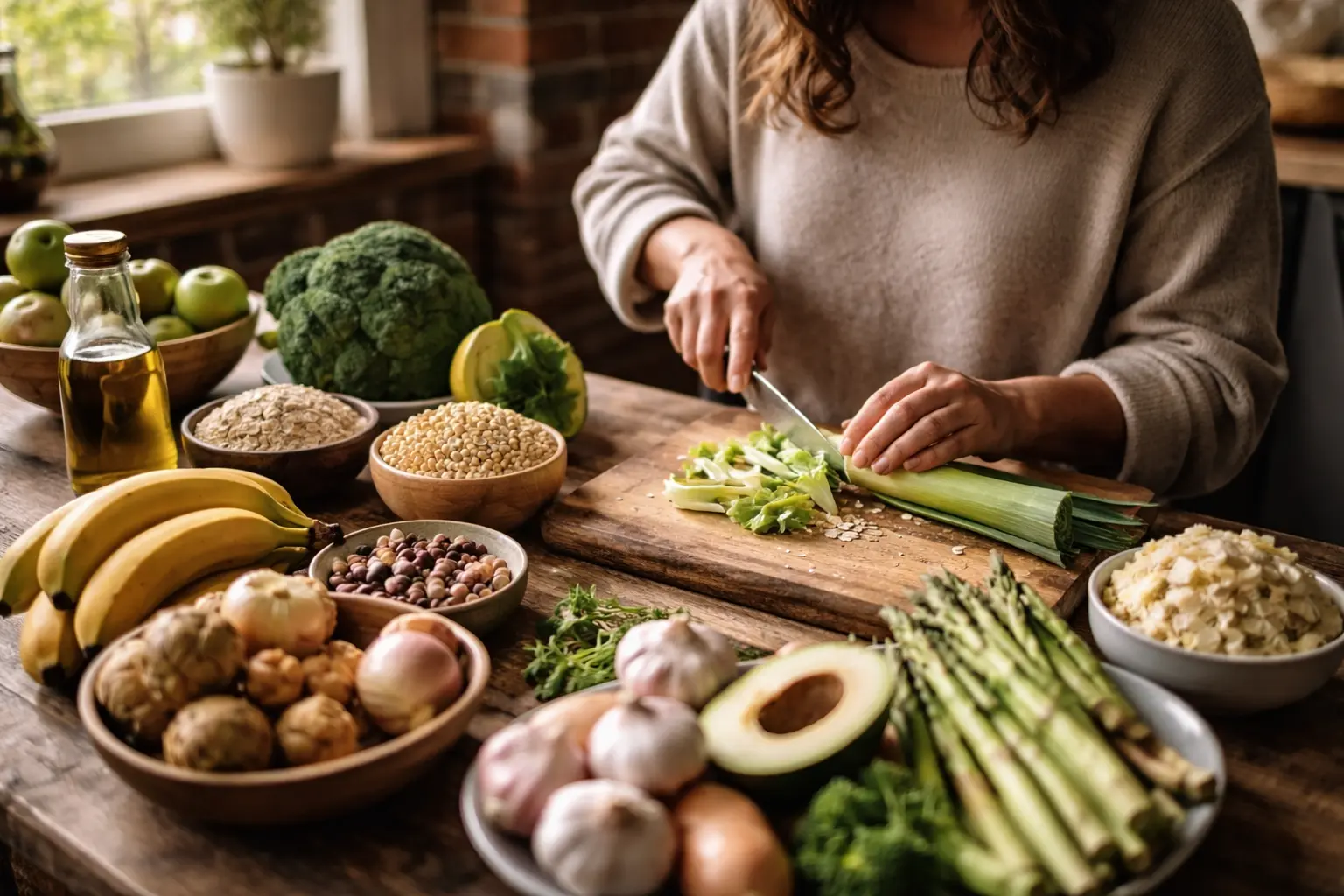
The best prebiotic foods are hiding in plain sight at your local grocery store. Garlic and onions are powerhouses, containing inulin and fructooligosaccharides that feed your beneficial bacteria while adding incredible flavor to any dish. Leeks offer a milder onion-like taste and work beautifully in soups or roasted as a side vegetable. Asparagus provides both prebiotics and a satisfying texture that makes it easy to eat regularly. Bananas, especially when slightly underripe, contain resistant starch that acts as a prebiotic. Apples with their skin intact deliver quercetin and pectin. Whole grains like oats and barley, legumes such as lentils and chickpeas, and even chocolate with high cocoa content contain prebiotic compounds. The key is variety and consistency. Rather than focusing on just one food, rotating through different sources ensures you get a broader spectrum of prebiotic fiber types and additional nutrients that support women’s health.
📘 Fix your day in under 2 minuteschoose where to begin:
How to add prebiotic foods to your diet
Start by auditing what you already eat and identifying natural entry points for prebiotic foods. If you eat breakfast cereal, switch to oat-based options or add ground flaxseed. For lunch, build salads around leafy greens with roasted asparagus, sliced apples, and a sprinkle of garlic-infused olive oil. Dinner becomes easier when you realize that garlic and onions are foundational to countless cuisines, so simply use them more generously in your cooking. Smoothies are an underrated vehicle for prebiotics: blend a banana, add a tablespoon of raw chicory root powder, include some berries, and you’ve created a prebiotic powerhouse. Snacking can shift too. Instead of processed options, keep sliced apples with almond butter, or roasted chickpeas seasoned with herbs on hand. The mistake most women make is trying to overhaul their diet overnight. Start by adding one prebiotic food to each meal and let your digestive system adapt gradually over two to three weeks before expanding further.
Potential benefits of prebiotic foods for women
Beyond gut health, prebiotic foods offer cascading benefits that touch nearly every system in your body. Women who increase their prebiotic intake often report improved energy levels, clearer skin, and better mood stability because a healthy gut microbiome produces neurotransmitters like serotonin and regulates inflammation throughout the body. Blood sugar regulation improves when you consume prebiotics because the fiber slows glucose absorption and feeds bacteria that produce short-chain fatty acids, which enhance insulin sensitivity. Weight management becomes less of a struggle because prebiotic fiber increases satiety, meaning you feel fuller longer and experience fewer cravings. Many women also notice reduced bloating and more regular digestion within weeks of consistent prebiotic consumption. The anti-inflammatory effects can ease period-related discomfort and reduce overall joint and muscle inflammation. Some research suggests that a healthy prebiotic-fed microbiome even supports bone density, which is particularly important for women approaching or in menopause. These benefits compound over time, creating a positive feedback loop where better digestion leads to better nutrient absorption, which leads to more energy for movement and self-care.
Consult a healthcare professional
Before making significant dietary shifts, especially if you have existing digestive conditions, food sensitivities, or take medications that interact with high-fiber foods, schedule a conversation with your healthcare provider or registered dietitian. They can review your individual health history, current symptoms, and nutritional needs to create a personalized plan rather than a generic approach. A professional can also help you increase prebiotic intake at a pace your system can handle, preventing the temporary bloating or gas that sometimes occurs when people jump into high-fiber eating too quickly. If you have conditions like IBS, FODMAP sensitivities, or are managing hormonal health issues, a dietitian can guide you toward prebiotic sources that work specifically for your body. They might recommend starting with gentler options like cooked asparagus or ripe bananas before moving to raw garlic or high-dose supplements. This personalized guidance ensures you get the benefits of prebiotics without triggering unwanted side effects, and it gives you a roadmap for sustainable, long-term dietary change that actually fits your life.
Prebiotic foods are rich in fiber and essential for supporting gut health and overall well-being. By including a variety of prebiotic foods in your diet, you can promote good digestion, boost your immune system, and potentially improve other aspects of your health.
What are some easy ways to add prebiotic foods to my diet?
You can add prebiotic foods to your diet by including them in salads, soups, stir-fries, smoothies, or enjoying them as snacks. Experiment with different recipes to find delicious ways to incorporate prebiotics into your meals.
Are there any potential side effects of consuming prebiotic foods?
While prebiotic foods are generally safe for most people, some individuals may experience bloating or gas initially as their gut bacteria adjust. It’s important to start slowly and gradually increase your intake of prebiotic-rich foods.
Others also read:
Disclaimer: This article is for informational purposes only and is not a substitute for professional medical advice. Always consult a healthcare professional for personal guidance.
This guide has been prepared and reviewed by the GlobalHealthBeacon editorial team and reflects current medical research as of 2026. It provides structured, evidence-based information to support informed health decisions.
