Your digestion feels off, your energy dips, and you’re wondering if something deeper is happening with your gut, but nobody’s really explaining what prebiotics foods list actually does or why it matters for your body specifically.
What are prebiotics?
Prebiotics are specialized types of dietary fiber that your digestive system cannot break down or absorb on its own. Unlike regular fiber that gets processed throughout your digestive tract, prebiotics pass through your stomach and small intestine largely unchanged, reaching your colon intact. Once there, they become selective food sources for beneficial bacteria already living in your gut. Think of them as fertilizer for the good microbes you want to thrive. Your gut contains trillions of microorganisms, and prebiotics essentially feed the specific strains that support digestion, immune function, and metabolic health. Common prebiotic fibers include inulin and fructooligosaccharides, which selectively stimulate the growth of Bifidobacterium and Lactobacillus species. This selective feeding is what distinguishes prebiotics from general dietary fiber, making them a targeted nutritional strategy rather than a broad dietary approach.
Sources of prebiotics
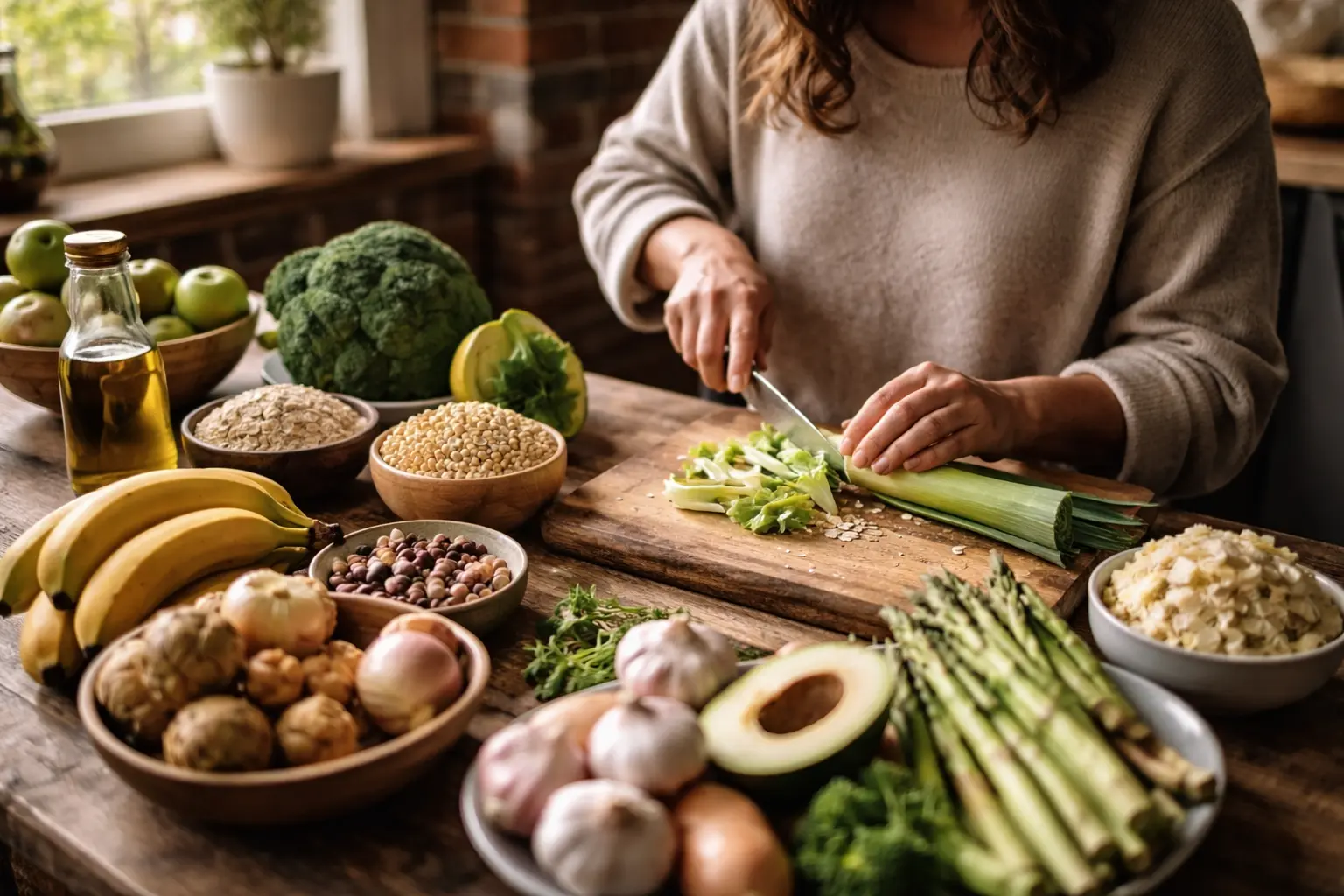
Prebiotic-rich foods are surprisingly common in everyday meals, though many women don’t realize they’re consuming them. Bananas, particularly when slightly underripe, contain resistant starch and inulin that feed beneficial bacteria effectively. Garlic and onions are potent prebiotic sources, delivering significant amounts of inulin with every serving. Asparagus, leeks, and chicory root are equally powerful options. Whole grains like oats, barley, and wheat contain beta-glucans and other prebiotic compounds. Legumes such as lentils, chickpeas, and black beans provide both prebiotic fiber and protein, making them nutritionally dense choices. Jerusalem artichokes are exceptionally high in inulin, though less commonly consumed. Even honey contains small amounts of prebiotic compounds. The key is variety and consistency, as different prebiotic sources feed different bacterial populations, creating a more diverse and resilient microbiome.
How prebiotics support women’s health
Women’s health involves interconnected systems where gut health plays a surprisingly central role. A healthy gut microbiome influences estrogen metabolism through what researchers call the estrobolome, a collection of bacterial genes that regulate estrogen levels. This connection means prebiotic intake can indirectly support hormonal balance, potentially easing symptoms related to menstrual cycles and hormonal fluctuations. Beyond hormones, prebiotics strengthen the intestinal barrier, reducing inflammation that can trigger digestive discomfort, bloating, and irregular bowel movements. The improved nutrient absorption that follows supports energy levels, skin health, and immune resilience. Mental health also benefits, as the gut-brain axis means a thriving microbiome produces neurotransmitters like serotonin and GABA, influencing mood and stress response. Women managing digestive sensitivities, hormonal imbalances, or chronic inflammation often report noticeable improvements when incorporating diverse prebiotic foods consistently.
- Incorporate more fiber-rich fruits and vegetables into your meals, starting with one additional serving daily to allow your digestive system to adapt gradually.
- Choose whole grains like oats and barley for added prebiotic benefits, replacing refined grains in at least half your grain-based meals.
- Include legumes such as lentils and chickpeas in your diet to boost prebiotic intake, aiming for at least two to three servings weekly.
🔬 Science-backed benefits in 2 minuteschoose where to begin:
The impact of prebiotics on gut health
Scientific research consistently demonstrates that prebiotic-rich diets create measurable shifts in gut composition and function. Studies using stool analysis show increased microbial diversity and higher populations of beneficial bacteria within weeks of increased prebiotic consumption. This diversity matters because a varied microbiome is more resilient and capable of producing a wider range of beneficial compounds. Women with digestive issues often experience reduced bloating, improved regularity, and decreased abdominal discomfort as their microbiota stabilizes. The anti-inflammatory effects are particularly significant, as dysbiosis (microbial imbalance) contributes to systemic inflammation linked to hormonal disruption, autoimmune responses, and metabolic dysfunction. Prebiotic fermentation produces short-chain fatty acids like butyrate, which nourish colon cells and strengthen the intestinal barrier. This barrier function is crucial for preventing bacterial lipopolysaccharides from entering the bloodstream, a process called leaky gut that triggers widespread inflammation.
Balancing your gut microbiome
Creating a balanced microbiome requires both prebiotics and probiotics working synergistically, a concept called synbiotics. Prebiotics feed beneficial bacteria, while probiotics introduce live beneficial strains. However, the most sustainable approach emphasizes prebiotic foods over supplements, since whole foods provide fiber, vitamins, minerals, and phytonutrients alongside prebiotic compounds. A practical strategy involves consuming fermented foods like yogurt, kefir, sauerkraut, or kimchi alongside prebiotic vegetables and whole grains. This combination ensures you’re both introducing beneficial bacteria and providing them with their preferred food sources. Women often see the best results when they gradually increase prebiotic intake over two to three weeks, allowing their digestive system to adapt without excessive gas or bloating. Consistency matters more than perfection, as the microbiome responds to sustained dietary patterns rather than occasional efforts.
Making informed dietary choices
Understanding prebiotics empowers you to make intentional dietary decisions aligned with your health goals rather than following generic nutrition advice. Start by identifying which prebiotic foods you already enjoy, then gradually expand your variety. If you experience bloating when increasing fiber intake, slow down and spread additions across several weeks. Keep a simple food journal noting energy levels, digestion quality, and mood to observe your personal response patterns. Remember that prebiotic benefits accumulate over time, so patience is essential. Consult with a healthcare provider if you have digestive conditions like IBS or FODMAP sensitivities, as some prebiotic foods may require modification. The goal isn’t perfection but building sustainable eating patterns that support your unique body and lifestyle, creating lasting improvements in how you feel daily.
Prebiotics, found in fiber-rich foods like fruits, vegetables, and whole grains, play a vital role in supporting a healthy gut microbiome. By incorporating these foods into your diet, women can promote better digestion, hormonal balance, and overall health.
Can I get prebiotics from supplements?
While supplements are available, it’s generally recommended to obtain prebiotics from natural food sources to ensure a diverse nutrient intake and support overall health.
Are prebiotics safe for pregnant women?
Including prebiotic-rich foods in moderation is generally safe for pregnant women and can provide additional health benefits, but it’s always best to consult with a healthcare provider before making significant dietary changes.
Others also read:
Disclaimer: This article is for informational purposes only and is not a substitute for professional medical advice. Always consult a healthcare professional for personal guidance.
This article has been prepared and reviewed by the GlobalHealthBeacon editorial team and is based on current medical research and published scientific literature available in 2026. It provides structured, evidence-based information to support informed health decisions.
