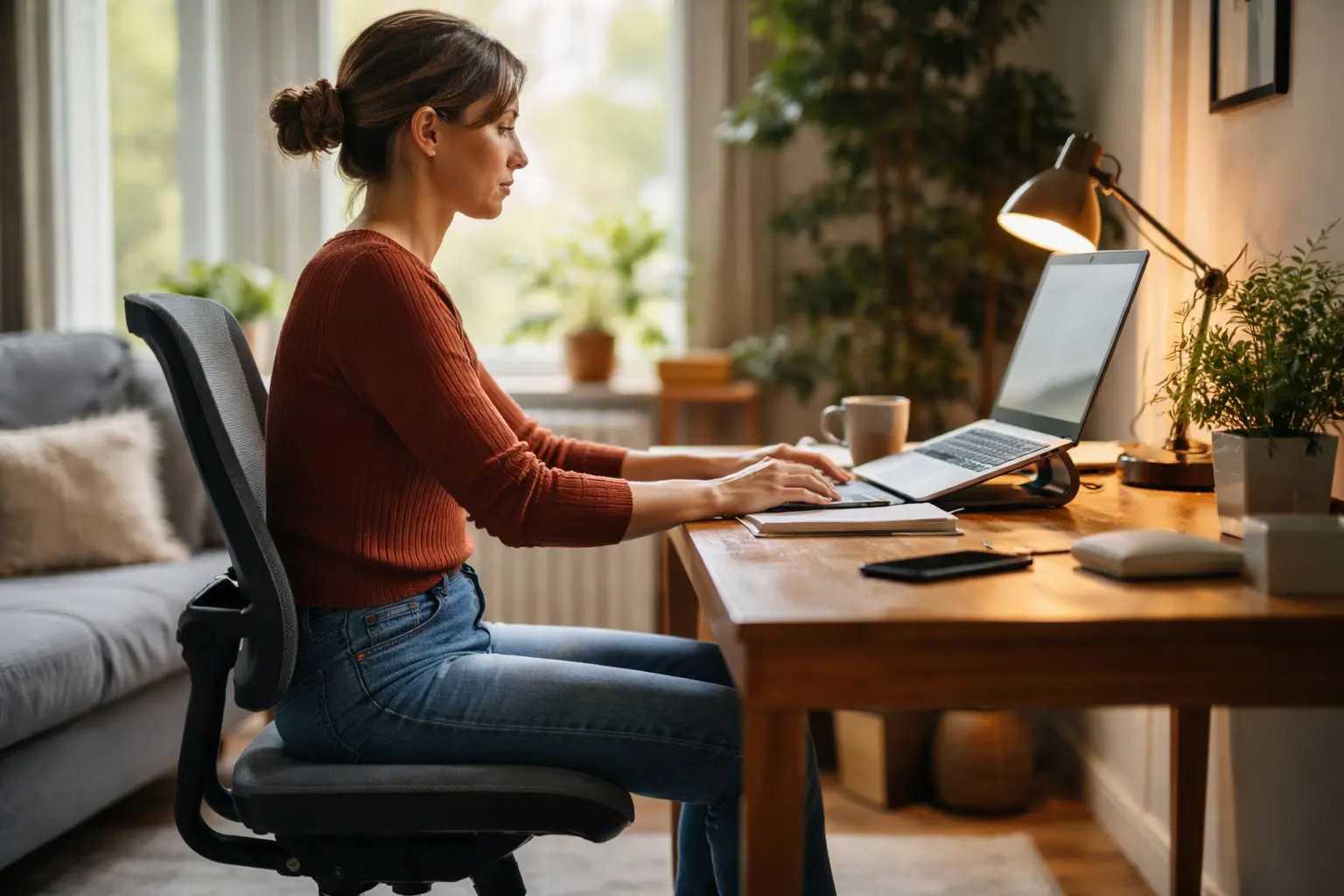
Your neck is screaming, your lower back feels like it’s been hit by a truck, and you’re only three hours into your workday, but here’s the thing: mastering proper sitting posture for home working doesn’t require fancy equipment or hours at the gym, just real adjustments that actually stick.
Ergonomic essentials for comfort
I remember the moment I realized my dining chair was slowly destroying my spine. After weeks of waking up stiff and reaching for painkillers by noon, I finally invested in a proper ergonomic chair, and honestly, it changed everything. But here’s what I wish I’d known sooner: it’s not just about the chair. Your monitor height matters more than you think. When it’s too low, you’re constantly craning your neck forward, which creates this domino effect of tension down your entire spine. Position it so the top of the screen sits at eye level when you’re sitting upright. Your keyboard and mouse placement is equally crucial. If they’re too far away, you’ll hunch forward and round your shoulders, which triggers that familiar ache between your shoulder blades. Keep them close enough that your elbows stay at roughly 90 degrees and your wrists stay straight, not bent upward or downward. And please, take breaks every hour. I know it feels impossible when you’re in the flow, but standing up, walking around, and doing a quick stretch prevents that cumulative muscle fatigue that sneaks up on you.
- Adjust your chair height so your feet are flat on the floor and your knees form a 90-degree angle.
- Position your monitor directly in front of you to reduce strain on your neck and eyes.
- Keep your keyboard and mouse close enough that your elbows are at a 90-degree angle and your wrists are straight.
- Stand up, move around, and stretch every hour to prevent muscle fatigue and improve circulation.
- Practice good posture by sitting upright with your shoulders relaxed and your back supported.
Mindful movement for posture improvement
Movement became my secret weapon. I started doing shoulder rolls during video calls, neck stretches between emails, and gentle spine twists whenever I felt stiffness creeping in. What surprised me was how these tiny movements throughout the day added up. Your core muscles are like the foundation of a house. If they’re weak, everything else compensates, which means your back takes the hit. That’s why I eventually tried yoga and pilates, and I genuinely noticed the difference within two weeks. My posture improved not because I was forcing myself to sit straighter, but because my muscles were finally strong enough to support me naturally. The key is consistency over intensity. You don’t need hour-long classes. Even ten minutes of targeted core work in the morning or evening makes a real difference. I also discovered that moving throughout the day actually boosts my focus and energy. When I sit for too long without movement, my mind gets foggy, but a quick stretch session clears everything up. It’s like your body and mind are connected in ways we don’t always recognize.
💬 Ready to feel better in 2 minutes?choose where to begin:
Breathing techniques for relaxation
Tension lives in your shoulders and back, and honestly, most of us don’t even realize we’re holding stress there until someone points it out. I noticed that my poor posture got worse when I was anxious or stressed because I’d unconsciously hunch forward and tighten up. That’s when I started practicing deep breathing exercises throughout my workday. It sounds simple, but it works. I’d pause, inhale slowly through my nose while expanding my diaphragm, then exhale through my mouth while consciously relaxing my shoulders and releasing any tightness I felt. Even two minutes of this resets your nervous system. What’s interesting is that better breathing actually supports better posture. When you breathe deeply, you naturally sit taller and engage your core. It’s not just about relaxation. It’s about creating a feedback loop where your body feels calmer and more aligned. I do this especially before important calls or when I notice myself getting tense during the day.
Creating a supportive work environment
Your environment matters more than you might think. I realized my workspace was dimly lit, which made me lean forward toward my screen, straining my eyes and throwing off my posture. Adding a desk lamp changed that immediately. I also started using a footrest because my feet weren’t quite flat on the floor, which was creating tension in my legs and lower back. Then I added a lumbar support pillow to my chair, and that small addition provided just enough extra support to keep my spine in proper alignment throughout the day. The thing about posture improvements is that they’re rarely about one big change. It’s a collection of small adjustments that together create a supportive system. When your environment supports you, maintaining good posture becomes effortless rather than something you have to constantly think about and correct. I also noticed that when my space feels organized and comfortable, I’m more motivated to maintain good habits.
By implementing ergonomic essentials, mindful movement, breathing techniques, and creating a supportive work environment, you can effectively improve your posture while working from home. These simple adjustments can alleviate discomfort and enhance your productivity throughout the day.
How long should I sit at a time when working from home?
It is recommended to take a break every 30-60 minutes when working from home. Stand up, stretch, and move around to prevent muscle fatigue and stiffness.
Can posture correctors help improve sitting posture?
Posture correctors can be helpful as a temporary aid to remind you to sit up straight, but they should not be relied on as a long-term solution. Focus on strengthening your core muscles and practicing good posture habits for lasting results.
Others also read:
Disclaimer: This article is for informational purposes only and is not a substitute for professional medical advice. Always consult a healthcare professional for personal guidance.
This article presents an experience-based perspective and has been reviewed by the GlobalHealthBeacon editorial team in 2026. It provides structured, evidence-based information to support informed health decisions.
← Back to the main proper sitting posture for home working page
