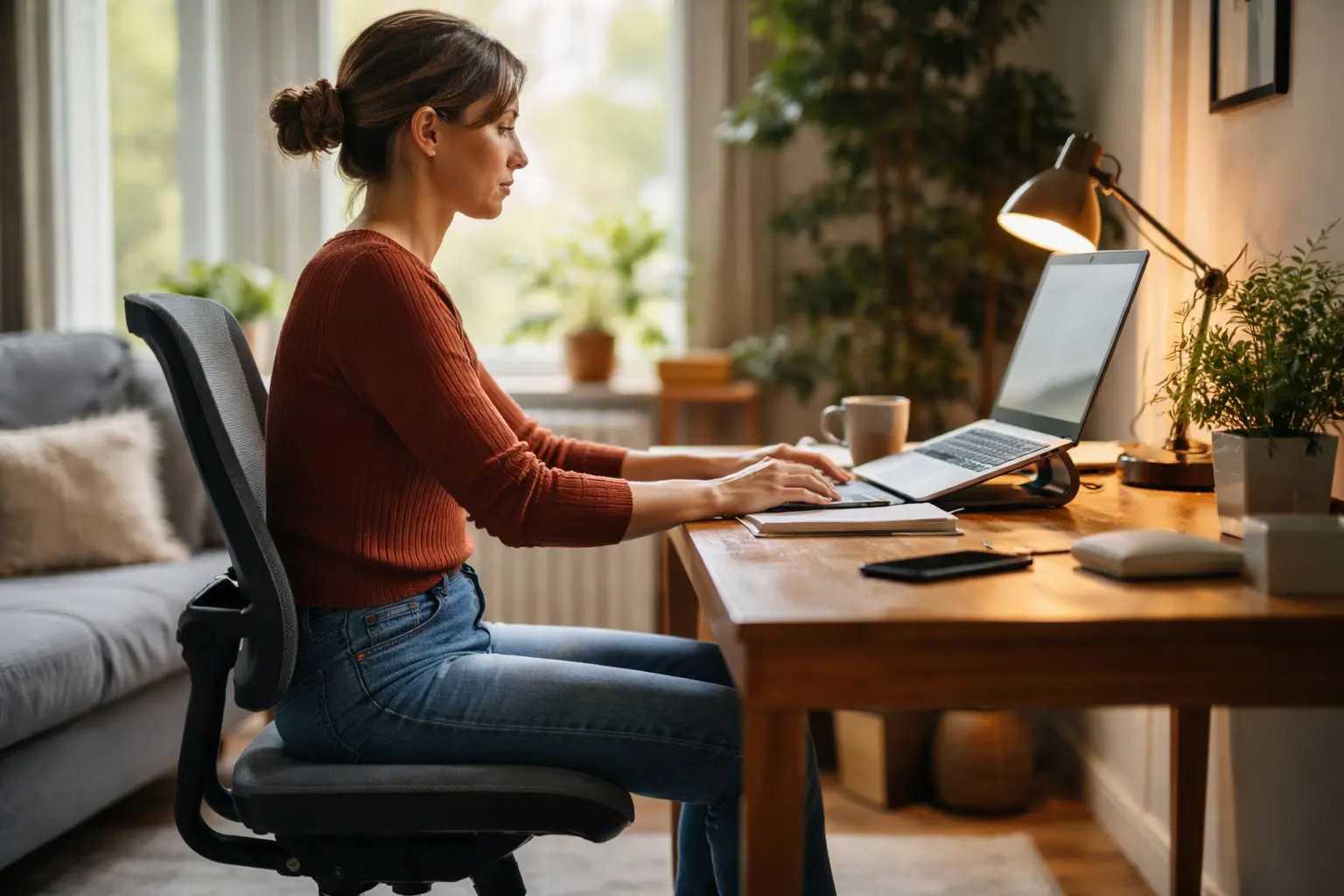
Your back aches after an hour at the desk, your neck feels stiff by afternoon, and you catch yourself slouching again even though you know better, so let’s fix your proper sitting posture for home working once and for all.
Understanding the importance of posture
Think about what happens to your body when you slouch for hours. Your spine curves unnaturally, your chest collapses inward, and suddenly your muscles are working overtime just to keep you upright. For seniors, this becomes even more critical. When you maintain good posture, you’re not just sitting up straight, you’re protecting your spine from premature wear, keeping your lungs open for better breathing, and ensuring blood flows properly throughout your body. Poor posture compounds over time, leading to chronic back pain, reduced mobility, and even digestive issues. The good news is that fixing posture now prevents years of discomfort later. Consider someone like Margaret, a 68-year-old who spent decades at a desk with rounded shoulders. After three months of conscious posture work, she noticed her energy improved, her headaches disappeared, and she could walk longer without fatigue. Your body remembers good alignment and rewards you for it.
- Keep both feet flat on the floor to support your lower back
- Align your shoulders and ears to avoid neck strain
- Ensure your chair provides adequate lumbar support
Simple adjustments for better posture
You don’t need to overhaul your entire setup. Start small and build from there. First, raise your computer screen so the top of it sits at eye level when you’re sitting naturally, not tilted down. This alone prevents the forward head posture that causes neck pain. Next, adjust your chair height so your elbows bend at roughly 90 degrees when your hands rest on your keyboard. Your feet should touch the floor without dangling. If your current chair doesn’t support your lower back, add a small lumbar pillow or rolled towel behind your lower spine. Take breaks every 30 minutes, even if just for two minutes, to stand and stretch. Walk to get water, do a few shoulder rolls, or gently twist your torso. These micro-breaks reset your muscles and prevent stiffness from setting in. One senior found that setting a phone alarm every half hour transformed her day, turning what felt like constant discomfort into manageable, brief interruptions.
📘 Fix your day in under 2 minuteschoose where to begin:
The role of proper ergonomics
Ergonomics isn’t luxury, it’s necessity. Your body spends hours in the same position, so the tools supporting that position matter deeply. A keyboard tray keeps your wrists neutral instead of bent, reducing strain on the tendons and nerves that run through your hands and forearms. A wrist rest prevents your hands from dangling as you type. A footrest, if your feet don’t naturally touch the floor, takes pressure off your lower back and thighs. Even small items like an adjustable monitor stand or a document holder at eye level prevent you from constantly looking down. The investment is modest compared to the relief you’ll experience. One 72-year-old man spent just 150 dollars on an ergonomic keyboard and footrest, and his carpal tunnel symptoms improved within weeks. These tools work because they align your body with its natural mechanics, reducing the constant micro-adjustments that tire your muscles and strain your joints.
Exercises to strengthen posture muscles
Sitting correctly is half the battle, but strengthening the muscles that support good posture is the other half. Your core, back, and neck muscles need regular activation to hold alignment without exhaustion. Gentle yoga poses like child’s pose, cat-cow, and downward dog lengthen tight muscles and build awareness of your spine. Pilates focuses on core strength, which is the foundation of all posture work. Tai chi combines slow, flowing movements with balance training, perfect for seniors concerned about falls. Even simple exercises help, like wall angels where you stand against a wall and slowly raise your arms, or prone Y-T-W holds that activate your upper back. Start with just 10 to 15 minutes, three times weekly. A 70-year-old woman began a gentle yoga routine and within six weeks noticed she could sit upright without effort, her shoulders naturally relaxed instead of tense. These exercises aren’t about becoming flexible or strong in the gym sense, they’re about training your body to prefer good alignment.
Seeking professional advice
Sometimes you need expert eyes on your specific situation. A physical therapist can assess your posture, identify which muscles are tight or weak, and design a program tailored to your body. They spot habits you don’t notice, like one shoulder sitting higher than the other or your head jutting forward. Your primary care doctor can rule out underlying conditions like osteoporosis or arthritis that might affect how you approach posture work. A chiropractor or occupational therapist offers additional perspectives. Many insurance plans cover physical therapy, especially if your doctor refers you. Even one or two sessions can clarify what you’re doing right and what needs adjustment. A 75-year-old man visited a physical therapist for just three sessions, learned three specific exercises, and used those tools for the next two years with excellent results. Professional guidance accelerates your progress and prevents you from reinforcing bad habits unknowingly.
Maintaining good posture is essential for seniors to prevent discomfort and enhance overall well-being. Simple adjustments, ergonomic tools, exercises, and professional guidance can all contribute to improving sitting posture at home.
Can poor posture lead to health problems for seniors?
Yes, poor posture can contribute to back pain, muscle stiffness, and decreased mobility in seniors. By maintaining proper sitting posture, you can reduce the risk of these issues and improve your overall comfort and health.
How often should seniors take breaks from sitting?
Seniors should aim to take breaks every 30 minutes to stand up, stretch, and move around. These short breaks can help prevent stiffness, improve circulation, and reduce the strain on your muscles and joints.
Others also read:
Disclaimer: This article is for informational purposes only and is not a substitute for professional medical advice. Always consult a healthcare professional for personal guidance.
This guide has been prepared and reviewed by the GlobalHealthBeacon editorial team and reflects current medical research as of 2026. It provides structured, evidence-based information to support informed health decisions.
← Go to the proper sitting posture for home working main guide
