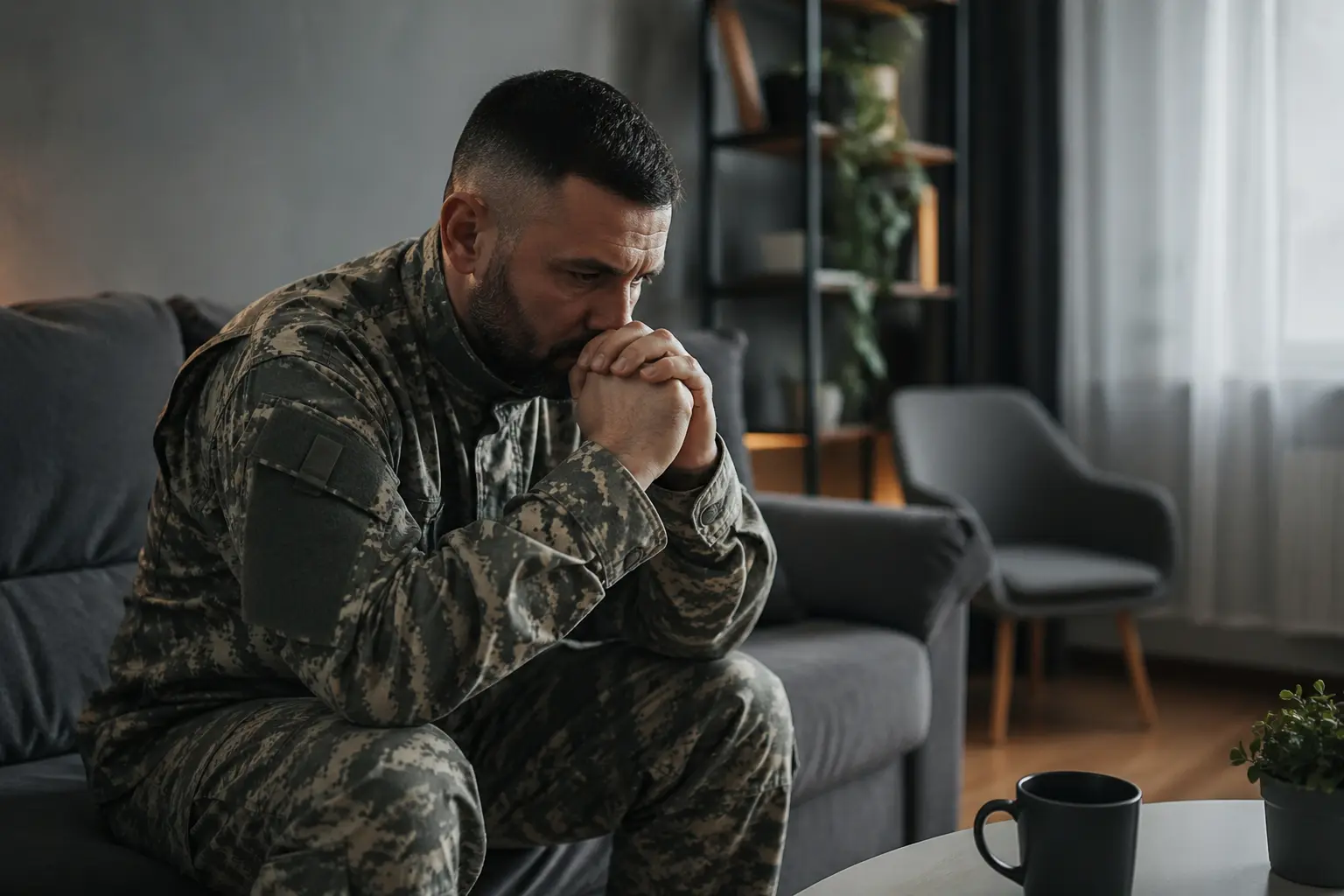
You wake up in a cold sweat from a nightmare you can’t shake, your heart pounding like it’s happening all over again, and you’re exhausted from carrying the psychological effects war trauma has left on your body and mind.
Recognizing the signs of war trauma
Understanding what war trauma looks like in your own life is the first step toward healing. The psychological effects war trauma creates don’t always announce themselves loudly. You might notice you’re jumpy when a door slams, or that you’ve stopped enjoying activities you once loved. Some women describe feeling like they’re watching their life from outside their body, disconnected and numb. Others experience intrusive memories that feel as vivid as the original event. Flashbacks can hit without warning, pulling you back into moments you desperately want to forget. Sleep becomes a battleground where nightmares replay traumatic scenes. Concentration suffers because your nervous system is stuck in survival mode, constantly scanning for danger. You might feel irritable with loved ones or struggle with overwhelming anxiety that seems to come from nowhere. These aren’t signs of weakness or failure. They’re your mind and body’s natural response to extraordinary circumstances. Recognizing these patterns in yourself is crucial because awareness creates the foundation for change.
- Persistent thoughts or memories of the traumatic event
- Difficulty sleeping or concentrating
- Feeling on edge or easily startled
Seeking support from qualified professionals
Reaching out for professional help is one of the most powerful decisions you can make in your healing journey. A trauma-specialized therapist understands that war trauma isn’t something you should manage alone, and they have tools specifically designed for what you’re experiencing. Cognitive-behavioral therapy, or CBT, helps you identify thought patterns that keep you stuck in fear and gradually rewires how your brain responds to trauma reminders. Eye movement desensitization and reprocessing, known as EMDR, uses bilateral stimulation to help your brain process traumatic memories more effectively. Many women find that after several sessions of EMDR, the emotional charge around their traumatic memories significantly decreases. Other evidence-based approaches include trauma-focused cognitive therapy and somatic experiencing, which addresses how trauma lives in your body. When searching for a therapist, look specifically for someone with credentials in trauma treatment and experience working with war survivors. Don’t settle for the first person you find. Interview potential therapists, ask about their approach, and trust your gut about whether they feel like the right fit. Your healing depends partly on the relationship you build with your provider.
📘 Fix your day in under 2 minuteschoose where to begin:
Practicing self-care and stress management techniques
Self-care isn’t indulgent when you’re healing from trauma. It’s medicine. Your nervous system needs consistent practices that signal safety and calm. Exercise is particularly powerful for trauma recovery because it metabolizes stress hormones and releases endorphins that naturally improve mood. Even a 20-minute walk can shift your nervous system state. Meditation and breathing exercises like box breathing, where you inhale for four counts, hold for four, exhale for four, and hold for four, give you direct control over your anxiety response. Journaling allows you to externalize the thoughts swirling in your head, getting them out of your body and onto paper where you can observe them without being consumed. Spending time in nature, whether that’s a park or your backyard, provides grounding and perspective. Some women find that creative activities like painting, music, or crafting offer a safe channel for processing difficult emotions. Others benefit from yoga, which combines movement with breathwork and body awareness. The key is consistency. Pick practices that resonate with you and commit to them regularly, not just when you’re in crisis. These become your daily armor against trauma’s grip.
Building a support network
Healing from war trauma happens in relationship. You need people around you who understand what you’re carrying and can hold space for your pain without judgment. This might include trusted friends, family members who’ve shown up for you, or support groups specifically for women survivors of war trauma. Support groups are particularly valuable because they connect you with others who truly get it. You’re not explaining yourself to someone who’s never experienced what you have. You’re sitting with women who recognize the specific weight of your experience. They’ve had the same nightmares, the same moments of feeling broken, the same struggles to reconnect with normal life. Hearing their stories and sharing yours creates a powerful sense of belonging. Online communities can also provide connection if in-person groups aren’t available in your area. Be selective about who you let into your inner circle during recovery. Some people will try to minimize your experience or push you to move on faster than you’re ready. Surround yourself with people who validate your journey and respect your timeline. Quality matters far more than quantity when it comes to support.
Creating a healing routine
Recovery thrives on structure and consistency. Your nervous system has been dysregulated by trauma, and a solid routine helps retrain it to feel safe and predictable. Start by establishing non-negotiable basics: aim for seven to nine hours of sleep, eat regular nutritious meals that stabilize your blood sugar and mood, and move your body daily in ways that feel good. A healing routine might look like waking at a consistent time, doing ten minutes of breathing exercises, eating a protein-rich breakfast, taking a walk, attending therapy, journaling for fifteen minutes, and ending your day with a calming ritual like tea and reading. The specific activities matter less than the consistency. Your brain learns that when you follow this routine, you’re safe. Predictability is deeply healing for trauma survivors. Include activities that bring you joy and remind you that life contains good things too. This might be time with a beloved pet, a hobby you’ve neglected, time with friends who make you laugh, or a creative pursuit. These moments of lightness aren’t distractions from healing. They’re essential parts of it. Adjust your routine as needed, but maintain the framework. Over time, this consistency builds resilience and creates a foundation strong enough to support your recovery.
Recognize the signs of war trauma, seek professional help, practice self-care, build a support network, and establish a healing routine to effectively cope with psychological effects of war trauma.
Can war trauma be effectively treated?
Yes, war trauma can be effectively treated with the help of qualified mental health professionals using evidence-based therapies and self-care strategies.
How long does it take to recover from war trauma?
Recovery from war trauma varies for each individual. With proper support, treatment, and self-care, many people can experience significant improvement over time.
Others also read:
Disclaimer: This article is for informational purposes only and is not a substitute for professional medical advice. Always consult a healthcare professional for personal guidance.
This guide has been prepared and reviewed by the GlobalHealthBeacon editorial team and reflects current medical research as of 2026. It provides structured, evidence-based information to support informed health decisions.
