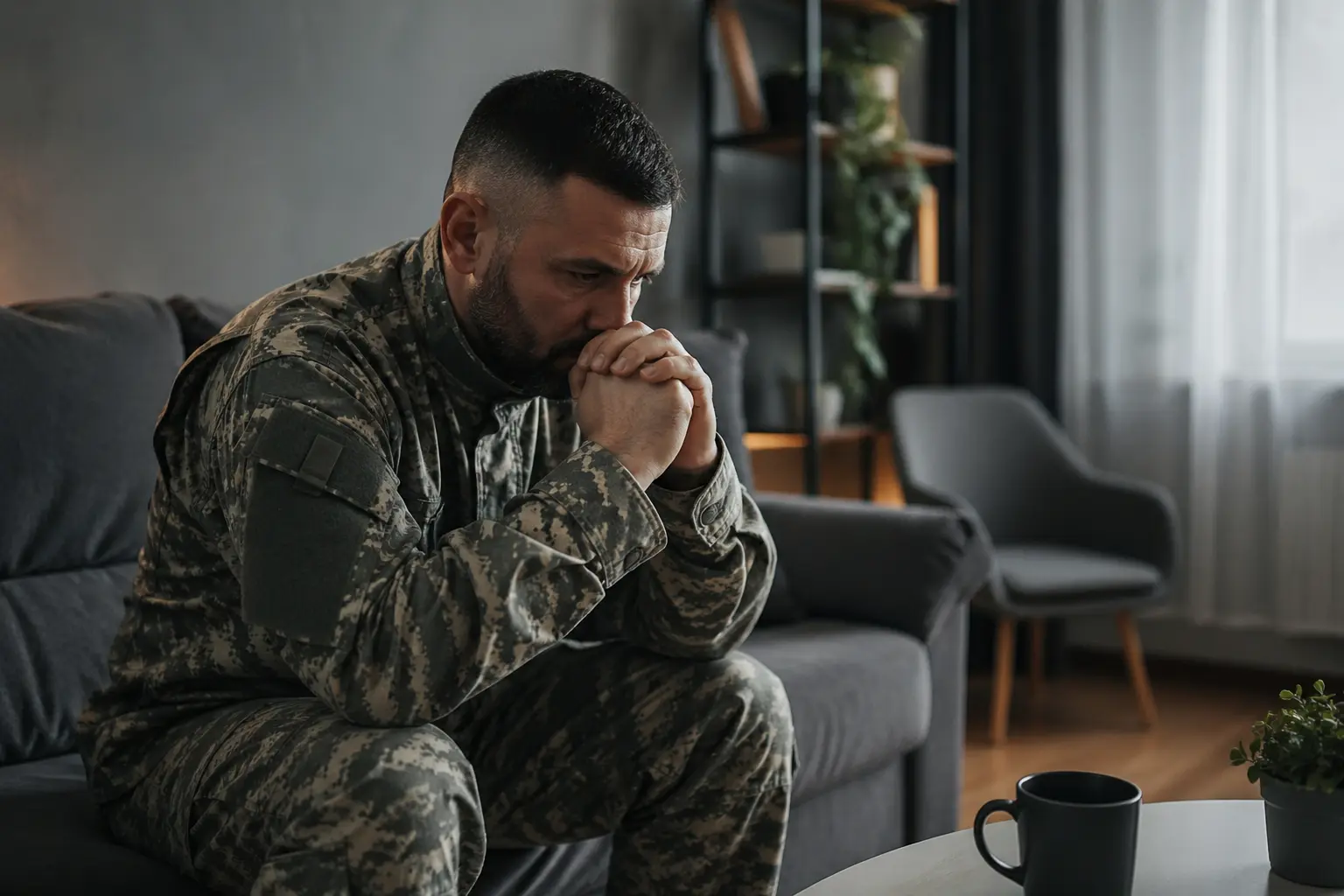
You wake up at 3 AM again, your heart pounding, drenched in sweat from a nightmare that feels more real than the bedroom around you, and you realize the psychological effects war trauma left behind decades ago are still controlling your nights and stealing your peace.
Understanding psychological effects of war trauma
War trauma doesn’t simply fade with time. For many seniors, the psychological effects war trauma creates can surface unexpectedly, triggered by a sound, a smell, or a quiet moment when the mind wanders back. Anxiety might hit during crowded places or when hearing fireworks. Depression can creep in slowly, making mornings feel heavier than they should. PTSD symptoms vary widely: some seniors experience intrusive memories that feel like they’re happening right now, while others struggle with emotional numbness that distances them from loved ones. A 75-year-old veteran might find himself unable to sit with his back to a door at a restaurant, or a 70-year-old grandmother might startle violently at unexpected noises. These aren’t character flaws or signs of weakness. They’re the brain’s way of protecting itself after exposure to extreme stress. Understanding that these reactions are normal responses to abnormal events is the first step toward healing and moving forward.
- Anxiety and panic attacks are common symptoms experienced by seniors with war trauma, often triggered by specific situations or sensory reminders.
- Depression and feelings of hopelessness may arise due to unresolved war-related memories, sometimes worsening during anniversaries or holidays.
- Senior veterans often struggle with anger management issues and difficulty in forming relationships, which can strain family bonds and social connections.
Choosing the right therapist for seniors
Finding the right therapist is like finding the right fit for a shoe: it takes time and sometimes trying a few pairs. Look for therapists who specialize in trauma, particularly those trained in evidence-based approaches like Cognitive Processing Therapy (CPT) or Prolonged Exposure (PE). Experience matters enormously. A therapist who understands military culture, the specific stressors of combat, and the generational differences in how seniors process trauma will be more effective than a general practitioner. Ask potential therapists directly: Have you worked with senior veterans? Do you understand the unique challenges of aging with PTSD? Some seniors prefer therapists who are themselves veterans, while others feel more comfortable with someone outside that experience. Consider practical factors too: Does the therapist offer telehealth appointments if mobility is an issue? Are they accepting new patients? What is their cancellation policy? Trust your gut. If something feels off in the first session, it’s okay to keep looking. The therapeutic relationship is foundational to healing.
📘 Fix your day in under 2 minuteschoose where to begin:
Benefits of group therapy for seniors
Group therapy for seniors with war trauma offers something individual therapy cannot: the profound relief of being in a room with people who truly understand. When a 72-year-old veteran shares a memory and sees recognition in the eyes of five other people who lived through similar experiences, something shifts. The isolation breaks. Group settings allow seniors to hear how others have coped, what strategies worked, and that recovery is possible at any age. Many groups are structured around specific conflicts: Vietnam-era veterans, Korean War survivors, or World War II veterans often find their own cohorts. The shared language, the unspoken understanding, the occasional dark humor that only those who were there can appreciate, all contribute to healing. Groups also provide accountability and motivation. When you commit to showing up each week, you’re less likely to isolate. You build friendships. You realize your story matters and your presence matters to others. Some seniors report that group therapy was the turning point where they finally felt they could breathe again.
Exploring alternative therapies for seniors
Traditional talk therapy works well for many, but some seniors find that their bodies hold trauma in ways words cannot reach. Art therapy allows expression without needing to articulate painful memories. A senior might paint abstract colors that represent his emotions, or sculpt clay to release tension he’s carried for fifty years. Music therapy taps into different neural pathways. Listening to or playing music can soothe the nervous system and access memories and emotions that verbal conversation misses. Yoga and tai chi teach the body that it is safe now, helping to regulate the nervous system’s fight-or-flight response that has been stuck in overdrive. Some seniors find relief through equine therapy, working with horses in a structured environment. Others benefit from nature-based therapies like gardening or walking in natural settings. These approaches aren’t replacements for professional trauma therapy, but they complement it beautifully. A 68-year-old might attend weekly PTSD therapy while also taking a yoga class and joining an art group, creating a comprehensive healing approach that addresses mind, body, and spirit.
Self-care tips for seniors coping with war trauma
Self-care is not indulgent when you’re managing trauma. It’s essential maintenance. Start with basics: sleep, nutrition, and movement. Poor sleep intensifies PTSD symptoms, so establish a bedtime routine that signals safety to your nervous system. Some seniors find that a warm bath, reading, or soft music helps. Meditation doesn’t have to be complicated. Even five minutes of focused breathing can calm an activated nervous system. Exercise releases endorphins and helps process stored trauma. This could be a daily walk, swimming, or dancing to your favorite songs in the living room. Engage in activities that bring you joy and remind you that life contains good things. Maybe it’s woodworking, gardening, cooking, or time with grandchildren. Limit alcohol and caffeine, which can amplify anxiety. Maintain social connections even when isolation feels safer. Journaling can help process thoughts and memories. Some seniors keep a gratitude practice, noting three things each day, however small. Create a safety plan for when symptoms flare: know your grounding techniques, have your therapist’s number accessible, and identify people you can call. Self-care is the daily practice of telling yourself that you deserve healing and peace.
War trauma therapy for seniors involves understanding the psychological effects, choosing the right therapist, exploring group therapy benefits, considering alternative therapies, and practicing self-care for holistic healing.
How long does war trauma therapy usually last for seniors?
The duration of war trauma therapy for seniors varies depending on individual needs and progress. Some seniors may find relief in a few months, while others may benefit from longer-term therapy. Trauma that has been present for decades often requires sustained treatment. Many therapists recommend starting with a commitment of 12 to 16 sessions to assess progress, then adjusting from there.
Is war trauma therapy covered by Medicare for seniors?
Medicare may cover certain war trauma therapy services for seniors if deemed medically necessary. It’s recommended to check with Medicare or a healthcare provider for specific coverage details. Additionally, the VA offers comprehensive mental health services for eligible veterans at no cost, including therapy specifically for service-related trauma.
Others also read:
Disclaimer: This article is for informational purposes only and is not a substitute for professional medical advice. Always consult a healthcare professional for personal guidance.
This guide has been prepared and reviewed by the GlobalHealthBeacon editorial team and reflects current medical research as of 2026. It provides structured, evidence-based information to support informed health decisions.
