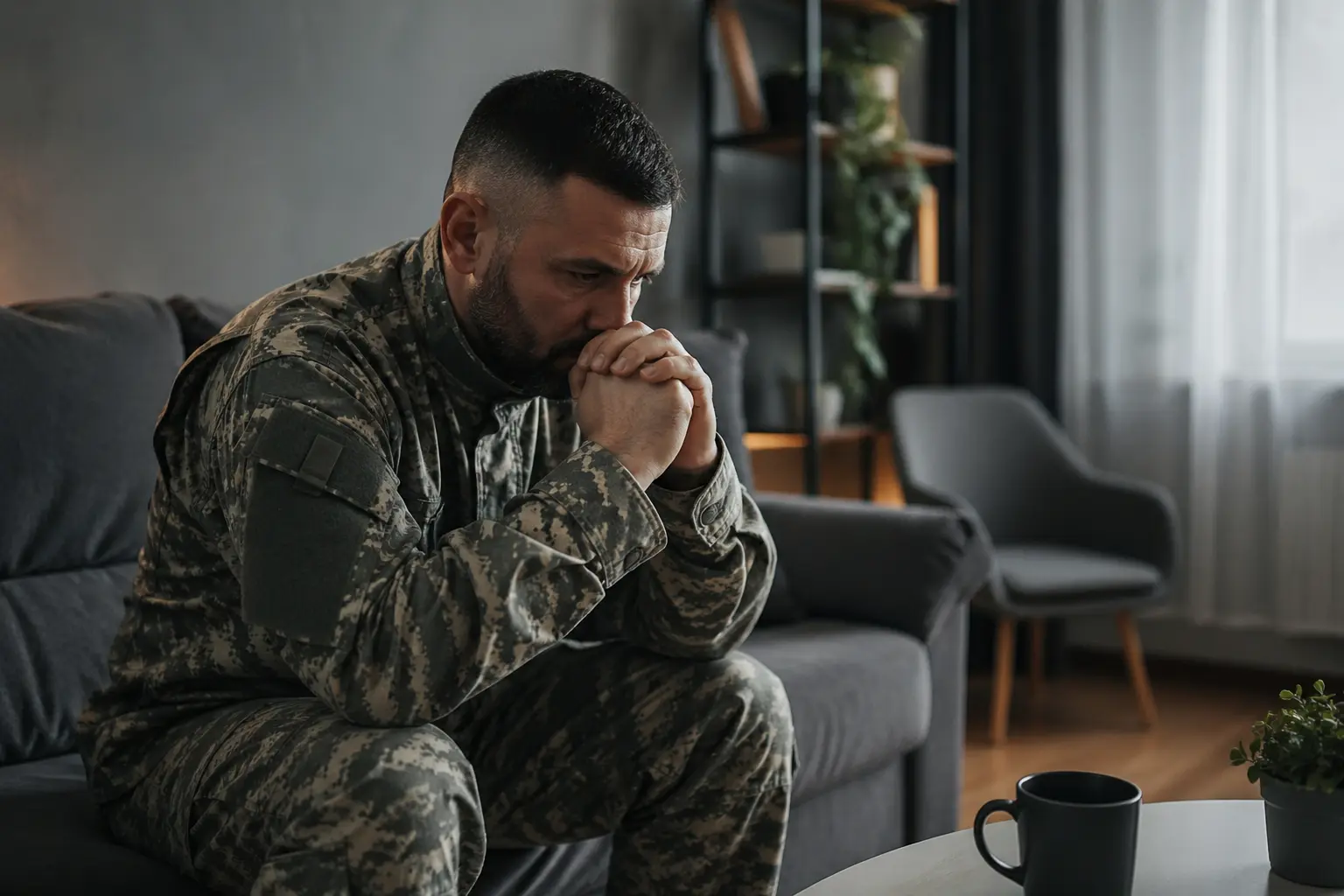
Flashbacks that won’t quit, sleep that feels impossible, and a constant sense of dread that follows you everywhere – the psychological effects war trauma leaves behind can feel like they’re stealing your golden years, and understanding what’s actually happening in your brain might be the first step toward reclaiming your peace.
Understanding psychological effects of war trauma
War trauma doesn’t simply fade with time, especially for seniors who carry these experiences across decades. The psychological effects war trauma creates manifest as post-traumatic stress disorder (PTSD), anxiety, depression, and cognitive difficulties that can feel isolating and overwhelming. Consider a 78-year-old veteran who suddenly finds himself unable to tolerate loud noises at his grandchild’s birthday party, or a woman in her 80s who experiences intrusive memories during quiet moments. These aren’t character flaws or signs of weakness. Seniors face unique vulnerabilities because their brains have already undergone natural age-related changes, and layering trauma responses on top of these changes creates a more complex picture. The emotional weight compounds differently in older adults compared to younger trauma survivors. Anxiety might manifest as physical symptoms like chest tightness or dizziness. Depression can mask itself as apathy or withdrawal from activities once enjoyed. Cognitive impacts might include difficulty concentrating, memory gaps, or trouble processing new information. Understanding these patterns helps seniors and their families recognize what’s happening rather than dismissing symptoms as normal aging.
Neurobiological mechanisms of war trauma
When someone experiences war trauma, the brain’s threat-detection system gets essentially stuck in overdrive. The amygdala, which processes fear and emotional responses, becomes hyperactive. The prefrontal cortex, responsible for rational thinking and emotional regulation, shows reduced activity. This neurological imbalance means the brain keeps perceiving danger even in safe situations. Imagine your nervous system as a smoke detector that’s been set too sensitive – it goes off when you’re just cooking dinner. Chronic stress from war trauma alters neurotransmitter levels, particularly serotonin, dopamine, and norepinephrine, which regulate mood and stress response. Brain imaging studies reveal actual structural changes in the hippocampus, the region critical for memory formation and context. This explains why trauma memories feel so vivid and intrusive while everyday memories become harder to access. The amygdala essentially hijacks the narrative, tagging traumatic memories as perpetually dangerous. Over time, these neurological patterns become entrenched, creating a self-reinforcing cycle where the brain’s alarm system stays activated. For seniors, these changes occur against a backdrop of natural cognitive aging, making recovery more nuanced and requiring tailored approaches.
Impact of war trauma on seniors
Seniors experiencing war trauma face a distinct set of challenges rooted in both neuroscience and life circumstances. Age-related decline in cognitive reserve and neuroplasticity means the brain has less flexibility to rewire itself away from trauma patterns. A 75-year-old processing war memories operates differently than a 35-year-old with the same trauma history. Resilience factors that worked in younger years may no longer be available – physical stamina for exercise, social circles that may have shrunk, or the energy required for intensive therapy. Social isolation amplifies trauma effects dramatically. When a senior withdraws from friends and family due to anxiety or depression, they lose protective factors that buffer against psychological distress. Access to mental health services becomes critical yet often complicated by transportation challenges, financial constraints, or stigma from their generation. Cognitive training through structured activities like memory exercises, puzzles, or learning new skills can help maintain mental sharpness and create new neural pathways. Physical activity, even gentle walking, triggers neurochemical changes that support emotional regulation. The combination of professional support, meaningful social connection, and cognitive engagement creates the most favorable conditions for managing trauma’s impact in later life.
- Seek professional help if experiencing distressing symptoms related to war trauma, such as nightmares, flashbacks, or persistent anxiety that interferes with daily functioning.
- Engage in social activities to build a support network and prevent isolation, whether through senior centers, faith communities, hobby groups, or regular contact with family members.
- Practice relaxation techniques like deep breathing, progressive muscle relaxation, or mindfulness meditation to manage stress responses when they arise.
🔬 Science-backed benefits in 2 minuteschoose where to begin:
Neuroscience advances in treating war trauma
Recent neuroscience research has illuminated how the brain processes traumatic memories and emotions, opening doors to more effective interventions. Scientists now understand that trauma memories are stored differently than regular memories – they’re fragmented, sensory-rich, and disconnected from the narrative context that helps us make sense of experiences. Cognitive-behavioral therapy (CBT) works by helping the brain reorganize these fragmented memories into coherent narratives, essentially teaching the prefrontal cortex to regain control over the amygdala’s alarm response. Eye movement desensitization and reprocessing (EMDR) uses bilateral stimulation while processing trauma memories, which appears to activate both brain hemispheres in ways that facilitate healing. Neurofeedback, an emerging treatment, allows seniors to see real-time brain activity and learn to self-regulate their neural patterns. Pharmacological advances support these therapies, with medications targeting specific neurotransmitter systems to reduce hyperarousal and anxiety. For seniors, the advantage of these approaches is that they don’t require the physical intensity of some traditional therapies. A 76-year-old can benefit from EMDR without needing to run or engage in strenuous activity. These evidence-based treatments represent a significant shift from older approaches, offering seniors concrete, scientifically-grounded pathways toward recovery and restored quality of life.
Adapting therapeutic approaches for seniors
One-size-fits-all trauma treatment doesn’t work for seniors, and neuroscience increasingly supports personalized, age-informed approaches. Cognitive decline, which may already be present, requires therapists to adjust pacing and complexity of treatment. A senior with mild memory loss needs different therapeutic strategies than someone with sharp cognition. Physical limitations matter too – someone with arthritis can’t participate in certain grounding exercises, so alternatives like guided imagery or sensory focus become more appropriate. Pre-existing medical conditions complicate treatment planning. A senior on blood pressure medication needs careful monitoring during stress-reduction work because relaxation techniques can lower blood pressure further. Hearing loss, vision changes, and medication interactions all influence how therapy unfolds. Effective treatment considers the senior’s life narrative, values, and what matters most to them. A therapy focused on returning to work makes no sense for a retiree, but rebuilding confidence to travel or spend time with grandchildren might be profoundly motivating. Shorter, more frequent sessions often work better than intensive weekly appointments that can feel overwhelming. Building trust takes longer with seniors who may have experienced dismissal of their symptoms for years. Therapists who understand the neuroscience of aging combined with trauma create the most supportive environment for healing.
Future directions in war trauma research
Neuroscience research continues evolving rapidly, with exciting developments on the horizon for seniors dealing with war trauma. Brain imaging technology is becoming more sophisticated, allowing researchers to identify specific neural signatures that predict which treatments will work best for individual patients. Precision medicine approaches may soon allow doctors to match seniors with therapies based on their unique brain patterns rather than trial-and-error methods. Longitudinal studies tracking seniors over decades are revealing how trauma effects change across the lifespan and what protective factors matter most in later years. Researchers are investigating how combining multiple approaches – therapy plus targeted medication plus cognitive training plus social engagement – creates synergistic effects greater than any single treatment. Virtual reality therapy shows promise for seniors, allowing safe exposure to trauma-related situations in controlled environments. Genetic research is uncovering why some individuals develop chronic trauma responses while others show resilience, information that could guide prevention and early intervention. The field is moving toward understanding not just what goes wrong in trauma, but how to activate the brain’s natural healing capacities. For seniors, these advances mean increasingly effective, personalized, and accessible treatments that honor both the complexity of aging and the profound impact of war experiences.
Neuroscience research provides valuable insights into the psychological effects of war trauma in seniors. Understanding the neurobiological mechanisms and adapting therapeutic approaches can help improve outcomes and enhance the quality of life for seniors affected by war trauma.
Can war trauma affect memory in seniors?
Yes, war trauma can impact memory function in seniors due to changes in brain structures linked to stress and emotional regulation.
What are effective strategies for managing war trauma in seniors?
Seeking professional help, engaging in social activities, and practicing relaxation techniques are effective strategies for managing war trauma in seniors.
Others also read:
Disclaimer: This article is for informational purposes only and is not a substitute for professional medical advice. Always consult a healthcare professional for personal guidance.
This article has been prepared and reviewed by the GlobalHealthBeacon editorial team and is based on current medical research and published scientific literature available in 2026. It provides structured, evidence-based information to support informed health decisions.
← Back to the Main page on: psychological effects war trauma
