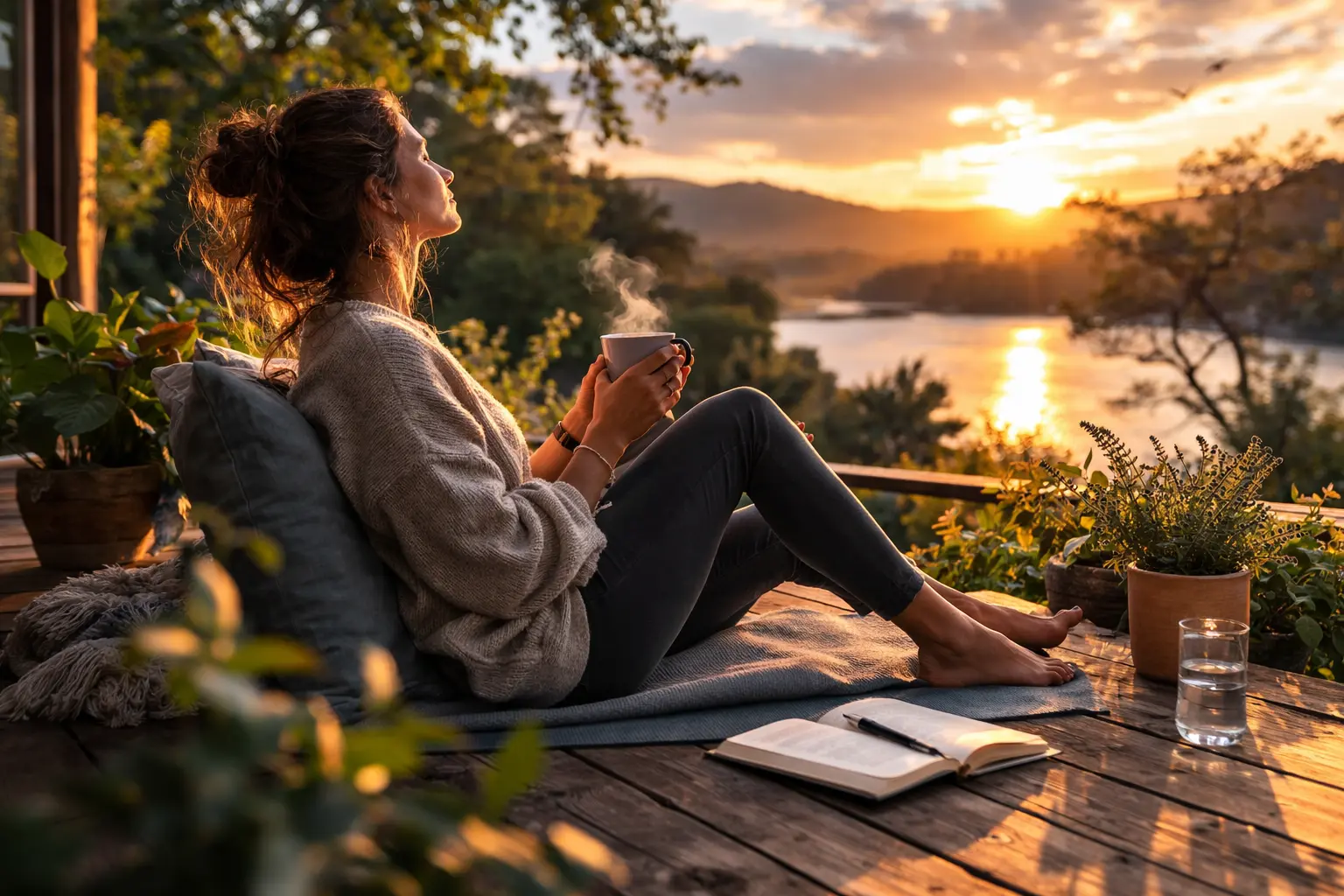
Your shoulders are tight, your mind won’t stop racing, and you feel like stress is stealing your peace, but relaxation techniques for stress can actually work for you right now.
Deep breathing techniques
Deep breathing is one of the fastest ways to calm your nervous system, and it requires nothing but your own breath. When stress hits, your breathing becomes shallow and rapid, which signals your body to stay in fight-or-flight mode. By intentionally slowing your breath, you reverse this cycle. Find a quiet corner, sit comfortably in your favorite chair, and place one hand on your chest and one on your belly. Breathe in slowly through your nose, feeling your belly rise rather than just your chest. This signals that you are engaging your diaphragm, the muscle designed for deep, calming breaths. Many seniors find that practicing this for just five minutes in the morning sets a calmer tone for the entire day. One common mistake is forcing the breath or holding it too long, which creates tension instead of release. Let the breath flow naturally. Start with whatever count feels comfortable, then gradually extend it as your body adapts.
- Inhale for a count of 4, hold for a count of 7, and exhale for a count of 8
- Repeat this cycle several times to reduce stress and promote relaxation
- Deep breathing can be done anywhere, anytime to help ease tension and anxiety
Progressive muscle relaxation
Progressive muscle relaxation works by deliberately tensing and then releasing muscle groups throughout your body, creating a direct pathway to physical calm. This method is especially helpful for seniors because it teaches your body to recognize the difference between tension and relaxation. Begin seated or lying down in a comfortable position. Start with your toes: tense them firmly for five seconds, then release and notice the sensation of relaxation. Move slowly upward through your calves, thighs, buttocks, abdomen, chest, hands, arms, shoulders, neck, and face. Each group gets the same treatment: five seconds of tension followed by release. The entire process takes about fifteen to twenty minutes. Many seniors report that this practice helps them sleep better at night because their muscles learn to let go of chronic tension they did not even realize they were holding. A helpful tip is to breathe out as you release each muscle group, which deepens the relaxation response. Avoid the mistake of tensing too hard, which can cause cramping. The goal is firm but gentle engagement.
📘 Fix your day in under 2 minuteschoose where to begin:
Guided imagery
Guided imagery invites you to escape into a mental sanctuary where your mind and body both experience genuine relaxation. Unlike meditation, which focuses on clearing the mind, imagery asks you to populate your mind with peaceful details. Close your eyes and choose a place that feels safe and calming to you: perhaps a beach at sunset, a forest trail, a garden you loved, or even your childhood home. Do not worry if the image is not perfectly clear at first. Instead, engage your senses one by one. What do you hear? Perhaps waves, birds, or wind through trees. What do you smell? Salt air, pine needles, flowers, or fresh grass. What do you feel on your skin? Warmth, a gentle breeze, soft sand. Many seniors find that spending ten to fifteen minutes in guided imagery before bed significantly improves sleep quality and reduces nighttime anxiety. You can practice this alone using your own imagination, or you can listen to a recorded guided imagery session, which many find easier when starting out. The key is consistency and allowing yourself to fully inhabit the scene without judgment.
Meditation
Meditation is the practice of training your mind to focus and letting go of the mental chatter that often drives stress and worry. Unlike what many seniors assume, meditation does not require you to empty your mind completely or sit in an uncomfortable position for hours. Start with just five minutes in a quiet space, sitting comfortably with your spine gently upright. Choose a focal point: your breath, a simple word or mantra like ‘calm’ or ‘peace’, or even the sensation of your feet on the floor. When your mind wanders, which it will, simply notice the thought without judgment and gently return your attention to your focal point. This noticing and returning is the actual practice. Over time, your mind becomes less reactive and more peaceful. Many seniors discover that a consistent meditation practice, even just ten minutes daily, reduces blood pressure, improves focus, and creates a sense of emotional stability that carries into daily life. A common mistake is expecting immediate profound experiences. Meditation is subtle and cumulative. Trust the process and show up regularly, even on days when your mind feels particularly busy.
Yoga and tai chi
Gentle yoga and tai chi combine slow, flowing movements with breath awareness, creating a form of moving meditation that is especially suitable for seniors. These practices build strength and flexibility while simultaneously calming the nervous system. In yoga, you move through poses at your own pace, holding each position for several breaths while focusing on how your body feels. Tai chi, often called meditation in motion, involves a continuous sequence of graceful movements performed slowly and deliberately, almost like a dance. Both practices improve balance, which reduces fall risk, a significant concern for many seniors. Beyond the physical benefits, the focused attention required during these practices naturally quiets racing thoughts and anxiety. Many seniors report feeling more grounded, more connected to their bodies, and more at peace after regular practice. You can join a class specifically designed for seniors, which provides community and professional guidance, or practice at home using online videos. The key is choosing movements that feel good in your body and never pushing into pain. These are practices of self-care, not performance.
Learn how deep breathing, progressive muscle relaxation, guided imagery, meditation, and yoga can help seniors relax and reduce stress naturally.
Can seniors with limited mobility benefit from relaxation techniques?
Yes, seniors with limited mobility can still benefit from relaxation techniques like deep breathing and guided imagery that require minimal physical movement.
How often should seniors practice relaxation techniques to see results?
Seniors can benefit from practicing relaxation techniques daily, even for short periods. Consistency is key to experiencing the full benefits of these stress-relief methods.
Others also read:
Disclaimer: This article is for informational purposes only and is not a substitute for professional medical advice. Always consult a healthcare professional for personal guidance.
This guide has been prepared and reviewed by the GlobalHealthBeacon editorial team and reflects current medical research as of 2026. It provides structured, evidence-based information to support informed health decisions.
