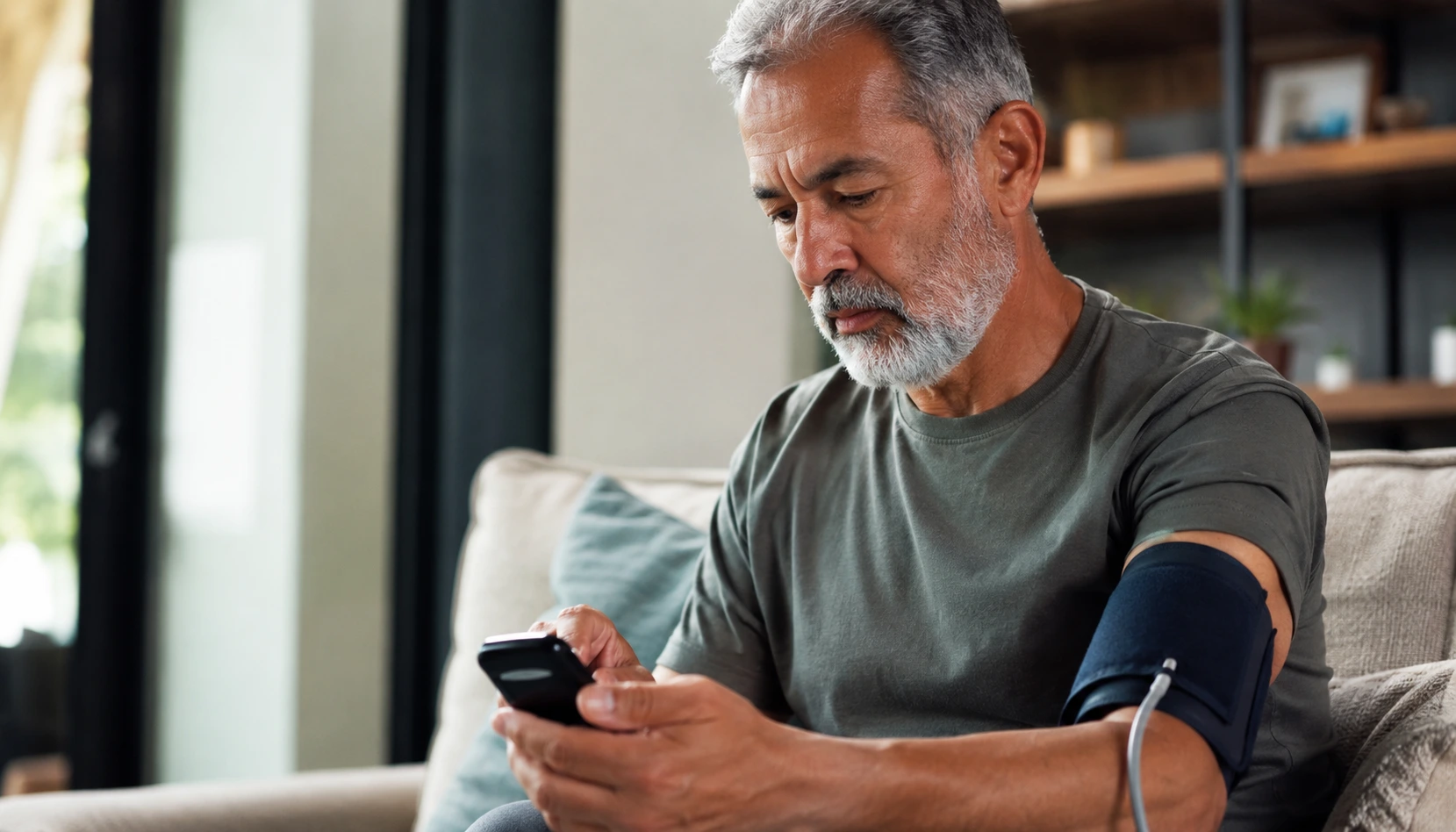
Tired of waiting weeks between doctor visits while wondering if something’s actually wrong, or worse, missing warning signs entirely? Remote patient monitoring devices let you and your healthcare team catch problems early, track what’s really happening with your health in real time, and finally get the personalized attention you deserve without the constant office visits.
Remote monitoring devices: the basics
Remote patient monitoring devices represent a significant shift in how health data flows between patients and healthcare providers. These wearable technologies continuously track vital signs including heart rate, blood pressure, oxygen saturation, and sometimes even electrocardiogram patterns. Consider Margaret, a 72-year-old with a history of irregular heartbeats. By wearing a small cardiac monitoring device, she transmits real-time data to her cardiologist’s office every few hours. If her heart rhythm becomes erratic, her provider receives an alert before she even feels symptoms. The devices work through wireless connectivity, sending encrypted health information to secure servers that healthcare providers access through dedicated portals. Some devices sync automatically with smartphones, while others connect directly to home monitoring stations. The technology eliminates the need for frequent office visits solely for data collection, allowing seniors to maintain their daily routines while staying connected to their care team.
Benefits of remote monitoring devices
The advantages of remote monitoring extend far beyond simple convenience. Early detection represents perhaps the most significant benefit. When a healthcare provider can see blood pressure trending upward over several weeks, they can adjust medications before a crisis occurs. Consider James, a 68-year-old with diabetes who uses a continuous glucose monitor. By tracking his blood sugar patterns throughout the day and night, his endocrinologist identified that his evening insulin dose was too high, causing dangerous overnight drops. This adjustment, made possible only through continuous data, prevented a potentially serious hypoglycemic episode. Remote monitoring also reduces hospital readmissions by catching complications early. Studies show that seniors using these devices experience fewer emergency room visits because problems get addressed during routine monitoring rather than escalating to acute situations. Additionally, the data empowers seniors themselves. When you see your own health metrics improving week after week, it reinforces positive lifestyle choices and builds confidence in managing your condition.
How to get started with remote monitoring devices
Starting remote monitoring involves several straightforward steps that your healthcare team can guide you through. First, have a conversation with your primary care doctor or relevant specialist about whether monitoring suits your specific health situation. Not every condition requires it, and your provider can explain if it makes sense for you. Second, you and your doctor will select an appropriate device. If you have heart concerns, a cardiac monitor might be recommended. For respiratory issues, a pulse oximeter becomes essential. For general wellness tracking, a blood pressure cuff or activity monitor might suffice. Third, setup requires following manufacturer instructions, which are typically straightforward. Many devices come with video tutorials, and your healthcare provider’s office often has staff who can walk you through initial setup. Fourth, consistent wear matters tremendously. A device sitting in a drawer provides no data. Most seniors find that wearing devices becomes habitual within a week or two, like putting on glasses. Finally, schedule regular check-ins with your healthcare team to review trends together. These conversations transform raw numbers into meaningful insights about your health trajectory.
- Consult with your healthcare provider
- Choose an appropriate device
- Set up and sync the device
- Consistently wear the device
- Regularly review data with your healthcare team
🔬 Science-backed benefits in 2 minuteschoose where to begin:
Understanding remote monitoring data
Raw numbers mean nothing without context and interpretation. Remote monitoring generates patterns that tell stories about your health. Imagine you see your daily step count declining over three weeks. This pattern might indicate increasing fatigue, which could signal an infection, medication side effect, or depression. Your healthcare provider, seeing this trend alongside other data points, might order specific tests or adjust your treatment plan. Data interpretation requires training, which is why reviewing results with your healthcare team matters so much. They understand how your individual baseline differs from population averages. One person’s normal resting heart rate might be 55 beats per minute while another’s is 75. Without knowing your baseline, a single reading means little. Over time, you’ll begin recognizing your own patterns too. You might notice that your blood pressure spikes on stressful days or that your oxygen levels dip after certain activities. This self-awareness becomes valuable information you can share with your provider, creating a collaborative approach to your health management.
The future of remote monitoring devices
Technology in this field advances rapidly, with devices becoming increasingly sophisticated and capable. Current devices track basic vital signs, but emerging technologies monitor sleep architecture, detecting subtle sleep disorders that affect daytime function and overall health. Advanced devices measure activity patterns with precision, distinguishing between gentle walking and more vigorous exercise, then correlating this with health outcomes. Some newer devices even assess skin temperature variations that might indicate infection before obvious symptoms appear. Artificial intelligence is beginning to play a role, with algorithms learning individual patterns and alerting providers to deviations that might be clinically significant. Imagine a device that recognizes your unique heart rate pattern and alerts your doctor only when something genuinely unusual occurs, rather than generating false alarms. Integration is improving too, with devices communicating with electronic health records, allowing your entire care team to see consistent information. Within the next five to ten years, remote monitoring will likely become standard care for most chronic conditions, not a specialty service. The devices themselves will become less intrusive, possibly embedded in clothing or even patches on skin, making monitoring seamless rather than something you think about.
Remote monitoring: enhancing senior care
Remote patient monitoring devices fundamentally change the relationship between seniors and their healthcare system. Rather than being passive recipients of care who visit doctors periodically, seniors become active participants in their health management. The continuous data stream creates accountability and engagement. When you know your provider is monitoring your progress, motivation to take medications consistently and maintain healthy habits increases naturally. The technology also addresses a critical challenge in senior care: the time gap between office visits. In traditional care, a serious change in health status might go unnoticed for weeks until the next scheduled appointment. With remote monitoring, that same change gets flagged within hours. This responsiveness can mean the difference between managing a condition and experiencing a crisis. Furthermore, remote monitoring reduces the burden of travel for seniors with mobility limitations or those living in rural areas far from specialists. A 78-year-old with severe arthritis no longer needs to drive two hours to see a cardiologist monthly. Instead, data flows automatically, and in-person visits happen only when truly necessary. This combination of continuous oversight and reduced travel burden creates a more humane, efficient healthcare experience tailored to how seniors actually live.
Remote patient monitoring devices offer real-time health data, early issue detection, personalized care, and future advancements in healthcare technology. They enhance senior care by providing constant monitoring and empowering individuals to take charge of their health.
How accurate are remote monitoring devices?
Remote monitoring devices are generally accurate in tracking vital signs and health metrics. However, occasional discrepancies may occur, emphasizing the importance of cross-referencing data with healthcare professionals.
Can remote monitoring devices replace regular doctor visits?
Remote monitoring devices serve as complements to regular doctor visits by providing continuous health data. While beneficial, they do not replace the need for in-person consultations and diagnostic assessments by healthcare providers.
Others also read:
Disclaimer: This article is for informational purposes only and is not a substitute for professional medical advice. Always consult a healthcare professional for personal guidance.
This article has been prepared and reviewed by the GlobalHealthBeacon editorial team and is based on current medical research and published scientific literature available in 2026. It provides structured, evidence-based information to support informed health decisions.
← Back to the Main page on: remote patient monitoring devices
