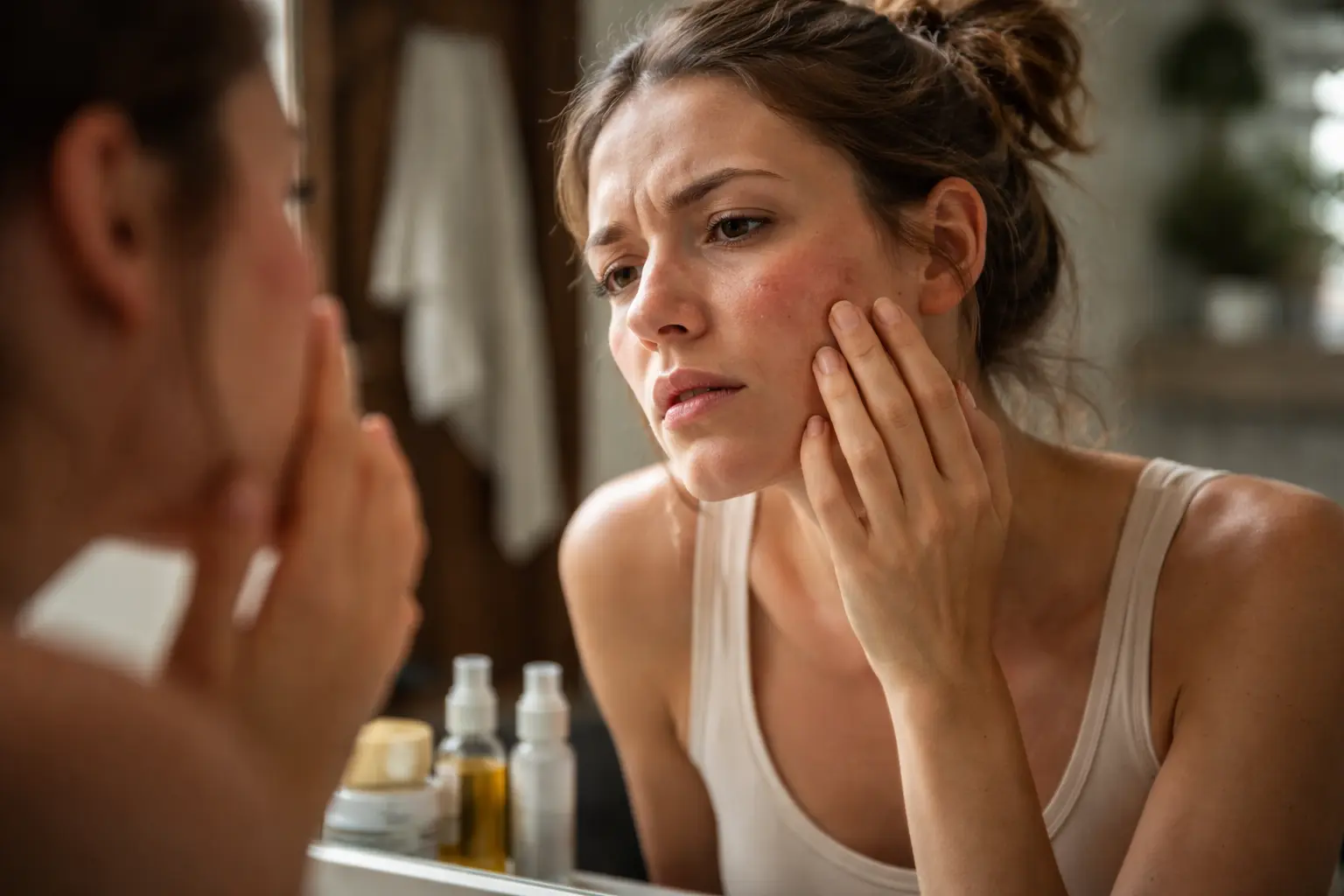
You wake up to flaky, burning skin that feels raw and tight, and you’re wondering if that retinol serum you started using is actually helping or just making everything worse, because retinol side effects can feel like your skin is rebelling against you when you’re just trying to look your best.
Understanding retinol side effects
Retinol, a derivative of vitamin A, is celebrated in the skincare world for its ability to reduce fine lines and wrinkles, but what nobody warns you about is how intense the adjustment period can be. Imagine starting a new retinol product and within days noticing your skin feels tight, looks red, and starts peeling like you’ve spent a week in the desert sun. This is retinol’s reality for many seniors. The dryness can be relentless, the redness embarrassing, and the flakiness frustrating. Your skin barrier, which naturally becomes more delicate with age, struggles to adapt to this powerful ingredient. Some people experience what’s called retinization, where symptoms peak around week two or three before improving. Understanding that these side effects are actually a sign your skin is responding to the treatment can help you push through without abandoning the product entirely.
- Stay hydrated to combat dryness caused by retinol
- Avoid over-exfoliating as it can worsen skin irritation
- Use a gentle moisturizer to soothe and hydrate your skin
Adapting your skincare routine
When retinol side effects hit hard, your entire skincare routine needs to shift into support mode. Think of it like this: you wouldn’t run a marathon without proper training shoes, and you shouldn’t use retinol without adjusting everything around it. Start by stripping your routine down to basics. Cleanse gently with lukewarm water and a mild, non-foaming cleanser instead of harsh soaps that strip away natural oils your skin desperately needs right now. After cleansing, apply retinol to completely dry skin, then wait a few minutes before layering a rich moisturizer or facial oil. Many seniors find success adding soothing ingredients like aloe vera, ceramides, or niacinamide to their routine. Consider using retinol just two or three times weekly initially, not every night. Some people find success with the sandwich method: moisturizer first, then retinol, then another layer of moisturizer to buffer the intensity. Your skin is more sensitive now, and it needs you to be its advocate.
💬 Ready to feel better in 2 minutes?choose where to begin:
Patience and consistency are key
Here’s the truth nobody wants to hear: managing retinol side effects is a waiting game, and it requires the kind of patience that doesn’t come naturally when your face feels uncomfortable. You might start retinol on a Monday feeling hopeful, hit Wednesday with visible flaking and redness, and want to quit by Friday. But this is exactly when you need to stay the course. Most dermatologists agree it takes four to twelve weeks for your skin to fully adjust and for the real benefits to emerge. Your skin cells are being encouraged to turn over faster, collagen production is ramping up, and fine lines are slowly fading, but you won’t see dramatic results overnight. Keep a simple journal tracking how your skin feels and looks each week. You’ll likely notice that week three is rougher than week two, but week five shows improvement. Consistency matters more than perfection. Missing a few applications won’t ruin your progress, but abandoning retinol the moment things get uncomfortable will mean starting over from scratch if you try again later.
Seeking professional advice
If you’re three months into retinol and your skin still feels raw, irritated, or develops a rash that doesn’t improve, it’s time to stop guessing and get expert input. A dermatologist can assess whether you’re experiencing normal retinization or an actual allergic reaction or sensitivity that means retinol simply isn’t right for you. They can also recommend alternative treatments like retinol esters, which are gentler, or prescription-strength options if you need something stronger. Some seniors discover they do better with retinaldehyde or bakuchiol, which offer similar benefits with less irritation. A skincare professional can also evaluate your entire routine to identify other products that might be conflicting with retinol or causing additional irritation. They might suggest professional treatments like hydrating facials or gentle laser therapy to support your skin during the adjustment period. Don’t view this as failure. Getting professional guidance is actually the smartest move you can make to ensure you’re using retinol safely and effectively for your unique skin.
Navigating retinol side effects as a senior requires understanding, patience, and adaptation. By adjusting your skincare routine, staying consistent, and seeking professional advice when needed, you can manage these changes effectively and maintain healthy, glowing skin.
Are retinol side effects permanent?
Retinol side effects are usually temporary and can improve with proper skincare and adjustments to your routine. If you experience persistent irritation, it’s best to consult a skincare professional for guidance.
Can retinol be used by seniors with sensitive skin?
Seniors with sensitive skin can still use retinol, but it’s crucial to start with a lower concentration and gradually build up tolerance. Using gentle products and listening to your skin’s needs are key to minimizing side effects.
Others also read:
Disclaimer: This article is for informational purposes only and is not a substitute for professional medical advice. Always consult a healthcare professional for personal guidance.
This article presents an experience-based perspective and has been reviewed by the GlobalHealthBeacon editorial team in 2026. It provides structured, evidence-based information to support informed health decisions.
