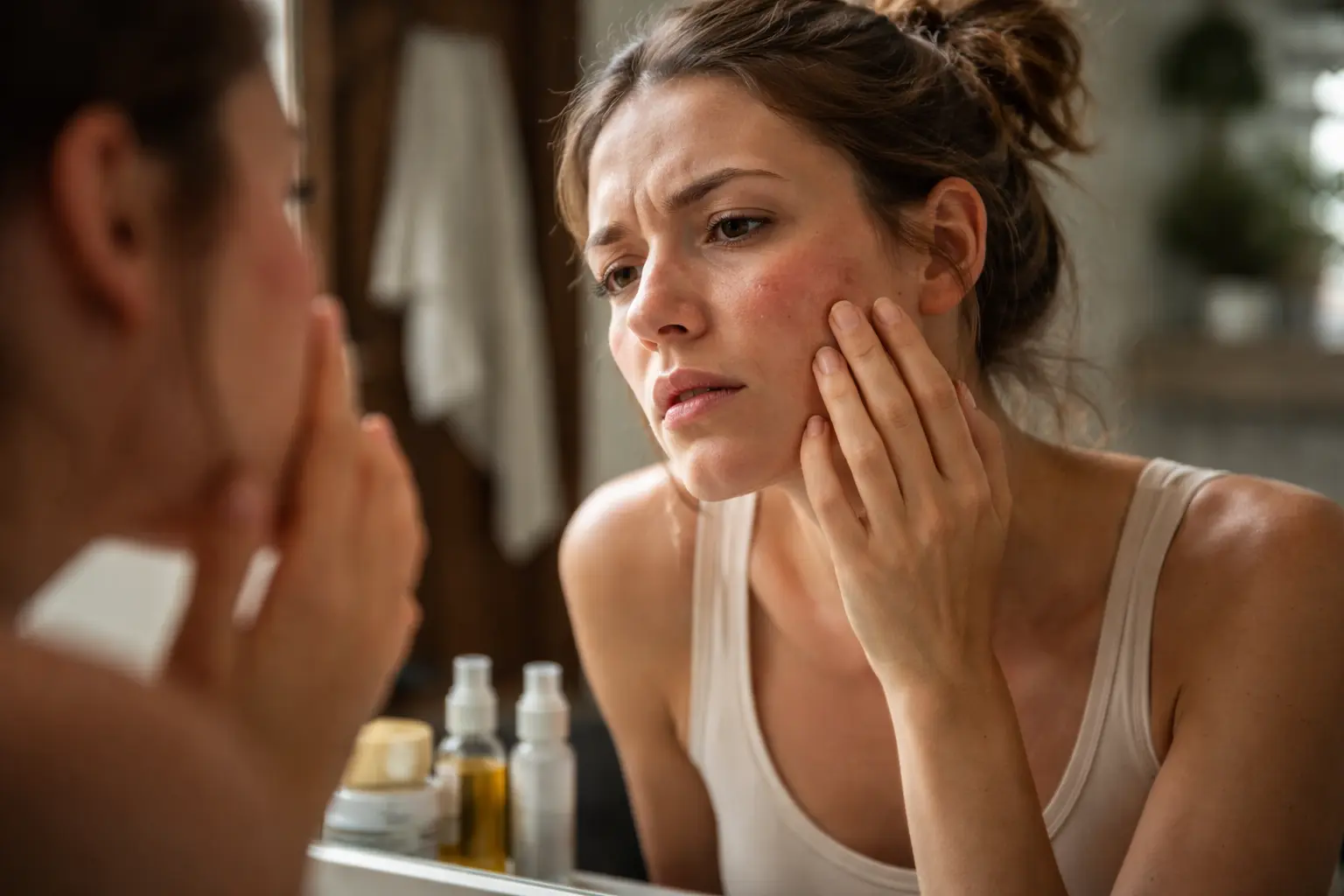
Your skin looks angry, your face feels like sandpaper, and you’re wondering if retinol side effects are worth the promise of glowing skin in a few months.
The breakout battle: dealing with unexpected skin reactions
You start retinol on a Monday feeling hopeful, and by Wednesday your chin is covered in angry red bumps. This is the reality many young adults face when introducing retinol, and it can feel like a betrayal after spending money on a product that’s supposed to help. The initial breakout phase, often called the retinization period, happens because retinol accelerates cell turnover, bringing all the congestion lurking beneath your skin to the surface faster than usual. Imagine your skin as a clogged pipe that suddenly gets a powerful flush. Everything stuck inside comes rushing out at once. You might experience whiteheads, cystic acne, or general redness that makes you want to hide under a blanket. The frustration peaks when you’re trying to look presentable at work or on dates while your skin is literally rebelling. Many young adults make the mistake of abandoning retinol entirely at this stage, not realizing this phase typically lasts two to four weeks. Others push too hard, using retinol every night instead of starting with twice weekly, which intensifies the reaction. The key is understanding this isn’t failure; it’s progress happening visibly on your face.
- Recognize that skin may get worse before it gets better with retinol use.
- Stay patient and allow your skin to adjust by gradually introducing retinol into your routine.
- Consult a dermatologist if the side effects persist or become unbearable.
The flaky dilemma: managing skin peeling and sensitivity
Week two of retinol use hits differently. You wake up, splash water on your face, and suddenly you’re shedding skin like a snake. Your foundation sits unevenly on patchy, flaky areas. Your cheeks feel tight and uncomfortable, especially when you smile or move your face too much. This peeling sensation is your skin’s way of adjusting to increased cell turnover, but knowing that doesn’t make it less annoying when you’re trying to look professional. The sensitivity amplifies too; products that never bothered you before now sting slightly. Your usual moisturizer feels insufficient, and even your gentle cleanser seems too strong. Some young adults describe this phase as their skin feeling raw or tender to the touch. You might find yourself constantly touching your face to check if the flaking has improved, which ironically makes it worse by introducing bacteria and disrupting the healing process. The emotional toll is real here. You feel self-conscious about your appearance, wondering if people notice the flakiness or if you look unhealthy. The solution isn’t complicated but requires commitment: layer a good hydrating moisturizer, use a gentle cleanser, and resist the urge to exfoliate aggressively or use multiple active ingredients simultaneously.
💬 Ready to feel better in 2 minutes?choose where to begin:
The sunscreen struggle: dealing with increased sun sensitivity
Retinol makes your skin significantly more photosensitive, meaning UV rays can cause more damage and trigger hyperpigmentation or additional irritation. This is non-negotiable, yet many young adults skip this step or apply sunscreen carelessly. You’re used to your old routine: shower, moisturize, go outside. Now you need to add sunscreen every single day, even when it’s cloudy or you’re mostly indoors. The hassle feels real when you’re already managing flaking skin and breakouts. Some sunscreens feel heavy or leave a white cast, which feels awful when your skin is already stressed. Others cause additional breakouts or feel greasy under makeup. You might find yourself choosing between protecting your skin and feeling comfortable in your own face, which shouldn’t be a choice but often feels like one. The stakes feel higher too. A single day without proper sun protection could undo weeks of retinol progress or cause dark spots that take months to fade. Young adults often underestimate this risk because sun damage isn’t immediately visible. The solution requires finding a sunscreen that works with your sensitive, retinol-treated skin, applying it generously, and reapplying every two hours if you’re outdoors. It’s an extra step, but it’s the difference between retinol working beautifully and retinol causing more problems than it solves.
The patience test: embracing the waiting game for results
You’ve survived the breakouts, managed the flaking, and religiously applied sunscreen for six weeks. You look in the mirror expecting dramatic transformation and see… subtle improvement. Maybe your skin tone is slightly more even, or your pores look marginally smaller, but it’s not the glow-up you imagined. This is where many young adults lose motivation because retinol results take time, often three to six months for noticeable changes and even longer for significant transformation. The frustration is valid. You’re dealing with side effects while waiting for benefits that might feel invisible for weeks. Meanwhile, your friends with naturally clear skin are thriving without any effort, which adds a layer of resentment to the process. You start questioning whether retinol is actually worth it or if you’re just being sold an expensive placebo. The waiting game tests your mental resilience more than your skin’s resilience. You have to trust the science, trust the process, and trust that consistency matters even when you can’t see progress. Some young adults set unrealistic timelines, expecting results like they see in before-and-after photos that took months or years to achieve. Others compare their week-four results to someone else’s week-sixteen results and feel discouraged. The real challenge is maintaining commitment when instant gratification isn’t available, which is increasingly difficult in a culture obsessed with quick fixes and overnight transformations.
Retinol side effects can be a rollercoaster ride for young adults, from battling breakouts to dealing with increased sensitivity. The key lies in patience, perseverance, and seeking professional guidance when needed.
How can I minimize retinol side effects?
To minimize retinol side effects, start with a low concentration, gradually increase usage, and always apply sunscreen during the day to protect your skin.
When should I consider stopping retinol use?
Consider stopping retinol use if side effects persist despite adjusting the frequency or concentration. Consult a dermatologist for personalized advice on alternative skincare options.
Others also read:
Disclaimer: This article is for informational purposes only and is not a substitute for professional medical advice. Always consult a healthcare professional for personal guidance.
This article presents an experience-based perspective and has been reviewed by the GlobalHealthBeacon editorial team in 2026. It provides structured, evidence-based information to support informed health decisions.
