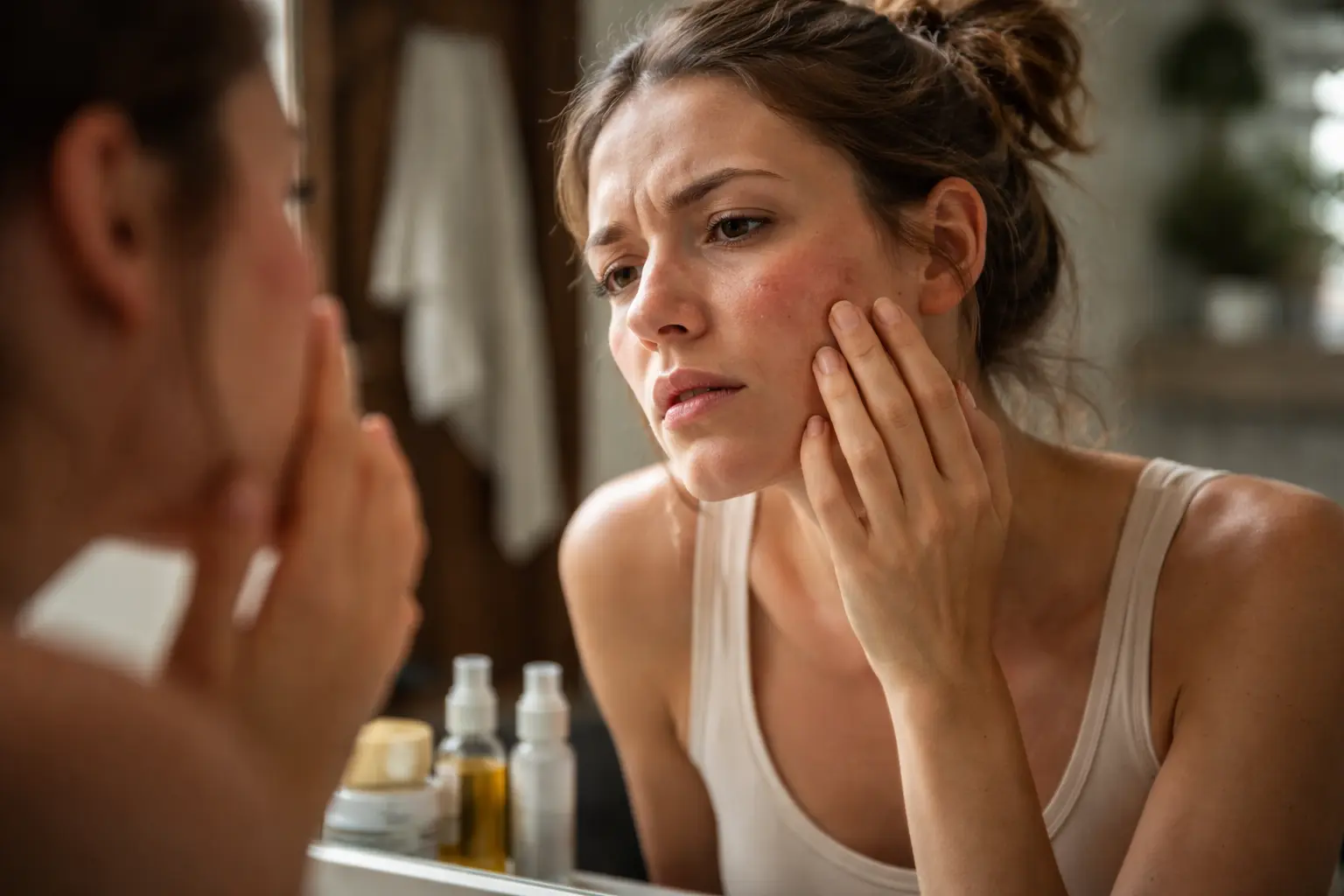
Your skin feels tight, looks red and flaky after trying retinol, and you’re wondering if you’re doing something wrong or if your face just can’t handle it, but here’s what you need to know about retinol side effects and why they might actually be part of the process.
What is retinol and how does it work?
Retinol is a naturally occurring form of vitamin A that has become one of the most researched and validated ingredients in skincare science. When you apply retinol to your skin, it penetrates the outer layers and converts into retinoic acid, the active form that your skin cells actually recognize and respond to. Think of it like a key fitting into a lock. Your skin cells have specific receptors waiting for this molecule, and once retinol binds to them, it sends signals that tell your cells to speed up their natural renewal cycle. This process stimulates fibroblasts, the cells responsible for producing collagen and elastin, the proteins that give skin its firmness and elasticity. Over time, this increased cell turnover means older, damaged skin cells are shed more quickly and replaced with fresher ones. For someone in their 60s or 70s, whose natural cell turnover has slowed significantly compared to younger years, retinol essentially acts as a biological accelerator, helping restore some of that youthful renewal capacity your skin has lost.
Common side effects of retinol
When you first introduce retinol to your skincare routine, your skin often goes through what dermatologists call the retinization period. During this adjustment phase, you might experience redness that looks similar to a mild sunburn, dryness that feels almost papery, and peeling that can be noticeable enough to make you self-conscious. Some people also report mild itching or a slight burning sensation, especially if they have sensitive skin. These reactions happen because retinol is essentially forcing your skin cells to work faster than they normally would, and this acceleration can trigger an inflammatory response as your skin adapts. The good news is that these side effects are almost always temporary. A 65-year-old who starts retinol might experience these symptoms for anywhere from a few days to a few weeks, depending on their skin’s sensitivity and the concentration they’re using. It’s important to understand that these aren’t signs of damage but rather signs that the ingredient is working. However, severe burning, persistent rashes, or signs of an allergic reaction warrant stopping use and consulting a dermatologist.
Tips for minimizing retinol side effects
The most effective strategy for managing retinol side effects is what dermatologists call the low-and-slow approach. Start with the lowest concentration available, typically 0.25% or even lower, and use it just once or twice per week initially. Picture this scenario: Margaret, a 70-year-old, started with a 0.3% retinol product once weekly on a Monday evening. By week three, her skin had adapted beautifully, so she increased to twice weekly. By week six, she moved to a slightly higher concentration. This gradual progression allowed her skin to build tolerance without the harsh reactions she’d feared. Always apply retinol to completely dry skin at night, as moisture can increase penetration and intensify side effects. Follow with a rich moisturizer to create a barrier that reduces irritation. Never use retinol on the same nights you use other potentially irritating ingredients like vitamin C serums or acids. During the day, sunscreen becomes non-negotiable because retinol increases sun sensitivity. Common mistakes include jumping to high concentrations too quickly, applying retinol to damp skin, or skipping moisturizer to avoid feeling greasy. These shortcuts often backfire, causing excessive irritation that discourages people from continuing.
- Start with the lowest retinol concentration available, typically 0.25% or less
- Begin with once or twice weekly application and gradually increase frequency over 4-6 weeks
- Always apply to completely dry skin at night and follow with a hydrating moisturizer
- Use broad-spectrum sunscreen daily during the day to protect against increased UV sensitivity
- Avoid combining retinol with other potentially irritating ingredients on the same evening
🔬 Science-backed benefits in 2 minuteschoose where to begin:
Understanding skin sensitivity to retinol
Not everyone’s skin responds to retinol the same way, and this variation comes down to several biological factors. Your genetics play a significant role in how sensitive your skin is to retinoids. If your parents had reactive or easily irritated skin, you’re more likely to experience stronger side effects. Your skin type matters too. Someone with naturally oily skin often tolerates retinol better than someone with dry or sensitive skin because the skin’s natural oils provide a protective buffer. Age is another factor, though perhaps not in the way you’d expect. Many seniors actually tolerate retinol well because their skin barrier has stabilized over decades, though some experience increased sensitivity due to thinning skin. Your overall skin health also influences tolerance. If you’ve been using harsh products or have a compromised skin barrier from sun damage, retinol might feel more irritating initially. A dermatologist can assess your individual skin profile by examining your skin type, asking about your sensitivity history, and understanding your specific skin concerns like fine lines, texture, or uneven tone. They can then recommend the right retinol strength and formulation for your unique situation, potentially suggesting alternatives like retinyl palmitate or bakuchiol if standard retinol proves too strong.
The importance of consistent use
Here’s something many people don’t realize: retinol requires patience and consistency to deliver results, and this is especially true for mature skin. Your skin doesn’t change overnight, even though we wish it would. The visible improvements in texture, tone, and fine lines typically emerge after 8 to 12 weeks of consistent use, and sometimes longer. Think of retinol like a fitness routine. You wouldn’t expect to see muscle definition after one workout, and similarly, you shouldn’t expect dramatic skin changes after a few applications. The science shows that consistent retinol use leads to measurable increases in collagen production, improved skin thickness, and enhanced cell turnover, but these changes accumulate gradually. A 68-year-old named Robert used retinol three nights per week for three months and saw minimal changes by week six, which discouraged him. But he stuck with it, and by week twelve, his wife commented that his skin looked smoother and his fine lines appeared softer. This is the typical timeline. Skipping applications or using retinol sporadically undermines these benefits because your skin never fully adapts and never reaches the threshold where collagen production significantly increases. Consistency also means using retinol year-round, not just seasonally, because the benefits plateau and reverse if you stop.
Seeking professional guidance
If you’re experiencing retinol side effects that feel severe, persistent, or concerning, a dermatologist visit is the right move. Severe reactions might include significant swelling, hives, intense burning that doesn’t subside, or signs of an allergic response. A dermatologist can examine your skin, review your application method and product choice, and determine whether the issue is normal retinization or a genuine adverse reaction. They might recommend adjusting your approach, switching to a different retinoid formulation, or exploring alternatives altogether. Some people benefit from prescription-strength retinoids like tretinoin or adapalene, which are more potent but also more precisely dosed than over-the-counter retinol. Others do better with gentler alternatives like retinaldehyde or bakuchiol, which provide similar benefits with potentially fewer side effects. A dermatologist can also rule out underlying skin conditions like rosacea or eczema that might make retinol unsuitable. For seniors specifically, professional guidance is valuable because your skin’s needs are unique. You might be taking medications that interact with retinoids, or you might have specific skin conditions that require a customized approach. Think of a dermatologist as your skincare coach, someone who can personalize recommendations based on your complete health picture and skin history.
Retinol, a potent form of vitamin A, offers significant benefits for aging skin by promoting collagen production and accelerating cell turnover. Understanding and managing common side effects, such as skin irritation and dryness, are essential for achieving optimal skincare results. The key is starting low, going slow, maintaining consistency, and seeking professional guidance when needed.
Can retinol be used during the day?
Retinol is typically recommended for evening use due to its potential to increase sun sensitivity. Using retinol products at night and applying sunscreen during the day is advised to protect the skin. Some people do use low concentrations during the day with careful sun protection, but nighttime application is the standard approach for most people.
How long does it take to see results from using retinol?
Visible results from using retinol products may take several weeks to appear, typically between 8 and 12 weeks of consistent use. Consistent usage and patience are key to experiencing the full benefits of retinol for aging skin. Results continue to improve over months and years of regular use.
Others also read:
Disclaimer: This article is for informational purposes only and is not a substitute for professional medical advice. Always consult a healthcare professional for personal guidance.
This article has been prepared and reviewed by the GlobalHealthBeacon editorial team and is based on current medical research and published scientific literature available in 2026. It provides structured, evidence-based information to support informed health decisions.
