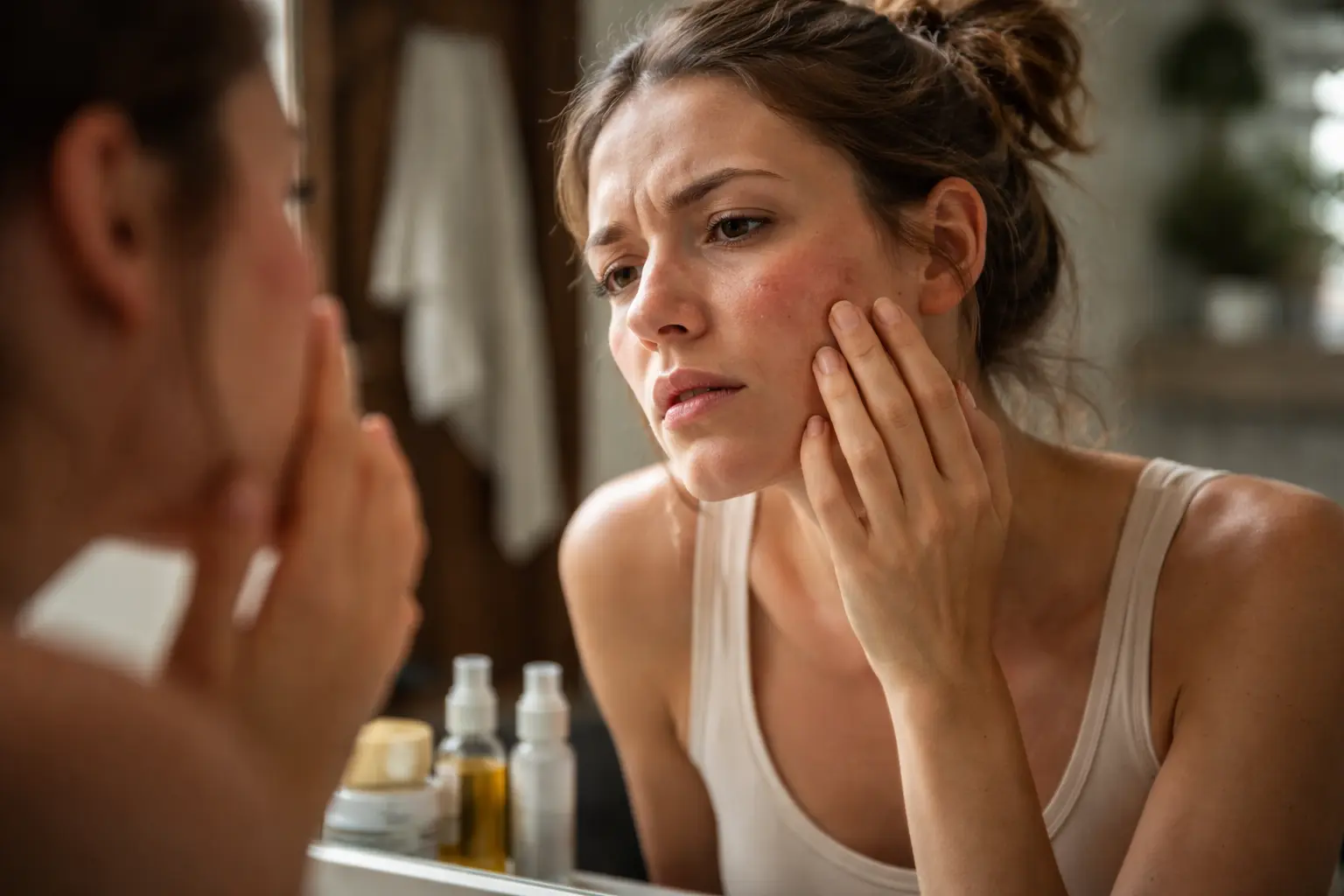
Your skin feels raw, tight, and angry after just a few nights of retinol, and you’re wondering if you’re doing something wrong or if your face is just too sensitive for this stuff, but here’s the thing: retinol side effects hit women differently, and there are real biological reasons why.
Understanding retinol side effects
Retinol, a potent form of vitamin A, has earned its reputation as a gold-standard skincare ingredient for good reason. It works by binding to retinoid receptors in your skin cells, triggering increased cell turnover and collagen production, which is why dermatologists have recommended it for decades to address fine lines, uneven texture, and acne. However, this powerful mechanism comes with a trade-off. When retinol accelerates your skin’s natural renewal process, it can simultaneously strip away your skin barrier’s protective lipids, leaving the deeper layers exposed. This is when you notice the telltale signs: persistent redness that doesn’t fade by morning, a tight, papery dryness that no moisturizer seems to touch, visible flaking that catches light awkwardly, and sometimes a burning sensation that makes you question whether you should continue. These reactions aren’t signs of failure or weakness in your skincare routine. They’re actually evidence that retinol is doing exactly what it’s designed to do, just faster than your skin can comfortably adapt.
Why women are more prone to retinol irritation
The science here is straightforward but often overlooked. Women’s skin tends to have a thinner epidermis, the outermost protective layer, compared to men’s skin. This isn’t a flaw; it’s simply anatomical variation. Additionally, women’s skin contains less sebum, the natural oil that buffers against irritants and maintains hydration. When you layer retinol onto skin that’s already working with less built-in protection, irritation becomes more likely. But there’s another layer to this story: hormones. Throughout your menstrual cycle, fluctuating estrogen and progesterone levels directly influence your skin’s barrier function and inflammation response. Many women notice their skin becomes noticeably more reactive in the luteal phase, roughly two weeks before their period, when progesterone peaks. Menopause adds another dimension entirely. As estrogen drops significantly, skin loses elasticity and moisture retention capacity, making retinol feel harsher than it did in your thirties or forties. Understanding these biological realities helps you stop blaming yourself and start working with your body’s natural rhythms instead of against them.
Managing retinol irritation effectively
The strategy here centers on patience and strategic layering. Think of retinol introduction like gradually acclimating to altitude rather than jumping straight to the summit. Begin with a low concentration, typically 0.25 percent or lower, and use it just twice weekly for the first two to three weeks. This gives your skin time to build tolerance without overwhelming your barrier. A real-world example: Sarah, a 45-year-old woman, started with a 0.3 percent retinol serum on Monday and Thursday nights only, paired with her regular moisturizer. By week four, her skin had adapted enough that she could increase to three nights weekly without irritation. Timing matters enormously. Applying retinol at night minimizes UV exposure, which can amplify irritation and reduce retinol’s effectiveness. Your skin also repairs itself more actively at night, making it the ideal window for this ingredient. After applying retinol, wait three to five minutes for it to fully absorb, then apply a nourishing moisturizer to seal in hydration and create a protective buffer. Some women find success with the sandwich method: moisturizer first, then retinol, then another layer of moisturizer. This approach dilutes the retinol slightly while still allowing it to work, making it gentler for sensitive skin types.
- Start with a low concentration of retinol
- Use retinol products at night
- Apply a moisturizer after using retinol
🔬 Science-backed benefits in 2 minuteschoose where to begin:
Potential causes of retinol irritation
Beyond skin sensitivity itself, several common mistakes amplify irritation unnecessarily. Using too much product is one of the biggest culprits. A pea-sized amount is genuinely sufficient for your entire face; more doesn’t mean faster results, just more irritation. Applying retinol too frequently, especially when starting out, overwhelms your skin’s adaptation capacity. Another frequent error is combining retinol with other potentially irritating ingredients like vitamin C, niacinamide, or alpha hydroxy acids in the same routine. While these ingredients aren’t inherently problematic, layering multiple actives simultaneously creates a perfect storm for sensitivity. Environmental factors play a role too. Using retinol during winter when your skin barrier is already compromised by cold, dry air, or during a period of high stress when your skin is more reactive, can intensify irritation. Additionally, if you’re using a retinol product with a low pH or one that’s been exposed to light and air for months, degradation may have occurred, making the formula less stable and more irritating. Finally, some women don’t realize they’re allergic or sensitive to other ingredients in their retinol product, such as fragrance or certain preservatives, which they then blame on the retinol itself.
Seeking professional advice
If you’ve been using retinol consistently for eight to twelve weeks and still experience persistent burning, severe redness, swelling, or signs of a barrier breakdown like excessive peeling or sensitivity to water, it’s time to consult a dermatologist. They can assess whether your irritation is a normal adjustment phase or a sign that retinol simply isn’t right for your skin at this time. A dermatologist can also evaluate whether your skin barrier needs repair before reintroducing retinol, recommend alternative retinoids like retinaldehyde or prescription-strength retinoids if over-the-counter retinol isn’t working, and identify any underlying conditions like rosacea or eczema that might be amplifying your reaction. They can also perform a patch test to rule out allergic reactions to specific product ingredients. Professional guidance is especially valuable if you’re taking medications that increase photosensitivity or if you have a history of skin conditions that complicate retinol use. Many dermatologists now recommend starting retinol during a consultation rather than through trial and error at home, particularly for women over 50 or those with compromised skin barriers.
Conclusion on retinol side effects
Retinol irritation in women isn’t a personal failure or a sign that your skin is too delicate for effective skincare. It’s a predictable response to a powerful ingredient, shaped by real biological factors like skin thickness, sebum production, and hormonal fluctuations. The path forward isn’t to abandon retinol but to approach it with informed strategy. Start low, go slow, and listen to your skin’s signals. Recognize that your hormonal cycle influences your skin’s tolerance, and plan your retinol introduction accordingly. Use it at night, pair it with hydration, and give yourself permission to take breaks if needed. Many women find that retinol becomes a cornerstone of their routine once they move past the initial adjustment phase, delivering visible improvements in texture, firmness, and clarity that justify the early discomfort. The goal isn’t to prove your skin can handle retinol. It’s to find the approach that works specifically for you, at your age, with your unique skin biology and life circumstances.
Retinol, a potent skincare ingredient, can cause skin irritation in women due to their increased skin sensitivity and hormonal influences. Properly managing retinol side effects involves using low concentrations, applying at night, and moisturizing regularly.
Can retinol side effects be completely avoided?
While it may not be entirely possible to avoid retinol side effects, starting with a low concentration and following a gentle skincare routine can help minimize irritation.
Is it normal to experience some skin dryness with retinol?
Yes, mild dryness is a common side effect of retinol as it works to promote skin cell turnover. Using a hydrating moisturizer can help alleviate this issue.
Others also read:
Disclaimer: This article is for informational purposes only and is not a substitute for professional medical advice. Always consult a healthcare professional for personal guidance.
This article has been prepared and reviewed by the GlobalHealthBeacon editorial team and is based on current medical research and published scientific literature available in 2026. It provides structured, evidence-based information to support informed health decisions.
