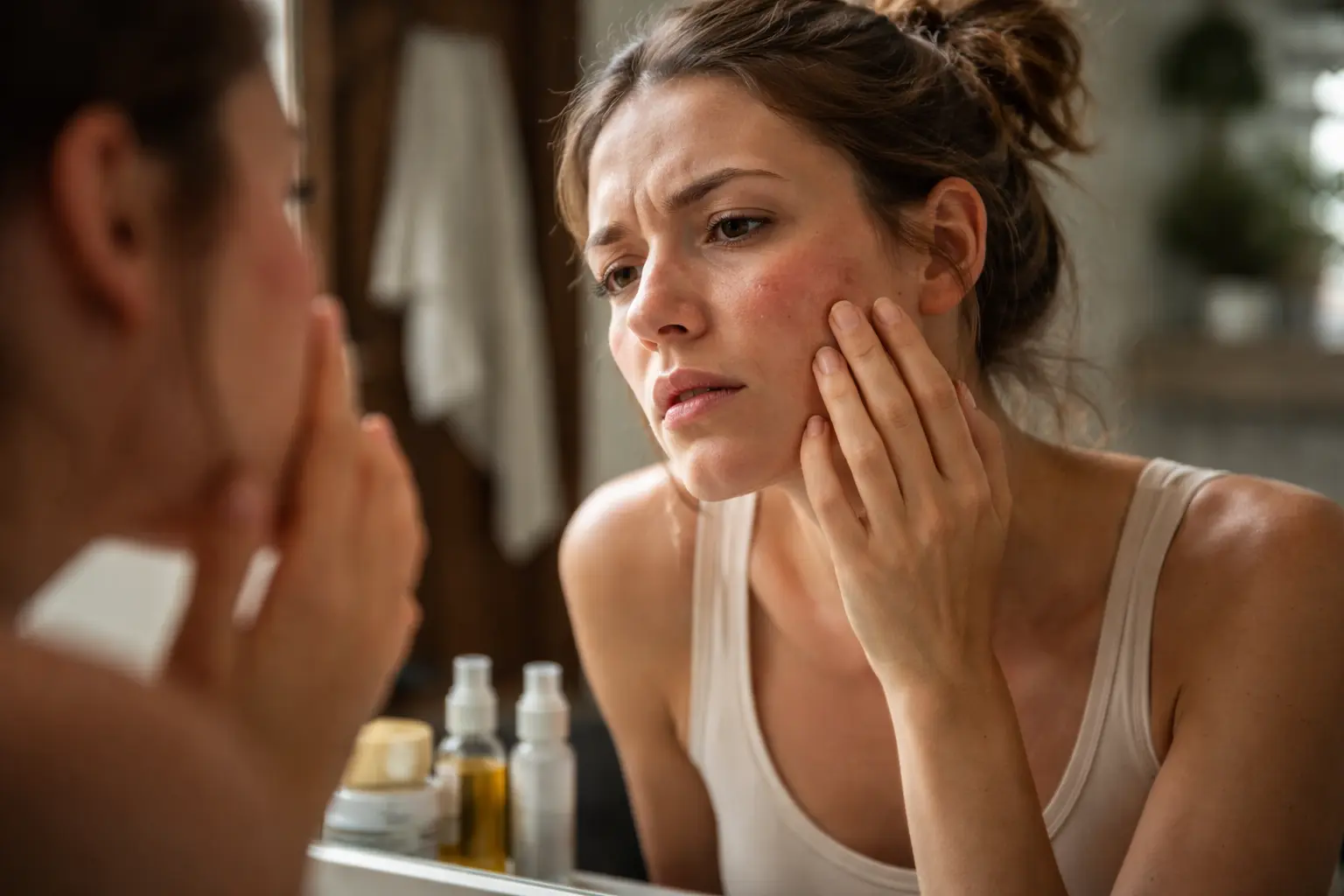
Your skin is burning, peeling, and angry after applying retinol, and you’re wondering if you’re doing something catastrophically wrong or if retinol side effects are just part of the deal.
Understanding retinol and its effects
Retinol, a form of vitamin A, has become a staple in skincare routines for good reason. It works by binding to retinoid receptors in your skin cells, essentially telling them to speed up their natural renewal process. Think of it like turning up the dial on your skin’s internal refresh rate. For young adults, this accelerated cell turnover can feel like a double-edged sword. On one hand, you get faster skin renewal, which theoretically means clearer, smoother skin over time. On the other hand, this rapid turnover means your skin barrier is working overtime, shedding old cells faster than usual. This is where irritation enters the picture. The redness, dryness, and peeling you experience aren’t signs of damage but rather visible evidence that your skin is undergoing significant cellular change. It’s intense, it’s uncomfortable, and it’s completely normal for someone new to retinol.
The science behind retinol sensitivity
Young skin operates differently than mature skin at the cellular level. Your skin cells are already turning over at a faster baseline rate compared to someone in their 40s or 50s. When you introduce retinol into this already-active system, you’re essentially accelerating an already-fast process. This is why young adults often experience more pronounced irritation than older users. Your skin hasn’t yet developed the tolerance that comes with years of gradual exposure. Additionally, young skin tends to have a more reactive immune response. When your skin senses the rapid cellular changes retinol triggers, it can interpret this as stress, leading to inflammation, redness, and that characteristic stinging or burning sensation. Some young adults also have naturally compromised skin barriers due to acne treatments, over-exfoliation, or environmental factors. If your barrier is already weakened, adding retinol is like adding fuel to a fire. Understanding this science helps you recognize that sensitivity isn’t a personal failing but rather a predictable biological response.
Managing retinol side effects
The key to successfully using retinol in young skin is patience and strategic introduction. Rather than jumping into a high-strength formula, think of retinol as a gradual commitment. Start with a low concentration, typically 0.25% or lower, and use it just once or twice per week initially. Picture this scenario: Sarah, a 24-year-old, started retinol at full strength every night and experienced severe peeling and redness within days. She quit entirely, convinced retinol wasn’t for her. Had she started with a low concentration twice weekly, her skin would have adapted gradually, and she’d likely be seeing benefits by now. Timing matters significantly. Applying retinol during the day exposes your skin to UV radiation, which can amplify irritation and reduce retinol’s effectiveness. Evening application allows your skin to repair and adapt without sun exposure interference. Finally, hydration is non-negotiable. Retinol depletes your skin’s moisture reserves as cells turn over rapidly. A good moisturizer isn’t optional; it’s essential infrastructure for managing irritation and supporting your skin barrier during this transition period.
- Begin with a low concentration of retinol, around 0.25% or less, to allow your skin to acclimate without overwhelming your barrier.
- Apply retinol products in the evening only, as daytime use increases sun sensitivity and can amplify irritation.
- Follow up with a nourishing, fragrance-free moisturizer to replenish hydration and support your skin barrier function.
- Increase frequency gradually, moving from twice weekly to three times weekly only after your skin shows clear tolerance signs.
- Avoid combining retinol with other potentially irritating ingredients like vitamin C, niacinamide, or acids during your adjustment period.
🔬 Science-backed benefits in 2 minuteschoose where to begin:
Addressing persistent irritation
Sometimes, despite your best efforts and careful introduction, irritation doesn’t improve or actually worsens. This is the moment to pause and reassess. Persistent irritation lasting more than four to six weeks suggests your skin may not be tolerating retinol well at this concentration or frequency. Before abandoning retinol entirely, consider a few adjustments. First, reduce frequency further, even to once weekly if necessary. Second, evaluate your entire routine. Are you using other potentially irritating products simultaneously? Benzoyl peroxide, salicylic acid, or even vitamin C can compound retinol irritation. Third, examine your moisturizer. If it’s not adequately hydrating, your skin barrier remains compromised, perpetuating irritation. If adjustments don’t help after another two to three weeks, consulting a dermatologist becomes the smart move. They can assess whether your skin has a genuine sensitivity to retinol, recommend alternative retinoids like adapalene or tretinoin that might work better for you, or identify underlying conditions like rosacea or eczema that make retinol unsuitable. This isn’t failure; it’s informed decision-making.
Long-term benefits of retinol
The irritation phase is temporary, but the benefits can be lasting. Once your skin adapts, typically after six to twelve weeks of consistent use, retinol delivers measurable improvements. For acne-prone young skin, retinol reduces sebum production and normalizes cell turnover, directly addressing breakout formation. You’ll likely notice fewer comedones and a reduction in inflammatory acne. Beyond acne, retinol improves skin texture by promoting even cell turnover, which means smoother, more refined skin surface. Fine lines and early signs of aging become less noticeable as retinol stimulates collagen and elastin production. Consider Marcus, a 22-year-old who pushed through the initial irritation phase. After three months of consistent retinol use, his acne significantly improved, his skin texture became noticeably smoother, and his overall complexion appeared brighter. The key was consistency and patience. Retinol isn’t a quick fix; it’s a long-term investment in your skin’s health. The irritation you experience now is essentially the price of admission to these benefits.
Final thoughts on retinol irritation
Retinol irritation in young skin is a predictable, manageable phenomenon rooted in solid biology. Your skin isn’t broken or defective; it’s simply responding to a powerful ingredient that accelerates its natural processes. Understanding this distinction transforms your perspective from frustration to informed action. The irritation you experience is feedback, not failure. It tells you your skin is adapting, your barrier is responding, and your cells are renewing at an accelerated rate. By starting low, going slow, moisturizing consistently, and adjusting based on your skin’s response, you can navigate this phase successfully. Some young adults will find retinol transformative for their skin. Others may discover that alternative retinoids or entirely different approaches work better for their unique biology. Both outcomes are valid. What matters is that you approach retinol with realistic expectations, scientific understanding, and patience. Your skin’s journey with retinol is individual, and honoring that individuality while staying informed is the path to success.
Retinol irritation in young skin stems from accelerated cell turnover and a naturally reactive skin barrier. Managing side effects through gradual introduction, low concentrations, evening application, and consistent moisturization can minimize discomfort while maximizing long-term benefits like improved acne, texture, and collagen production.
How long does it take for retinol irritation to subside?
Retinol irritation typically subsides within three to six weeks as your skin adjusts to the product and your barrier strengthens. However, this timeline varies based on starting concentration, frequency, and individual skin sensitivity. If irritation persists beyond six weeks or worsens, consult a dermatologist for personalized guidance and potential alternative options.
Can retinol be used on all skin types?
While retinol can benefit various skin types, those with sensitive skin, active rosacea, or compromised barriers may experience more pronounced side effects. It’s recommended to patch-test retinol products on a small area first, introduce them gradually into your routine, and monitor your skin’s response closely. Some individuals may find alternative retinoids or lower concentrations more suitable.
Others also read:
Disclaimer: This article is for informational purposes only and is not a substitute for professional medical advice. Always consult a healthcare professional for personal guidance.
This article has been prepared and reviewed by the GlobalHealthBeacon editorial team and is based on current medical research and published scientific literature available in 2026. It provides structured, evidence-based information to support informed health decisions.
