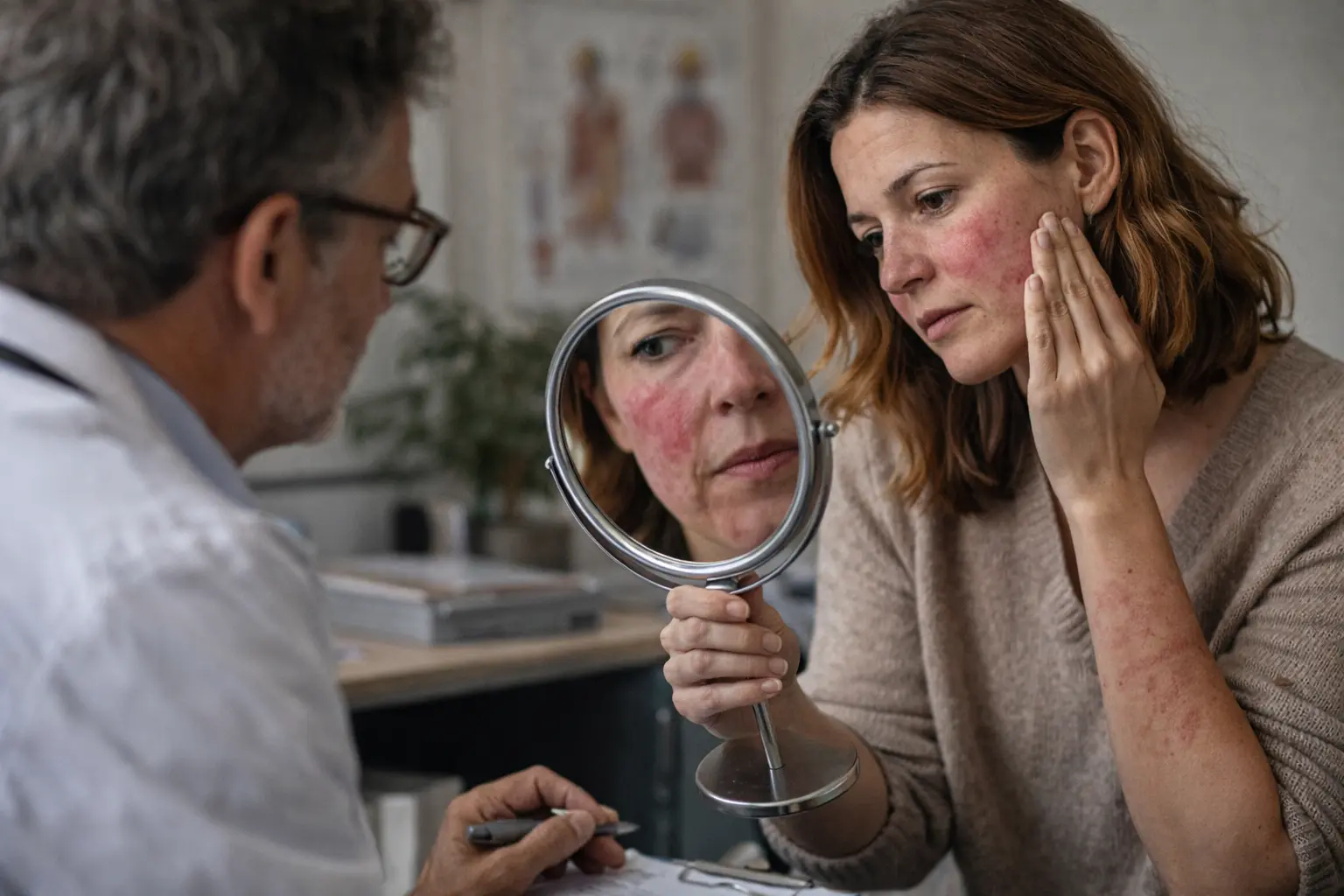
Your face feels hot and looks permanently flushed, those red bumps won’t go away, and you’re tired of wondering what’s actually happening to your skin – rosacea symptoms explained means finally understanding why your face behaves this way and what you can actually do about it.
Recognizing rosacea symptoms
Rosacea often starts subtly in seniors. You might notice your cheeks and nose feel warmer than usual, or that persistent redness that doesn’t fade even when you’re cool and calm. Over time, small red bumps appear, sometimes with tiny pustules that look like acne but feel different. Your eyes might become sensitive to light, or you develop a gritty sensation that makes wearing contacts uncomfortable. The key is recognizing that rosacea isn’t just occasional flushing. It’s a pattern. Someone with rosacea might wake up with a flushed face after eating spicy food the night before, or notice their skin reacts intensely to wind or temperature changes. Visible blood vessels become more apparent as the condition progresses. The bumps can feel tender or burning. Understanding these specific signs helps you distinguish rosacea from other skin conditions like eczema or simple sensitivity, which is crucial before seeking treatment.
- Facial redness, especially in the center of your face
- Swollen red bumps and pustules on the skin
- Eye irritation and sensitivity to light
Managing rosacea triggers
Triggers are personal, but patterns emerge once you start paying attention. For many seniors, spicy foods like hot peppers, curry, or even black pepper cause immediate flushing within minutes. Alcohol, particularly red wine and spirits, is a common culprit. Caffeine affects some people significantly while others tolerate it fine. Temperature extremes matter too: moving from a cold outdoor environment into a heated home can spark a flare-up. Even emotional stress or excitement triggers rosacea in many people. The solution isn’t elimination but awareness and gentle avoidance. Keep a simple log for two weeks, noting what you eat, your activities, and when your skin flares. You’ll spot patterns quickly. Beyond food and drink, protect yourself from sun exposure with broad-spectrum SPF 30 or higher daily, even on cloudy days. Avoid harsh wind by wearing scarves in winter. Use lukewarm rather than hot water when cleansing. These small adjustments compound into significant symptom reduction over time.
📘 Fix your day in under 2 minuteschoose where to begin:
Seeking dermatological advice
Self-diagnosis can lead you astray. What looks like rosacea might be seborrheic dermatitis, perioral dermatitis, or simple sensitivity. A dermatologist examines your skin under proper lighting, asks detailed questions about your history, and confirms the diagnosis. This matters because treatments differ. Once confirmed, your dermatologist might prescribe topical medications like metronidazole or azelaic acid, which reduce redness and bumps when applied twice daily. Some seniors benefit from oral antibiotics like doxycycline, which work partly through anti-inflammatory action rather than fighting infection. For more severe cases, laser or light-based therapies can reduce visible blood vessels and persistent redness. Your dermatologist also identifies whether your rosacea affects your eyes, which requires specific eye care instructions. They help you understand which over-the-counter products are safe and which might worsen your condition. This professional guidance prevents months of trial and error with ineffective treatments.
Embracing gentle skincare practices
Your skincare routine either helps or hurts rosacea. Harsh products strip your skin barrier, triggering more inflammation and redness. Start with a gentle, fragrance-free cleanser designed for sensitive skin. Avoid anything with alcohol, menthol, eucalyptus, or strong fragrances. Wash with lukewarm water using your fingertips, never a washcloth or brush. Pat dry gently rather than rubbing. Apply moisturizer while your skin is still slightly damp to lock in hydration. Look for products with ceramides, hyaluronic acid, or glycerin. Skip exfoliants entirely, including gentle ones, as they irritate rosacea-prone skin. Avoid vitamin C serums, retinoids, and acids, which can trigger flares. Instead, use calming ingredients like niacinamide, centella asiatica, or azelaic acid if recommended by your dermatologist. Sunscreen is non-negotiable. Apply it daily, even indoors, as UV exposure worsens rosacea significantly. This simplified routine takes five minutes but makes a measurable difference in symptom severity.
Maintaining overall skin health
Rosacea management extends beyond treating the condition itself. Healthy skin heals faster and reacts less intensely to triggers. Drink adequate water daily, aiming for eight glasses or more, as dehydration worsens skin sensitivity and redness. Eat foods rich in antioxidants like berries, leafy greens, and fatty fish, which support skin barrier function. Sleep matters more than many realize. During sleep, your body repairs skin and reduces inflammation. Aim for seven to nine hours nightly. Manage stress through gentle activities like walking, meditation, or hobbies you enjoy, since emotional stress directly triggers rosacea flares in many people. Avoid smoking and limit alcohol, both of which impair skin healing and increase rosacea severity. Consider keeping your home humidity at 40-50 percent, as very dry air irritates sensitive skin. These lifestyle factors work alongside medical treatments, creating a comprehensive approach that addresses rosacea from multiple angles rather than relying on medication alone.
Understanding and recognizing rosacea symptoms in seniors is crucial for effective management. By identifying triggers, seeking dermatological advice, embracing gentle skincare practices, and prioritizing overall skin health, seniors can navigate rosacea symptoms with confidence and care.
Can rosacea be cured?
While there is no cure for rosacea, symptoms can be effectively managed with proper treatment and lifestyle adjustments, such as avoiding triggers and using prescribed medications.
Is rosacea contagious?
No, rosacea is a non-contagious skin condition that affects individuals differently based on genetics, environment, and lifestyle factors.
Others also read:
Disclaimer: This article is for informational purposes only and is not a substitute for professional medical advice. Always consult a healthcare professional for personal guidance.
This guide has been prepared and reviewed by the GlobalHealthBeacon editorial team and reflects current medical research as of 2026. It provides structured, evidence-based information to support informed health decisions.
