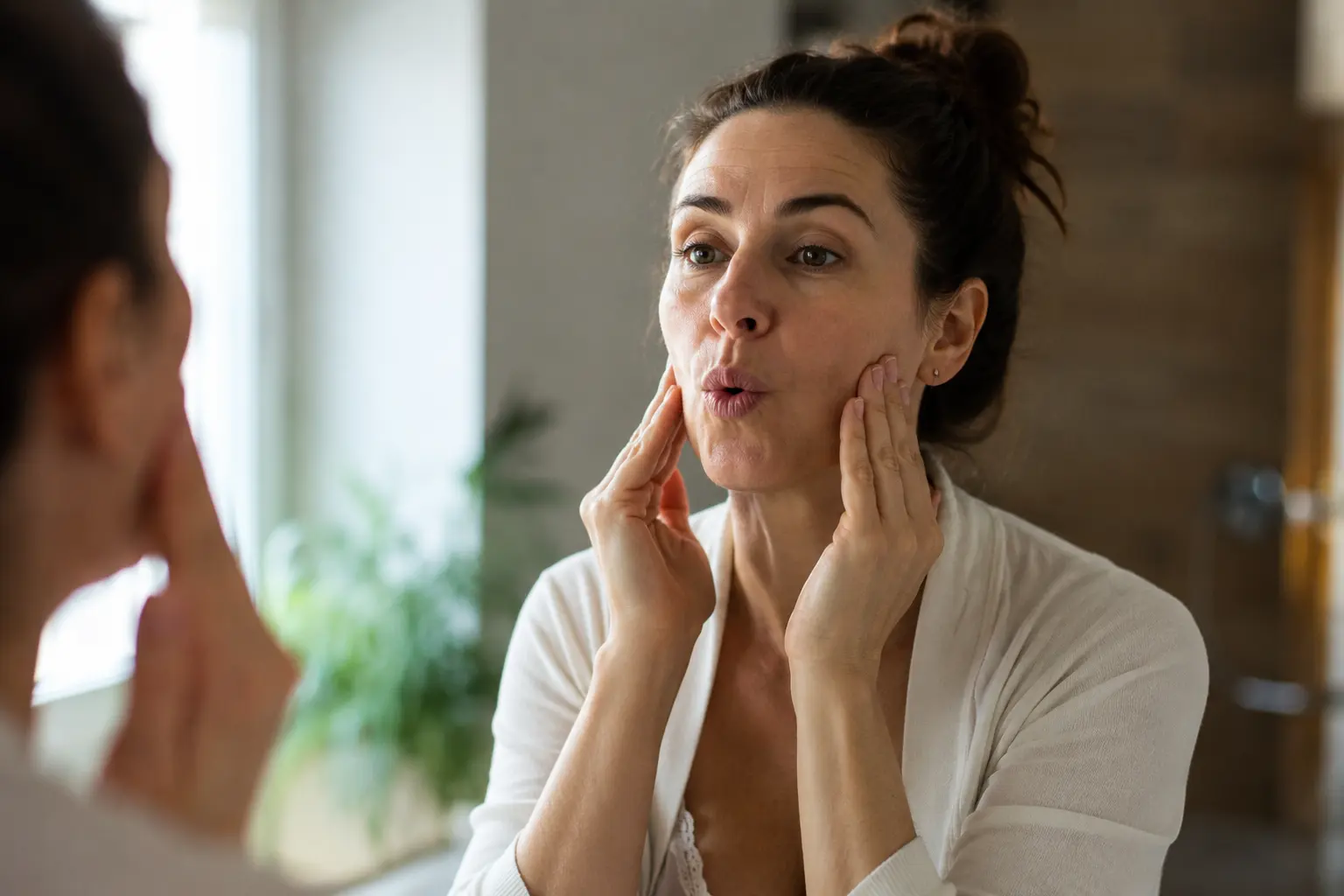
You look in the mirror and suddenly notice fine lines where there used to be smooth skin, or your complexion feels less firm than it did five years ago, and it hits you that skin health aging is actually happening to you right now, not some distant future problem.
The science behind skin aging
Skin aging is a complex biological process that happens on multiple levels simultaneously, influenced by factors you can control and others you simply cannot. Intrinsic aging, also called chronological aging, is driven by your genetic blueprint and affects everyone as time passes. Think of it like your cells have a built-in clock that gradually slows down their renewal processes. Extrinsic aging, meanwhile, comes from the world around you: intense sun exposure that damages DNA in skin cells, air pollution particles that trigger inflammation, smoking that depletes oxygen, and even stress that elevates cortisol levels. A 25-year-old who spends hours in the sun without protection might show aging signs similar to someone ten years older who stays mostly indoors. The interaction between these two types of aging determines how your skin actually looks and feels over time.
The role of collagen and elastin
Collagen and elastin are the structural proteins that keep your skin looking plump, firm, and resilient. Collagen acts like a scaffold, providing strength and structure, while elastin allows your skin to stretch and bounce back. When you’re young, your body continuously produces these proteins in abundance, which is why teenage skin looks so smooth and recovers quickly from minor damage. But starting around age 25, collagen production drops by roughly 1 percent each year. By age 40, this decline becomes visually noticeable as fine lines deepen and skin loses that tight, lifted appearance. UV radiation accelerates this breakdown by triggering enzymes called matrix metalloproteinases that literally chew through collagen fibers. Smoking does something similar by reducing blood flow and increasing oxidative damage. Someone who smokes and tans regularly might have visibly thinner, more wrinkled skin than a non-smoker of the same age, demonstrating how these factors compound over time.
Mitochondrial dysfunction and oxidative stress
Mitochondria are tiny structures inside your cells that generate energy, kind of like cellular power plants. As you age, these mitochondria become less efficient at producing energy and start leaking reactive oxygen species, which are unstable molecules that damage surrounding structures. This oxidative stress is like rust forming on metal, except it happens inside your cells. Free radicals attack collagen molecules, break down elastin, and even damage DNA, triggering mutations that impair cell function. Environmental stressors like UV rays and pollution accelerate this process by flooding your skin with additional free radicals. A young adult who gets regular sun exposure without protection experiences cumulative oxidative damage that compounds year after year. By their 40s, they might have significantly more visible sun damage and deeper wrinkles than someone who consistently protected their skin. The good news is that understanding this mechanism helps explain why certain protective strategies actually work at a biological level.
- Apply broad-spectrum sunscreen with SPF 30 or higher daily, even on cloudy days, since UV rays penetrate clouds and reflect off surfaces like water and concrete.
- Include antioxidant-rich foods in your diet such as berries, dark leafy greens, and nuts, which provide vitamins C and E that neutralize free radicals from within.
- Establish a consistent sleep schedule and stress management routine, as poor sleep and chronic stress elevate cortisol and impair your body’s natural repair processes.
🔬 Science-backed benefits in 2 minuteschoose where to begin:
The impact of inflammation
Chronic inflammation is like a low-grade fire burning inside your skin that you cannot see but that causes real damage over time. When your immune system encounters stressors like UV damage, pollution, or even emotional stress, it releases inflammatory molecules called cytokines. These molecules trigger a cascade of events that break down collagen and elastin while simultaneously impairing new collagen production. Someone dealing with chronic stress might notice their skin looks dull and develops more wrinkles, partly because stress hormones suppress immune function and increase inflammation. Inflammatory skin conditions like acne or eczema can leave lasting damage because the repeated inflammation accelerates collagen breakdown. Even seemingly minor daily stressors add up: poor sleep quality, a diet high in processed foods, and constant sun exposure all fuel inflammation. The skin of someone who manages stress well, sleeps seven to nine hours nightly, and eats an anti-inflammatory diet often looks noticeably fresher and more resilient than someone with opposite habits, even at the same age.
Epigenetics and skin aging
Epigenetics is the study of how environmental factors influence which genes get turned on or off without actually changing your DNA sequence itself. Think of your genes as a cookbook and epigenetics as the instructions for which recipes to use. UV exposure, pollution, diet, and lifestyle choices act like switches that activate genes associated with aging or deactivate genes that protect against it. A person with identical genetics to their sibling might age differently based on sun exposure habits and diet choices because their epigenetic switches are in different positions. Research shows that people living in sunny climates who consistently use sunscreen have different epigenetic patterns in their skin compared to those with the same genetics who do not protect themselves. These epigenetic changes accumulate over decades and influence how quickly visible aging appears. The encouraging part is that epigenetic changes can potentially be influenced by lifestyle modifications, meaning your daily choices genuinely affect how your genes behave at a molecular level.
Telomere shortening and cellular senescence
Telomeres are protective caps at the ends of your chromosomes that shorten slightly each time a cell divides, like the plastic tips on shoelaces wearing down with use. Your cells can only divide a limited number of times before telomeres become too short, at which point the cell enters senescence, a state where it stops dividing but remains metabolically active and inflammatory. Senescent cells accumulate in aging skin and contribute to visible aging by releasing inflammatory molecules and impairing skin renewal. Chronic stress, poor sleep, smoking, and unhealthy diet accelerate telomere shortening, meaning these lifestyle factors literally speed up cellular aging at a fundamental level. Someone who exercises regularly, manages stress effectively, and maintains good sleep habits typically has longer telomeres than someone with opposite habits, even if they are the same chronological age. This explains why two 50-year-olds can look dramatically different: one might have skin that appears 40 while the other looks 60, partly because their telomeres have shortened at different rates based on lifestyle choices made over decades.
Skin aging results from interconnected biological processes including collagen and elastin degradation, mitochondrial dysfunction and oxidative stress, chronic inflammation, epigenetic changes triggered by environment, and telomere shortening. Understanding these mechanisms reveals that aging is not simply inevitable but rather influenced by both genetic factors you cannot change and lifestyle factors you can influence. Protecting yourself from UV damage, managing stress, maintaining quality sleep, eating an antioxidant-rich diet, and avoiding smoking all work because they directly address these underlying biological processes. While you cannot stop aging entirely, you can meaningfully slow its visible progression by understanding and acting on the science.
How can I protect my skin from premature aging?
Protecting your skin from premature aging involves addressing both intrinsic and extrinsic factors. Apply broad-spectrum sunscreen daily with SPF 30 or higher, as UV radiation is the primary driver of extrinsic aging. Incorporate antioxidant-rich foods and skincare products containing vitamins C and E to combat oxidative stress. Prioritize seven to nine hours of quality sleep nightly, as sleep deprivation impairs cellular repair and elevates cortisol. Manage stress through meditation, exercise, or other practices that reduce inflammation. Avoid smoking and limit alcohol consumption, both of which accelerate collagen breakdown and increase oxidative damage. Regular physical activity improves circulation and supports mitochondrial function. While genetics determine your baseline aging rate, these lifestyle modifications genuinely slow visible aging progression.
Can skincare products reverse the signs of aging?
Skincare products cannot reverse the natural aging process or restore collagen that has already degraded, but they can meaningfully improve skin appearance and support ongoing skin health. Products containing retinoids stimulate collagen production and cell turnover, reducing the appearance of fine lines. Moisturizers hydrate the outer skin layer, making wrinkles appear less pronounced. Antioxidant serums protect against further oxidative damage. Sunscreen prevents additional UV damage that would accelerate aging. The key is consistency: using quality products daily over months and years produces cumulative benefits. However, skincare products work best alongside lifestyle modifications like sun protection, stress management, adequate sleep, and a healthy diet. Think of products as supporting actors in a larger strategy rather than standalone solutions.
Others also read:
Disclaimer: This article is for informational purposes only and is not a substitute for professional medical advice. Always consult a healthcare professional for personal guidance.
This article has been prepared and reviewed by the GlobalHealthBeacon editorial team and is based on current medical research and published scientific literature available in 2026. It provides structured, evidence-based information to support informed health decisions.
