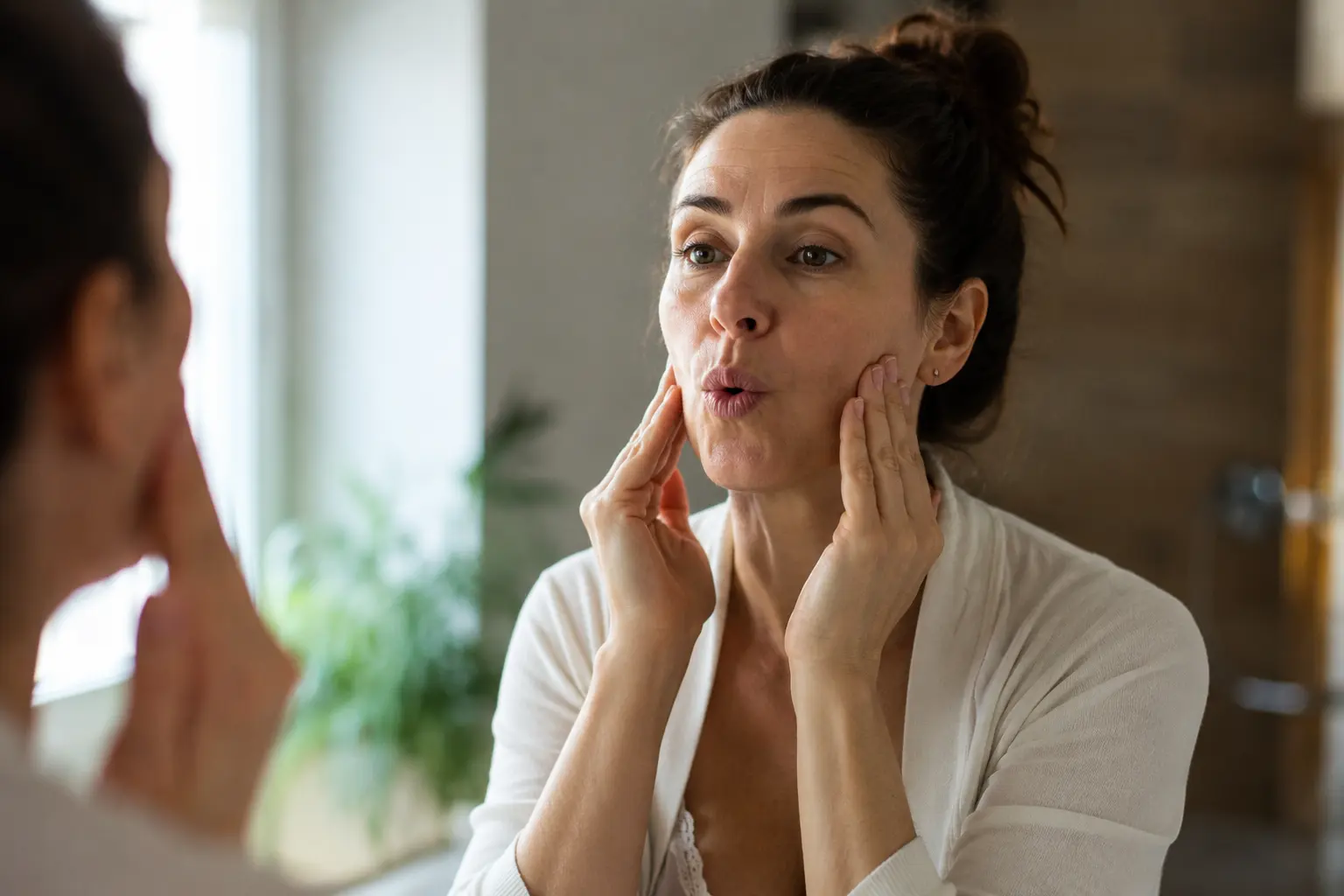
You’re staring at fine lines that weren’t there last year, your skin feels dull no matter what you slather on it, and every skincare ad promises to turn back time but nothing seems to stick – here’s what actually works for real skin health aging.
Understanding the basics of skin aging
Your skin changes as you age, and understanding why helps you stop fighting biology and start working with it. Collagen and elastin, the proteins that keep skin plump and bouncy, naturally decline starting in your late twenties. You might notice this as fine lines around your eyes or a slight loss of firmness on your jawline. Environmental stressors accelerate this process significantly. Sun exposure without protection is the biggest culprit, but pollution, stress, and poor sleep all contribute. Beyond structural changes, your skin’s moisture barrier weakens over time, meaning it loses water more easily and becomes drier and more reactive. Think of it like a brick wall where the mortar is crumbling. When you know what’s actually happening beneath the surface, you can choose targeted solutions instead of grabbing whatever promises the most dramatic results.
- Collagen and elastin decline with age, leading to wrinkles and sagging.
- Environmental factors like sun exposure and pollution accelerate skin aging.
- Moisture retention diminishes over time, resulting in dry, dull skin.
Choosing the right anti-aging ingredients
The skincare aisle is overwhelming, but focusing on ingredients with actual research behind them cuts through the noise. Retinoids (including retinol and prescription retinoids like tretinoin) are gold standard for reducing fine lines and boosting cell turnover. Start low and go slow if you’re new to them, as they can cause irritation. Vitamin C serums brighten skin and support collagen production, though stability matters – look for dark packaging and use within a few months of opening. Peptides signal your skin to produce more collagen, making them useful for addressing loss of firmness. Hyaluronic acid holds water in the skin, plumping fine lines temporarily while supporting your moisture barrier long-term. Niacinamide strengthens that barrier and reduces redness. Rather than buying ten products, pick two or three that address your specific concerns and use them consistently for at least six to eight weeks before deciding if they work for you.
📘 Fix your day in under 2 minuteschoose where to begin:
Establishing a consistent skincare routine
Consistency beats perfection in skincare. A simple routine you actually follow delivers better results than a complex one you abandon after two weeks. Start with a gentle cleanser that removes makeup and daily grime without stripping your skin. Follow with a targeted treatment (retinoid, vitamin C, or peptide product) on clean, dry skin, waiting a minute or two before applying moisturizer so it absorbs properly. Moisturize while your skin is still slightly damp to lock in hydration. Morning routine should include sunscreen with at least SPF 30, non-negotiable. Many women skip this step thinking their moisturizer has enough protection, but it does not. Consider a simple routine: cleanser, treatment, moisturizer, sunscreen in the morning and cleanser, treatment, moisturizer at night. Stick with this for at least three months before adding anything else. Your skin needs time to adjust and show results.
Avoiding common anti-aging myths
The anti-aging industry profits from making you feel inadequate, so myths are everywhere. One major myth is that expensive equals effective. A thirty-dollar retinol can work as well as a three-hundred-dollar one if the formula is stable and you use it correctly. Another myth is that you need to start anti-aging products in your twenties or you have missed the window. You have not. Your skin responds to good ingredients at any age. The myth that more products equal better results leads many women to overcomplicate routines, which actually irritates skin and damages the barrier. Some believe that anti-aging creams can permanently erase wrinkles, but realistic expectations matter here. Products can soften the appearance of lines and prevent new ones, but they cannot fully reverse deep wrinkles without professional treatments. Finally, the myth that natural ingredients are always safer and better is false. Some natural ingredients irritate sensitive skin, while some synthetic ingredients are gentle and effective. Focus on what works for your skin, not on marketing language.
Consulting with skincare professionals
A dermatologist can assess your specific skin type, concerns, and medical history in ways that no article or product review can. If you have sensitive skin, rosacea, or other conditions, professional guidance prevents costly mistakes and wasted time. A dermatologist can also prescribe stronger retinoids like tretinoin or recommend professional treatments like chemical peels or laser therapy if over-the-counter products are not delivering results. Estheticians can provide facials tailored to your skin and offer personalized product recommendations, though they are not medical professionals. If you are over forty or have significant concerns about aging, one consultation with a dermatologist can clarify what you actually need versus what marketing tells you to want. Many dermatologists now offer virtual consultations, making professional advice more accessible. Think of it as an investment in a personalized plan rather than an expense.
Understanding the natural processes of skin aging, choosing effective ingredients, maintaining a consistent routine, dispelling myths, and seeking professional guidance are essential steps in women’s anti-aging skincare.
Do anti-aging products really work?
Yes, but with realistic expectations. Anti-aging products can improve skin texture, reduce the appearance of fine lines, and prevent future damage when used consistently. Results vary based on your skin type, genetics, age, and how diligently you use them. Most visible improvements take six to twelve weeks of regular use. Professional treatments like retinoids show stronger results than gentler over-the-counter options, but they require patience and proper use to avoid irritation.
Is sunscreen the most important anti-aging product?
Yes, sunscreen is arguably the most important anti-aging product you can use. UV damage causes the majority of visible skin aging, including wrinkles, age spots, and loss of elasticity. Daily sunscreen use prevents new damage and allows your skin to repair itself over time. Without sunscreen, even the best anti-aging serums and creams cannot fully counteract the aging effects of sun exposure. Make broad-spectrum SPF 30 or higher a non-negotiable part of your morning routine.
Others also read:
Disclaimer: This article is for informational purposes only and is not a substitute for professional medical advice. Always consult a healthcare professional for personal guidance.
This guide has been prepared and reviewed by the GlobalHealthBeacon editorial team and reflects current medical research as of 2026. It provides structured, evidence-based information to support informed health decisions.
