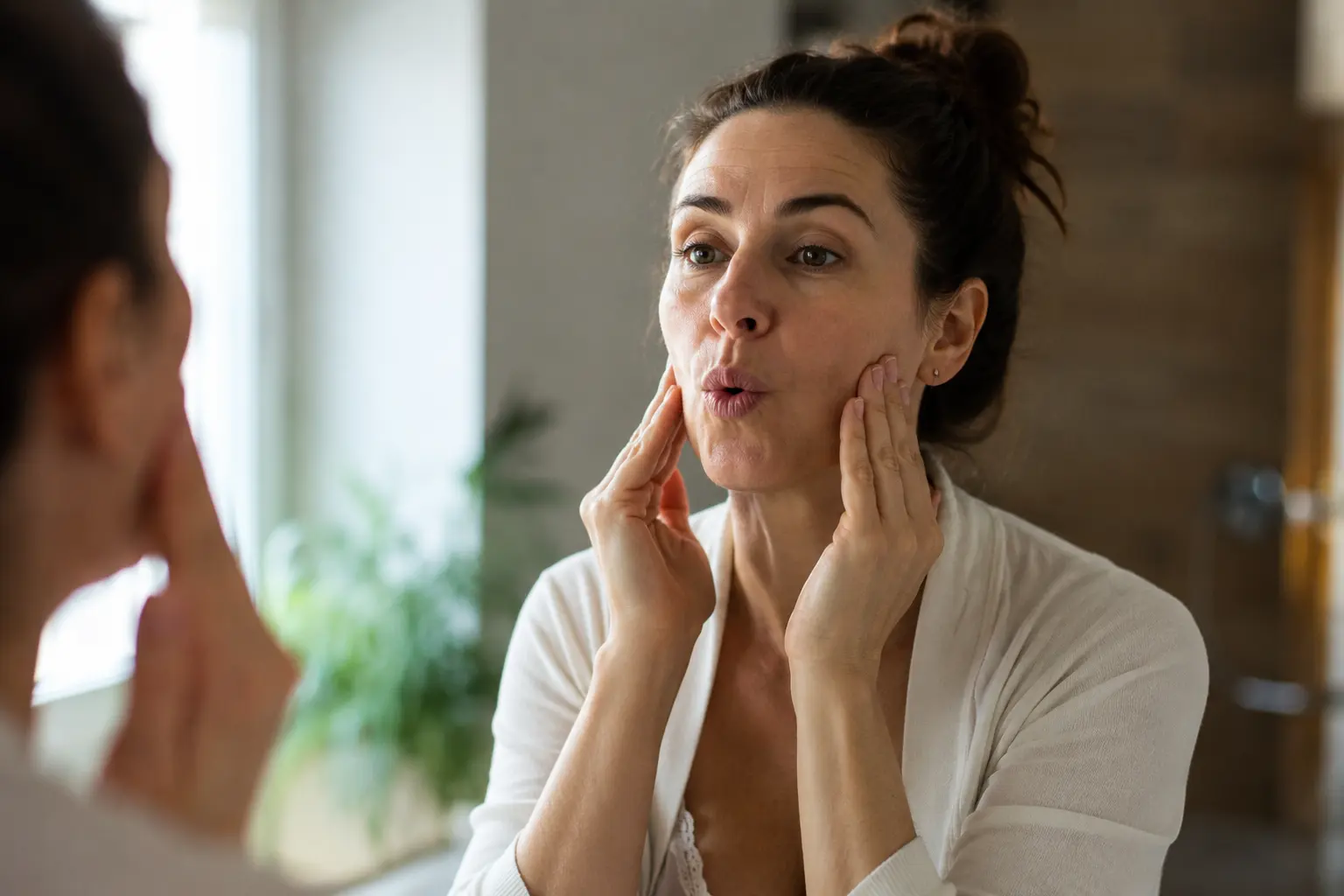
You’re staring at your reflection, noticing fine lines that weren’t there last year, and your bathroom cabinet is packed with products that promised the world but delivered… what exactly? Stop wasting money on anti-aging hype and learn what actually works for your skin health aging naturally.
Understanding the basics of anti-aging products
Anti-aging products target visible signs of aging like wrinkles, fine lines, and age spots, but not all formulas are created equal. The active ingredients matter most: retinol rebuilds collagen, hyaluronic acid plumps skin with hydration, vitamin C brightens and protects, and peptides signal your skin to firm up. Imagine retinol as a renovation crew working at night while you sleep, gradually smoothing out damage. When you’re browsing products, don’t just grab whatever has the fanciest packaging. Your skin type is crucial. If you have oily skin, a heavy cream packed with oils will clog pores and cause breakouts. If your skin is dry, a lightweight serum alone won’t cut it. Read genuine reviews from people with similar skin concerns, not just influencers paid to promote products. Better yet, talk to a dermatologist who can assess your specific aging concerns and recommend products tailored to your needs rather than generic bestsellers.
- Choose products based on your skin type and concerns
- Read reviews and testimonials from reputable sources
- Consult with a dermatologist for personalized recommendations
Deciphering anti-aging product labels
Marketing departments are clever. They throw around terms like ‘clinically proven,’ ‘dermatologist recommended,’ and ‘non-comedogenic’ to make products sound legitimate, but these phrases mean different things. Clinically proven sounds impressive until you realize the study involved only 20 people over two weeks. Dermatologist recommended might mean one dermatologist tested it, not that the entire profession endorses it. Non-comedogenic means it won’t clog pores, which is useful info but doesn’t tell you if it actually reduces wrinkles. Look for specific percentages of active ingredients. A retinol product listing 0.3% retinol is different from one with 1%. Higher isn’t always better for beginners, though. Check the ingredient list order: ingredients are listed by concentration, so if retinol is near the bottom, you’re getting minimal amounts. Watch for red flags like vague claims such as ‘reduces the appearance of aging’ without specifics. Real efficacy comes with real data. Legitimate brands publish their research or cite peer-reviewed studies backing their claims.
📘 Fix your day in under 2 minuteschoose where to begin:
Navigating product formulations and potencies
The potency of active ingredients determines whether a product actually works or just sits on your skin doing nothing. Retinol is a perfect example: it’s unstable and breaks down quickly when exposed to light and air, so formulation matters enormously. A retinol serum in an opaque, airtight pump bottle will be more effective than one in a clear glass jar. Vitamin C is similarly finicky. L-ascorbic acid is the gold standard form, but it oxidizes easily and loses potency within months of opening. Some brands use stabilized forms like ascorbyl palmitate, which last longer but may be less potent. Delivery systems matter too. A product with excellent ingredients but poor penetration won’t reach deeper skin layers where damage occurs. Nanoparticles, liposomes, and encapsulation technologies help ingredients penetrate effectively. Think of it like this: a powerful medicine is useless if it never reaches the problem area. When evaluating products, check how they’re packaged, what form of active ingredient they use, and whether the brand discusses their delivery system. This separates serious skincare from marketing fluff.
Evaluating the cost-effectiveness of anti-aging products
A $200 jar of cream isn’t automatically better than a $30 option. Cost-effectiveness means calculating what you actually pay per use. A luxury cream you use twice daily for two months costs more per application than a mid-range serum you use once daily for six months. Consider longevity too. A small bottle of concentrated serum might last three months, while a larger jar of lotion lasts one month despite the lower price tag. The real value comes from results. If a $50 product reduces your fine lines noticeably within eight weeks, it’s more cost-effective than a $150 product that does nothing. Before committing to full-size bottles, buy sample sizes or travel versions to test compatibility with your skin. Many brands offer trial kits for this reason. Some retailers accept returns, so you can test a product for two weeks and return it if it doesn’t work. This approach costs less than buying multiple full-size products that end up unused in your drawer. Track what you spend and what results you see. You might discover that a simple, affordable product works better for your skin than an expensive luxury brand.
Establishing a consistent skincare routine
The most expensive anti-aging product in the world won’t work if you use it sporadically. Consistency is where most people fail. Your skin cells turn over roughly every 28 days, so you need at least four to eight weeks of consistent use to see real changes. Start with a basic routine: cleanse morning and night to remove dirt and oil, exfoliate two to three times weekly to shed dead skin cells, moisturize to maintain the skin barrier, and apply sunscreen daily because UV damage is the leading cause of visible aging. Once this foundation is solid, add one anti-aging product at a time. If you introduce retinol, vitamin C serum, and a new moisturizer simultaneously and your skin reacts badly, you won’t know which product caused the problem. Give each new product at least two weeks before adding another. Keep a simple log noting what you use and how your skin responds. Take photos every two weeks under consistent lighting to track changes objectively. Sometimes improvements are subtle and you won’t notice them in the mirror. Written records and photos reveal progress you’d otherwise miss.
Finding effective anti-aging products requires understanding what actually works versus marketing hype. Start by learning which active ingredients address your specific concerns, then decode product labels to identify legitimate claims and potent formulations. Calculate real cost-effectiveness by considering how long products last and what results you actually see. Most importantly, commit to a consistent routine for at least eight weeks before deciding if a product works. Your skin health aging naturally improves through informed choices and patience, not expensive shortcuts.
Are expensive anti-aging products always better?
Not necessarily. The effectiveness of anti-aging products depends on the active ingredients, formulation, and how well they suit your skin type and concerns. Expensive products may not always yield better results. A $40 retinol serum with proven potency might outperform a $200 cream with minimal active ingredients. Focus on ingredient quality and formulation rather than price tag.
How long does it take to see results from anti-aging products?
Results from anti-aging products can vary depending on the product, your skin’s response, and the specific concerns you’re addressing. Most active ingredients require four to eight weeks of consistent use before visible improvements appear. Some products like vitamin C show subtle brightening within two weeks, while retinol takes longer to noticeably reduce fine lines. Be patient and consistent with your routine.
Others also read:
Disclaimer: This article is for informational purposes only and is not a substitute for professional medical advice. Always consult a healthcare professional for personal guidance.
This guide has been prepared and reviewed by the GlobalHealthBeacon editorial team and reflects current medical research as of 2026. It provides structured, evidence-based information to support informed health decisions.
